
PHOTO
It seems like ever since John Wickliffe sailed up Otago Harbour people have been discussing the need for an inland port.
Seeing as the next iteration is doing the rounds it is an opportune time to consider for once and for all where the optimal place should be for this project, and let’s get on with it.
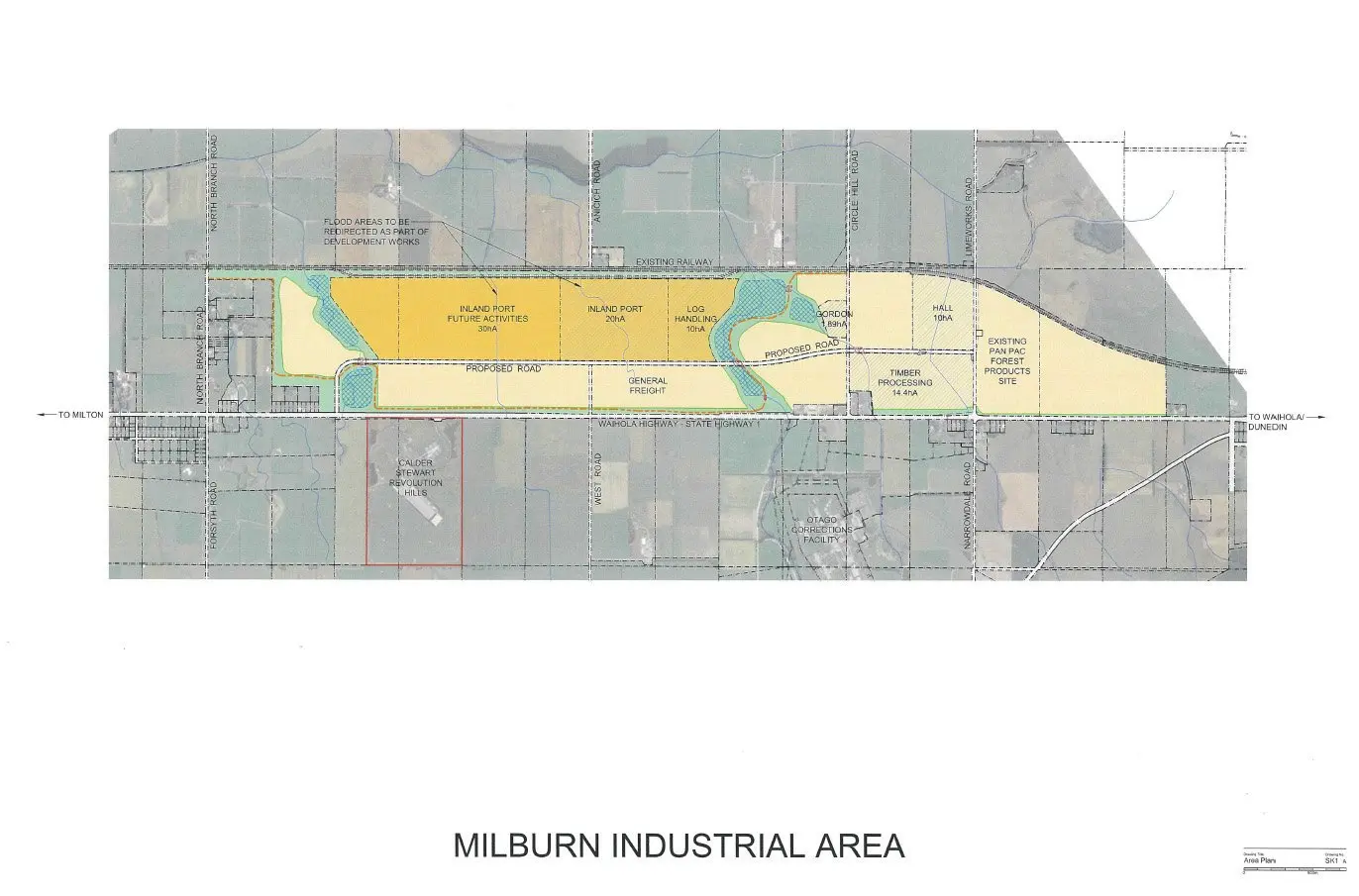
As mayor of the Clutha district, I raise this discussion unashamedly with the motivation of promoting our district’s Milburn industrial site.
In 2020 the council dedicated considerable resources to completing the plan changes, which on becoming operative have allowed for industrial activity such as an inland port development to be provided for in Milburn, giving increased certainty to the developers.
Solutions have already been considered for the myriad potential obstacles, things that most of us do not even contemplate such as indigenous flora and fauna, stormwater runoff and flood plains, obstacles that have the potential for delays and unforeseen costs.
Thankfully, these challenges have all been considered at Milburn.
This site is poised and ready to go to that next stage, allowing the unlocking of our region’s economic potential, and it is a sure bet that will not require fast-tracking. The natural advantages Milburn possesses could mean we’re looking a gift horse in the mouth.
Neigh you say? Then tell me where there is another site that has 180ha of flat land, room for not only today’s needs but well into the future and as a bonus there is already 1.5km of railway line stretching down one boundary and on the other boundary State Highway1 running the entire length.
From a taxpayer’s perspective, the requirement to engineer a solution to possible congestion is not necessary. Maybe a fraction of the money saved could go towards the long-awaited last stage of the cycle trail from Queenstown to Dunedin.
But I digress.
Please allow me to continue to extol the virtues of Milburn.
This is the closest available point to the confluence of produce moved from Central Otago, Southland and Clutha and that’s a lot of produce that for more than a century has been trundled an extra 70km, blocking up motorways and delaying motorists, not to mention the carbon footprint.
The whole idea of an inland port is to get the heavy vehicles off the road and on to rail before the trucks have rumbled too near to their final destination.
There is a proviso to the discussion: if all sites are considered and the weight of evidence goes against Milburn then I will shut up (which is a rarity I will admit). What we want is what is best for the future vitality and prosperity of the wider region.
This is an important issue for everyone.
It is about more than just congestion — it is about the optimal location, the best use of resources both natural and financial and it is about the greater good of the South.
Our wider region is destined to shackle its future economic potential on this decision, and we will only get one chance. We need to get this right for everyone’s benefit.
I could wax lyrically about the proven merits of the Milburn site, but you know I am biased.
So, please, let us consider all options in a balanced and clinical manner with the final outcome being whatever is best for the lower South Island and our nation, and then let us work together to make this project a reality as soon as possible.