
PHOTO
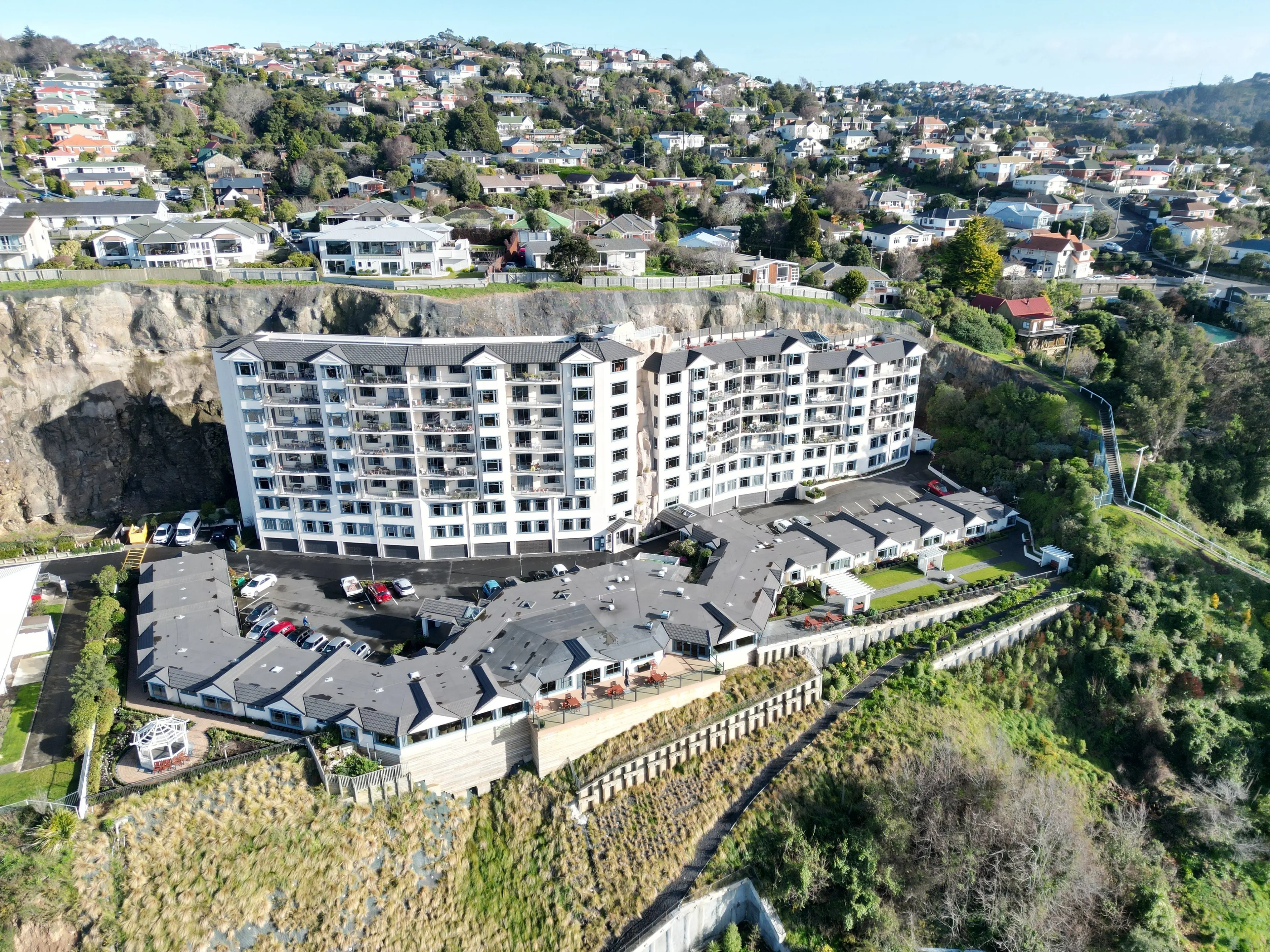
The Infrastructure Commission has declared that health investment is New Zealand’s number one infrastructure priority, driven by our ageing population.
They are right.
But if we continue to define "health infrastructure" as hospitals alone, we will fail — fiscally, clinically and morally.
Hospitals are essential, but they are not the whole system.
Aged residential care is not optional, it is the bridge between hospital and home.
Right now, that bridge is cracking and it is New Zealand families and seniors who are taking the weight.
A day in a public hospital medical ward costs about $1800.
A day of hospital-level care in aged residential care is funded at around $372.
But $372 does not cover the true cost of delivering care.
To ensure providers at least break even — let alone reinvest in buildings, equipment and workforce — the rate would need to be closer to $600 per day.
Even at $600, aged residential care remains roughly two-thirds cheaper than a hospital bed.
Yet we routinely keep older New Zealanders in acute hospital beds because there is nowhere appropriate for them to go.
North Shore Hospital recently created a 20-bed ward for patients who were medically discharged but had no lower-level care option available.
That is not a clinical failure.
It is an infrastructure failure and it is costing us dearly.
By 2043, projections show that nine out of 10 hospital beds could be occupied by someone aged 65-plus.
The average 80-year-old uses 10 times more hospital bed days per year than the average 45-year-old.
In the next 15 years, the 65+ population will grow by 44%, and the 85+ population will double.
This is not a distant challenge, it is a structural shift already under way.
Yet 89% of aged-care facilities are more than 20 years old.
Standard beds are closing.
Psychogeriatric beds have disappeared from entire regions.
Wairoa has had no residential care since Cyclone Gabrielle.
Reefton has been without aged residential care since April 2024.
We are shrinking capacity in the very part of the system designed to relieve hospital pressure.
An efficient health system for older people is straightforward.
A person becomes acutely unwell and is stabilised in hospital.
They move into residential care to recover and receive specialist geriatric support.
Once stable, they transition home with appropriate community supports.
Without that middle step, discharge cannot happen safely and hospitals become gridlocked.
Aged residential care is not in competition with home care or hospitals.
It is the bridge between them.
When that bridge is weak, the entire system stalls.
We have a member ready to restore aged residential care to Wairoa.
They have the workforce, the expertise and community backing.
They are a charity that reinvests every margin back into services and buildings.
What they do not have is capital.
Under the current funding model, there is insufficient return on capital to make borrowing viable.
Banks will not lend into a sector that cannot demonstrate sustainable margins.
If a targeted infrastructure grant fund existed, that provider would apply tomorrow.
Instead, older people must leave their community.
Families travel long distances.
Hospitals hold patients longer than clinically necessary.
This is not inevitable, it is a policy choice.
We recently applied to the Infrastructure Priorities Programme seeking consideration of an Aged Residential Care Infrastructure Grant Fund, modelled on Australia’s capital assistance programme.
Our proposal did not proceed beyond triage.
We were told it did not demonstrate sufficient alternative options and did not meet national cost thresholds.
Technically, that may satisfy process.
Strategically, it misses the point.
Aged residential care is not a niche service, it is core health infrastructure.
It determines whether hospitals function.
It determines whether the government can achieve its target of reducing 200,000 hospital bed nights.
It determines whether we pay $600 a day or $1800 a day.
That is nationally important.
Australia understood this.
Following its Royal Commission into Aged Care, it established a capital assistance programme worth nearly a billion dollars over four years, with ongoing funding thereafter — including targeted streams for urgent regional gaps.
We are not calling for a royal commission.
We are calling for urgency.
A $150 million aged residential care infrastructure fund over four years — with an additional targeted regional stream — is modest compared to hospital expansion costs.
It is prudent compared to the cost of system inefficiency and it is essential if we are serious about keeping older New Zealanders close to their communities.
Very expensive hospitals are the crisis response.
Aged residential care is the stabilisation platform.
It is where older New Zealanders recover with dignity, it is where hospital beds are freed.
It is where families regain breathing room.
Without it, the system jams.
We can continue to pour capital into acute capacity and wonder why pressure never eases or we can strengthen the bridge that allows flow from hospital to home.
The demographic wave is not coming. It is already here.
The question is no longer whether we need to act.
It is whether we will act before the strain becomes a crisis that forces us to.
• Tracey Martin is chief executive of the Aged Care Association.