
PHOTO
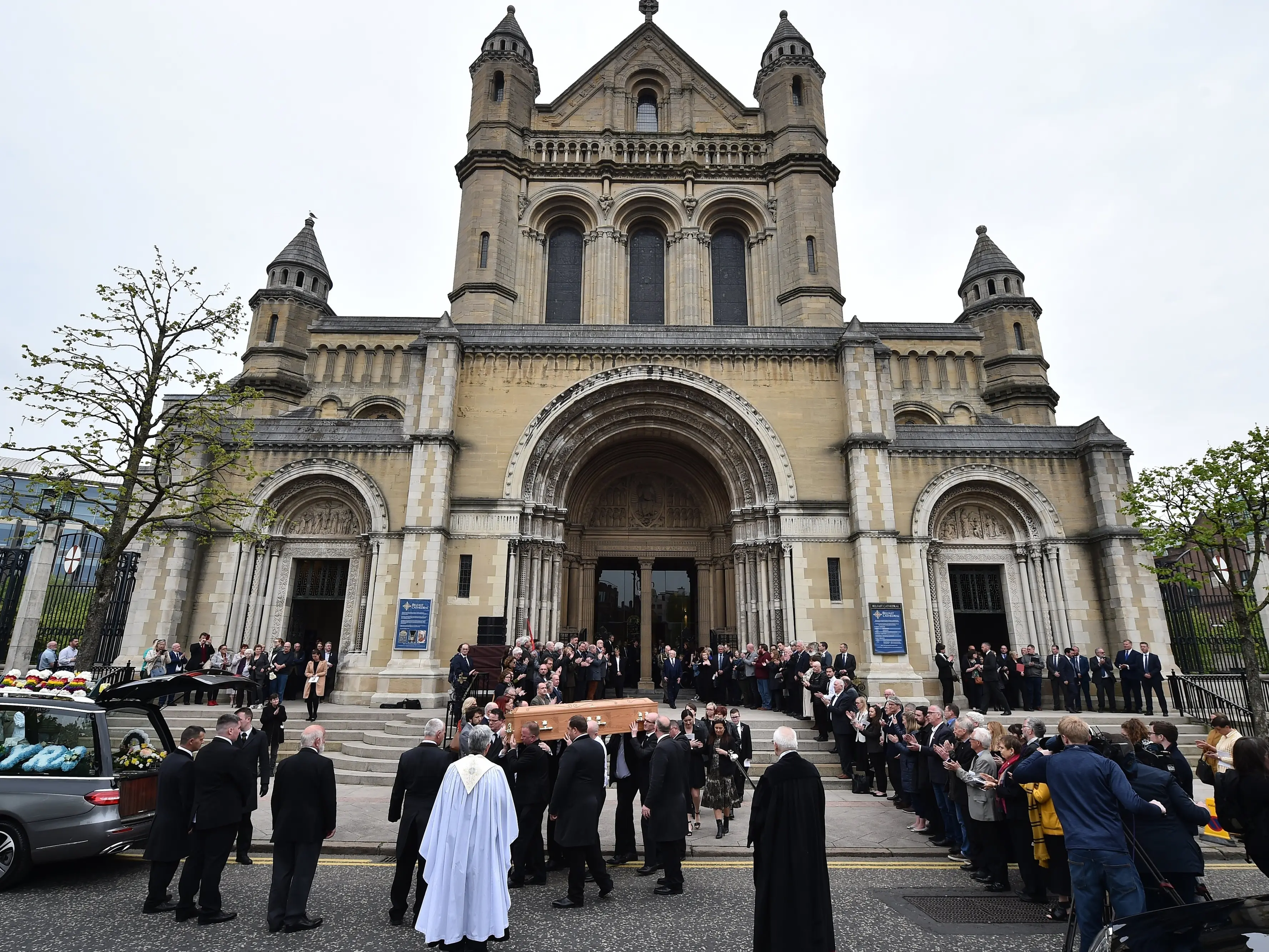
In 35 years of ministry, I have taken many funerals. Many for those who died gracefully in old age, many for those whose lives were tragically cut short and whose deaths felt unbearably wrong, and some for those who had slipped from public notice long before they died.
One of the hardest funerals I ever took was for a man widely admired, a pillar of the local community. Reliable, generous in public, well known. The chapel was full.
But there was another truth.
Within the family was a dark secret long kept from public view: the deceased had been a violent and abusive man, sexually and psychologically.
There were, in effect, two sets of mourners present that day: those who came to celebrate a life of public esteem, and those who came only out of familial obligation, carrying wounds no speech could honour and no hymn could erase.
What does a funeral do with that?
Many funeral services today are described as "celebrations of life". They focus on stories, achievements, personality, favourite songs, photographs and fond memories.
But not every life lends itself to celebration.
Some lives are mixed. Some are fractured. Some contain public virtue and private cruelty. Some leave behind affection in one corner and trauma in another.
Others end in loneliness, addiction, estrangement, or obscurity. There may be few achievements to list and fewer warm memories to share.
When that happens, the modern language of celebration can feel thin, inadequate.
Honouring the dead by telling the best story we can about their lives works well when the story is largely good.
But what if it isn’t? What if there are two stories in the room?
At the funeral I have described, I knew that if I simply praised the man’s public virtues, I would betray those who had suffered privately.
Yet if I publicly exposed family trauma, I would turn the service into something else entirely. I could neither canonise nor condemn.
This is where older religious traditions may still have something to offer, even in a secular society.
At its best, a Christian funeral is not a reward ceremony for the deserving. It is not a declaration that the deceased was exemplary.
It is not a denial of wrong. Nor is it dependent on how much can be fondly remembered.
Instead, it begins with a different premise: that human beings are complicated creatures, capable of generosity and selfishness, tenderness and harm, courage and cowardice, often in the same life.
There is a word for this realism: sin. It is not a fashionable word, and it has often been misused. But properly understood, it means we are not simply the heroes of our own stories. We are morally mixed, and our failures can wound others deeply.
That may sound bleak, but it opens the door to something else: grace.
Grace means that a person is more than their worst act. It means human worth does not rest solely on achievement, popularity, or reputation. It means judgement belongs finally to God and has the face of Jesus Christ, the one who exposed hypocrisy, stood with victims, bore human violence in his own body, and met sinners with truth and mercy.
For the family of the deceased that day, that mattered. They were not there to bless a lie.
For the admirers in the chapel, something mattered too. They needed space to grieve the good they had known.
And for everyone present, the funeral needed to acknowledge that one human life can contain both honour and shame.
If funerals become only curated celebrations, then they risk failing precisely where they are most needed: in the presence of damaged lives, unresolved histories and painful truths. The dead do not always leave us tidy narratives. Sometimes they leave us contradictions.
A good funeral must be able to hold mixed emotions: grief and anger, gratitude and disappointment, sorrow and relief. It must allow some mourners to weep while others feel numb. It must not demand affection where affection was absent. It must preserve dignity without resorting to fiction.
Perhaps that is why, even in a secular age, we still need rituals strong enough to tell the truth about human brokenness, and hopeful enough to say brokenness is not the final word.
• Graham Redding is a lecturer in Chaplaincy Studies, University of Otago.