
PHOTO
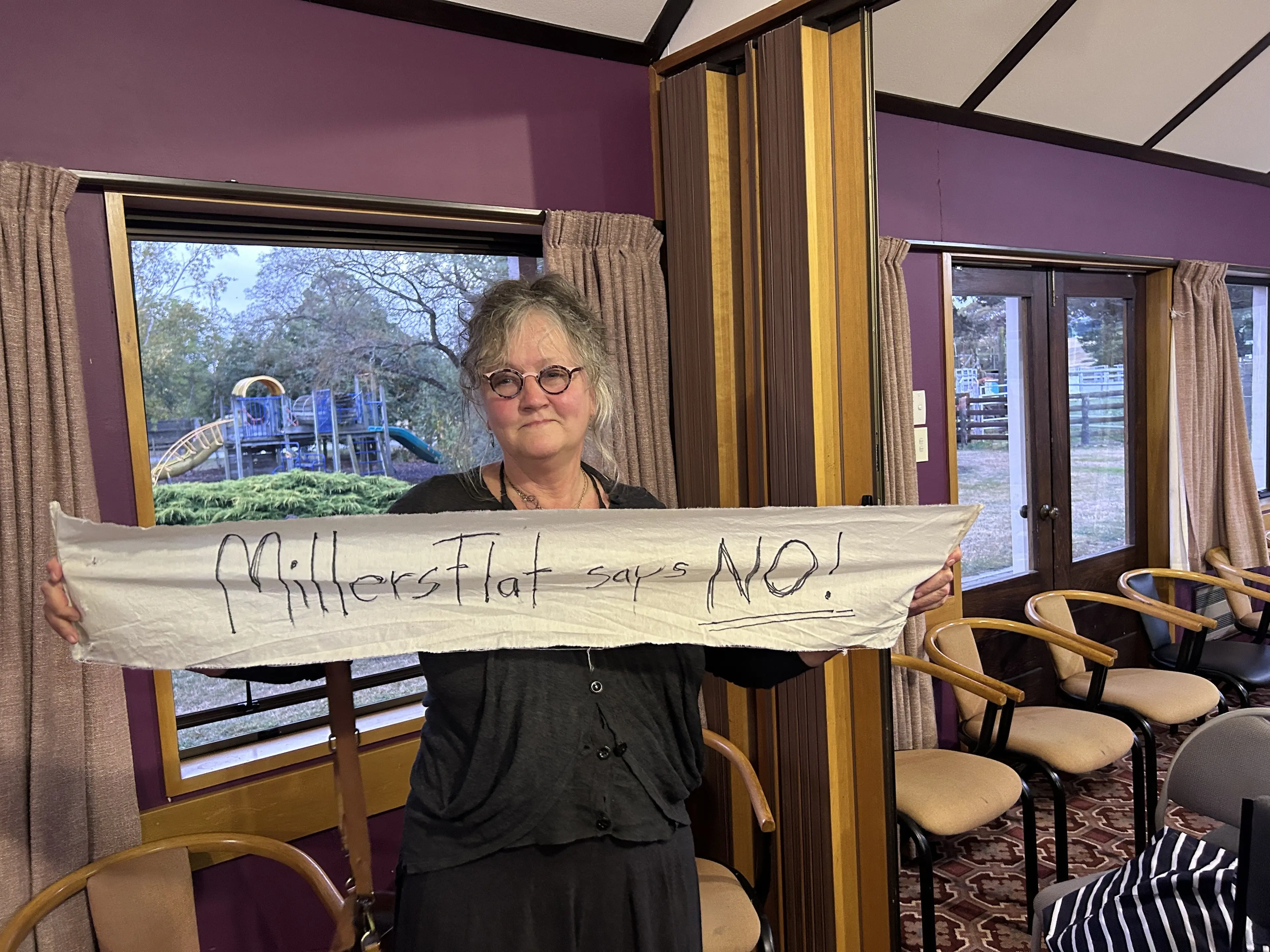
A large crowd with a lone protester filled the Millers Flat hall last night as the Hawkeswood Mining Company outlined expansion plans that include rerouting a stream and two roads as well as creating a heavy vehicle crossing to the existing mine.
Hawkeswood Mining general manager Simon Johnstone said three areas on the outskirts of the town were earmarked for expansion.
Company owner Andrew Hawkeswood said while gold prices had dipped in recent weeks they were still high enough to make lower-grade ground viable.
However, if prices fell they would not pursue the idea.
The expansion includes one block across from the existing mine area and two either side of the town.
One resident was concerned that mining would deter people from buying his property when he wanted to move away.
Protester Marion Mewburn asked when Millers Flat had agreed to become a mining town.
Farmer Richard Hore said the town desperately needed infrastructure and the school population needed a boost, which could come from the bigger mining area.
Mr Hawkeswood said he was building permanent infrastructure at the existing site and hoped to move 15 engineers working in Alexandra to the site.
Increasing their mining footprint would increase the staff to 50, he said.
However, having drilling over their back fence was bad enough without the thought of digging and heavy trucks taking material to be processed, a resident said.
They had moved to Millers Flat for the quiet, rural atmosphere and until now only heard birds.
That sentiment was echoed by a number of the 90-odd people in the room.
Water and fishery experts engaged by the company to prepare reports for a resource consent application also spoke.
Mr Johnstone said the company intended to close Pringle Rd and realign Craig Flat Rd to access the area to be mined and the processing plant as the mining moved around and south of Millers Flat.
Tima Burn Stream would be diverted then reinstated and a heavy traffic crossing would be needed across Teviot Rd for the first part of the expansion, he said.
Anyone wanting to discuss the effect on their property or to see the mine working could contact the office to arrange a time.
The time to gain council consents was unknown. Once that was in place, it was expected the first two blocks of the extension would take about a year each and the larger, southern area about four years if they were run concurrently with the existing operation, Mr Johnstone said.