

Most free school buses will be axed from routes serviced by "suitable" public transport from the beginning of next year under a Ministry of Education proposal affecting students across seven primary schools and Wakatipu High School.
Local school principals say bus frequency would need to at least double to ensure sufficient capacity and have aired serious concerns over traffic chaos, student safety, school attendance and the financial burden on families.
Queenstown Primary School principal Fiona Cavanagh, in her submission to the ministry, said students using the nine school buses it was proposed be withdrawn — currently all at or beyond capacity — would have to take one of five public bus alternatives.
The public buses were also already at capacity at the times required for students to travel to and from school and frequency would need to at least double to manage the numbers.
Her submission included feedback from 39 concerned parents and noted the school had 220 students on the affected school buses, or 34% of its roll.
"The public bus will not stop if it is full. The waiting students may be stranded, late for school, and left in unsafe situations at the side of the road or at an over-capacity busy hub."
Her 5 to 10-year-old pupils could not safely walk to and from the two nearest public bus stops to the school and most affected bus stops lacked safe waiting areas for large numbers.
Along with the dangers of young ones on board buses with adult strangers, she said parents would not have tabs on their children — generally too young to have cellphones — waiting for buses often delayed by Frankton Rd congestion.
By contrast, children were scanned on board school buses under adult supervision.
With parents nervous about public buses, she foresaw many more picking up their children, adding hundreds of extra cars to already gridlocked school zones and central Queenstown at peak times.
She called on the ministry to delay the withdrawal until the Frankton interchange and Otago Regional Council’s intended increase in bus frequency were in place, in 2027.
That would also allow time for the local council "to make required safety upgrades at the public bus stops".
Wakatipu High principal Oded Nathan, detailing his "serious concerns", noted three of the five main public transport routes serving Queenstown schools did not meet the ministry’s own suitability standards in terms of capacity, schedule alignment and journey complexity.
The change would trigger "an attendance crisis" and have severe negative impacts on educational outcomes.
He calculated 458 students risked being late daily, "equivalent to nearly a third of our roll".
Chronic absenteeism and truancy would likely rise.
Students would need to pay $3 a day to use Orbus public buses.
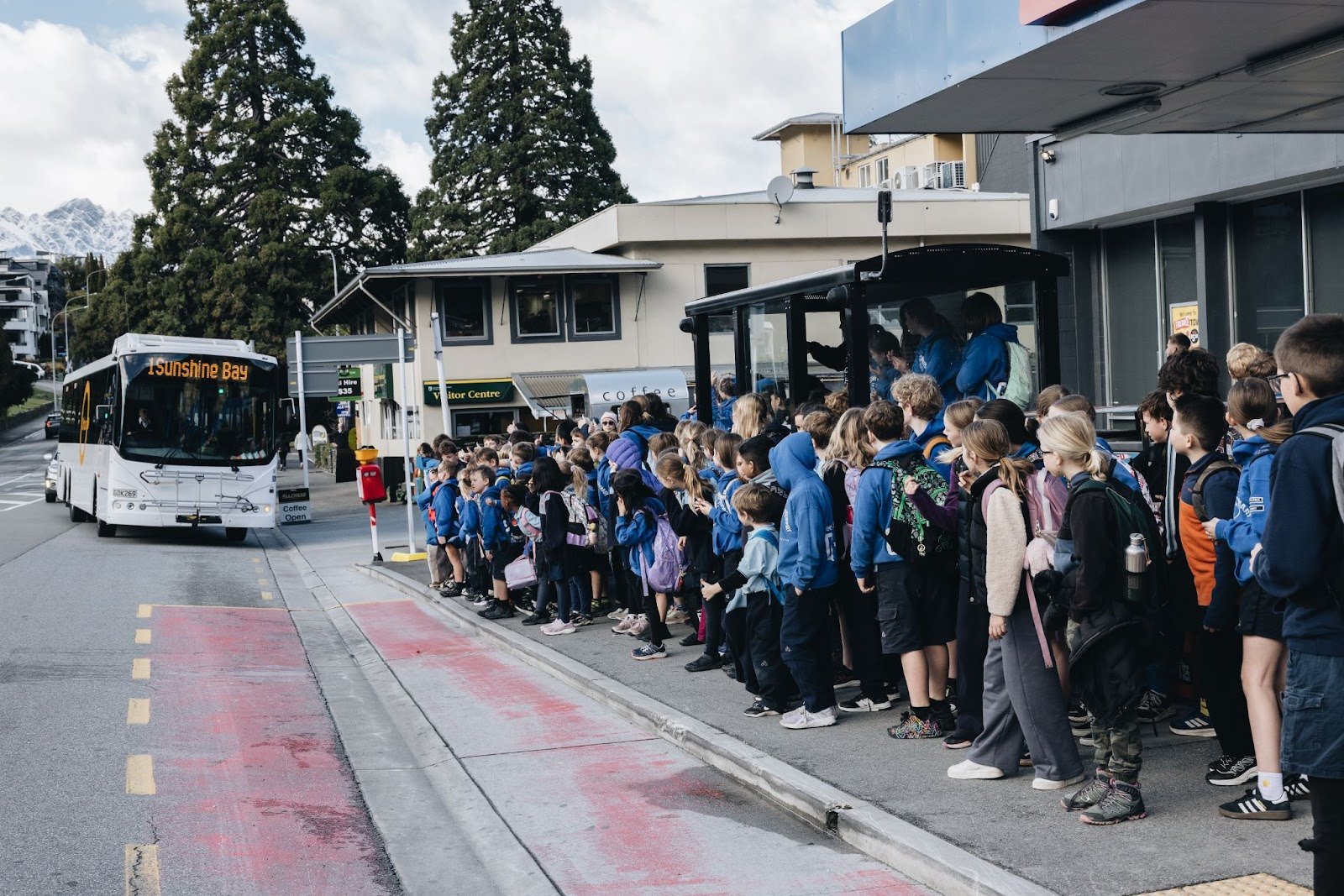
Local active travel advocacy group Lightfoot last week paid a photographer to capture about 120 students jam-packed at the Stanley St bus hub they would be using after school.
Lightfoot’s Amanda Robinson supported the call for the ministry to delay the withdrawal of school buses "because the system and the network’s just not ready for it", although she noted Queenstown residents did need to understand that eventually children would have to use the public bus service.


