"Jobs like this in Wanaka are rare as hens’ teeth. I would never have thought," she said.
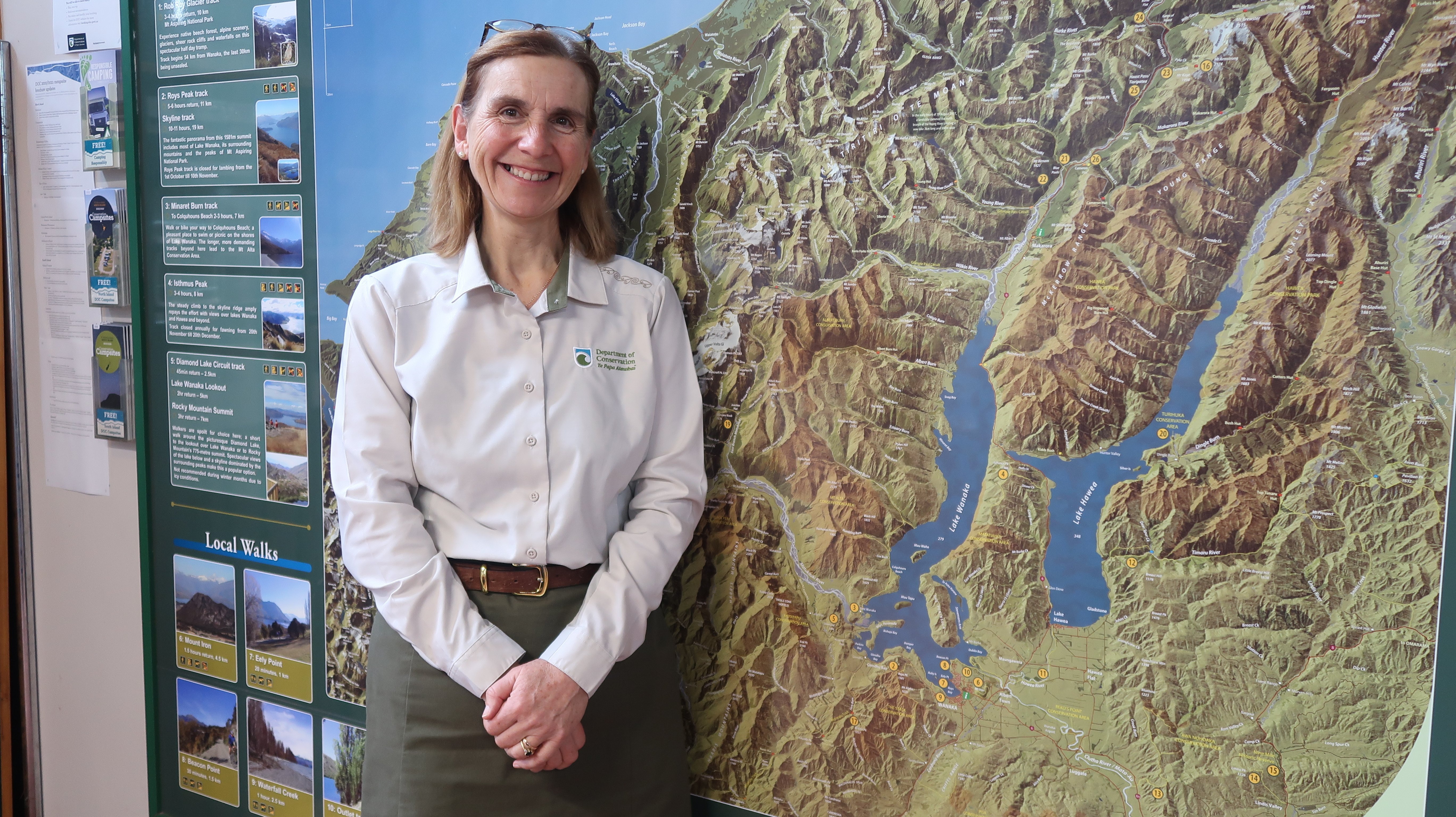
Mrs Holmes moved into the role of Doc Central Otago operations manager earlier this year.
The area hosts some of the rarest plants and animals in New Zealand, everything from skinks and chafer beetles to stubborn remnants of kowhai forests.
She was drawn to Otago by the land and also the people.
"I’ve always worked in the public sector, completely in the values space of making a difference for people ... I get energy and motivation by working with other people and seeing other people thrive," she said.
Mrs Holmes was raised in a family of five children in a rural patch in the Midlands in England.
She never imagined she would forge a career in conservation on the other side of the world.
"In my first life, my paternal grandfather was the local bobby and I always wanted to be a police person ... they said I had to join cadet school, but then they said if I joined the army, I could do three years and then join the civilian police.
"So 17 years later, as a senior detective in the British Army, specialising in child abuse and sex offence cases, working all around the world, I met Jonathan."
The couple applied for residency and moved to Wellington.
Mrs Holmes is qualified as a scenes of crimes officer for the army.
"And then I became a normal person. I would never change any of that time. It is all about who I am," she said.
She began working in various senior management contracts in the public sector.
The couple visited Wanaka frequently for cross-country skiing, multisport and other activities.
A health scare for Mr Holmes prompted them to move to Hawea Flat in 2011.
Mrs Holmes served on local boards, including Wanaka Wastebusters and Challenge Wanaka, and also did other jobs.
She was enticed back to the public sector, requiring an unenviable weekly Wellington-Wanaka commute.
She began spending more time at home last year, and then took up her new job with Doc this year.
Mrs Holmes has begun meeting community groups and building relationships with iwi.
Her other projects include strategies for working with climate change and in the post-Covid-19 environment.
"We have got the most heritage sites across New Zealand in any district, and when I say that, I am talking about colonial heritage with all the gold, but also all the iwi heritage, which we are discovering more and more of.
"It is just so exciting."
Preparing for next year’s forecast big beech mast season was front of her mind, including putting in place the predator control programme.
"All of that we can’t do without the amazing community groups that we have, such as the Matukituki Trust or the Central Otago Wilding Conifer Group, Ngai Tahu and Manuhaera Trust," she said.
Doc staff were "just fantastic", she said.
"Everyone is passionate about conservation ... They’ve got this values-based link, whether they work in IT in Wellington or are a hut warden. Everyone connects."
- By Marjorie Cook