
PHOTO
Anyone running from the long arm of the law at night should watch out — Rico will see you long before you see him.
Senior Constable Tom Evans, of Invercargill, is very proud of his police dog Rico, as tracking is the pitch-black German Shepherd’s greatest strength.
Snr Const Evans has had Rico at his side since the dog was 8 weeks old and the pair have formed a strong bond through the past two years.
"It’s all games and fun at the start. They don’t realise that they’re training, but they are. So you create that bond over time through that training."
Around 14 months old, the formal training begins; the pair worked together at the Trentham dog training centre and were now starting their career together in Invercargill.
"You spend so much time with that dog while you’re training — both informally for the first year and then formally for the second year — you create a pretty good bond with him."
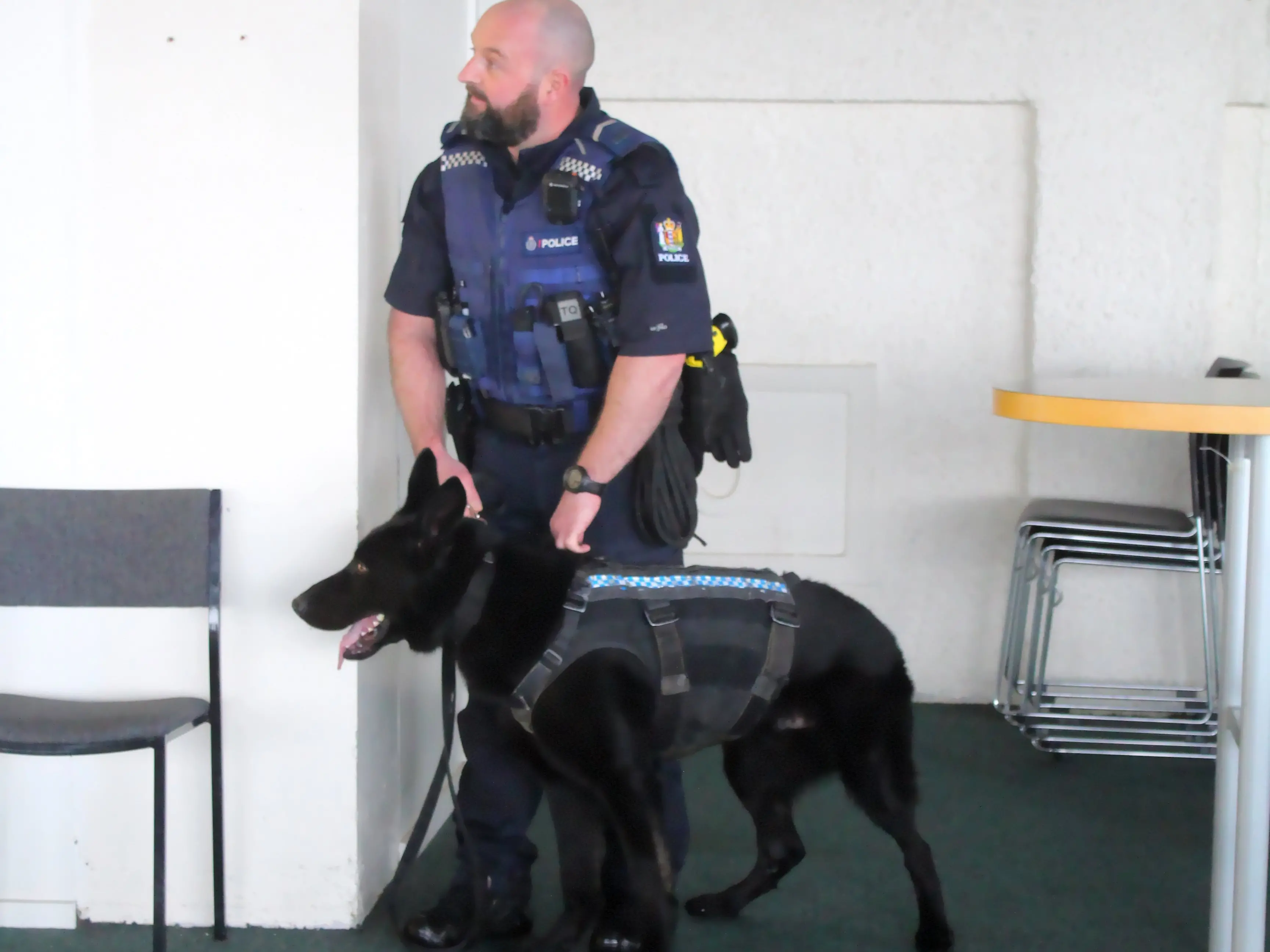
Spending all that time together was all part of building the connection needed to work effectively and safely in the field under pressure.
Snr Const Evans was a seasoned police team member of 14 years — after working the front line and as a CIB detective, he jumped at the chance to work at his dream job as a dog handler.
"It’s every little kid’s dream to work your own dog and catch baddies."
He had no qualms about moving south from Hamilton with his family.
The change in role meant more time spent working at night alone rather than with a big team.
"The only thing to talk to is your dog," he said.
"You spend a lot of time with your dog ... because you do an eight-hour shift with your dog, then you come home and your dog’s still with you.
"You’re looking after and running it and exercising it, feeding it. So you spend a lot more time with yourself than you do with your family."
While Rico was a fearless front-line team member whose size could be intimidating, he was also very much a member of Snr Const Evans’ family.
"My [children] have this funny thing, they don’t quite get that I am a dog handler, they think that I am a policeman who takes their pet dog to work every day.
"So he’ll do things like run around with my [children] and chase a ball and lie on his back to get his tummy rubbed — which I think to some people, they can’t comprehend that this big police dog can act like that."
Invercargill area manager of prevention and armed offenders squad (AOS) commander Andrew Karsten said having dogs on the front line team was a real tactical asset and a great "tool to have in the toolbox, much like search and rescues".
Handlers did not like putting their dogs into high-risk situations but understood the reassurance they provided to the public and police team.
Invercargill had four dog handlers, but only two were operational as two more were in training.
Most dogs were operational by 2 years old but their retirement age depended on the individual dog and if they were a general task dog or AOS trained.
Snr Const Evans said being a qualified AOS officer meant Rico could be qualified for AOS development, which he planned to assess in the next couple of years.
But graduation was not guaranteed as the training had a high failure rate. Only about 25 dogs were nationally AOS qualified, he said.