
PHOTO
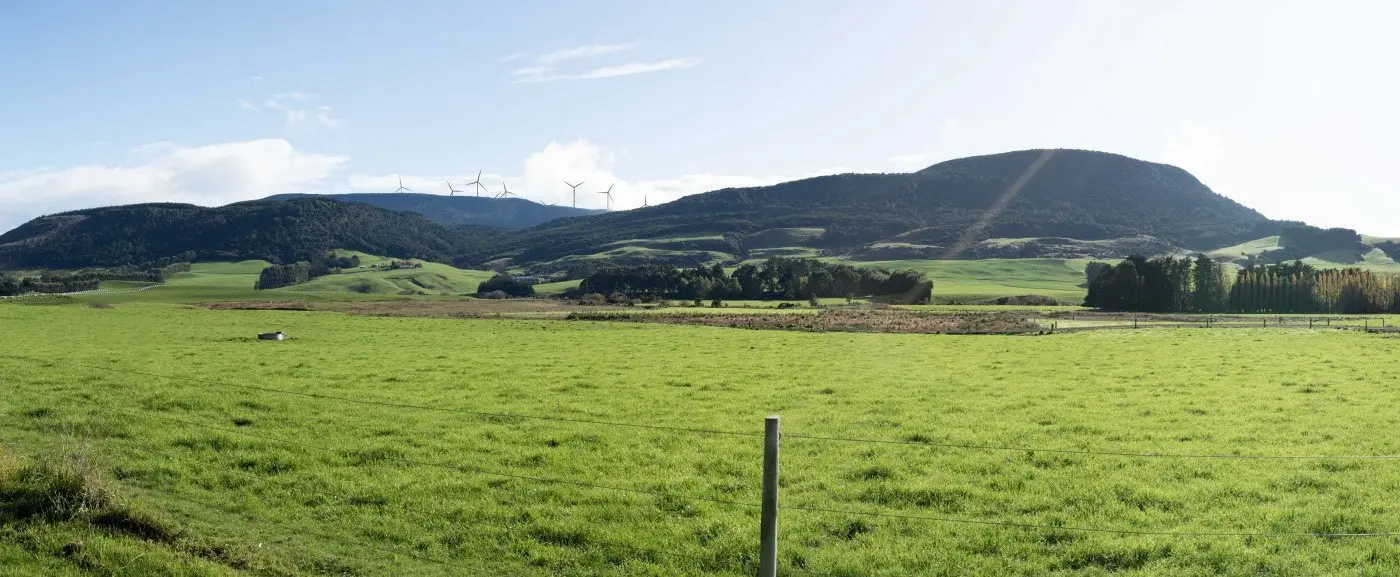
The Slopedown wind farm in Southland has been given draft approval, national and regional benefits winning out over the impact on the local environment.
Contact Energy has applied under fast-track legislation for the 55-turbine wind farm, seeking a consent for 30 years. The panel overseeing the application released a draft decision this week and has invited comments from interested parties.
The panel, which is chaired by Ian Gordon, a Wellington barrister, has given interested parties until March 23 to make a comment.
Contact Energy chief executive Mike Fuge said the company wanted to be a leader in the future of renewable energy and the planned wind farm could power the equivalent of 150,000 Kiwi households and bring more than $400 million to the Southland economy
"It’s been a long journey to get to this draft decision. We will be reviewing the proposed conditions over the coming days and continue to work through the process," he said.
In the decision, the panel said the Fast-track Approvals Act put emphasis on the benefits of the project over adverse effects.
"In short, the project will generate significant regional and national benefits in terms of renewable electricity generation to support economic growth and decarbonisation. Those benefits will come with adverse impacts, but these are not so great as to be out of proportion to the benefits," the panel said.
Under the Fast-track Approvals Act, legislation puts weight on the benefits of the project against the adverse effects.
Contact had told the panel there was therefore a clear tolerance for adverse impacts, provided they were not out of proportion to the regional and national benefits.
"The ‘proportionality’ consideration means that the more significant the regional and national benefits of a proposal, the more significant the adverse impacts would need to be before the proposal could be declined," Contact Energy had told the panel.
The panel accepted the interpretation of the limited scope to decline an application.
Conditions imposed meant any adverse effects would be no more than minor or otherwise acceptable, it said.
Conditions around ecology and land management would lead to increased protection of Jedburgh Station,
Loss of woody indigenous dominant vegetation within the project footprint would be alleviated by a stock exclusion fence around a 245ha area of manuka dominated bush on the station.
Other areas would be fenced and targeted to grow indigenous plants and wetlands.
There would be targeted deer and pig control across the Jedburgh Plateau, along with pest control to protect skinks, lizards and other rare animals.
A bat management plan would also have to be drawn up and that plan would be reviewed by a team of bat experts. The area was known to be home to long-tailed bats.
During the operation of the project, Contact Energy must implement acoustically based live curtailment at nine different turbines.
Sensors and frequency analysers, making up a bat detection system, must be installed on the nacelle of each of the wind turbines.
The bat detection system installed on the wind turbine must be connected to the wind turbine control system in order to feather and curtail the operation of the wind turbine when the bat detection system detected a long-tailed bat. If no further bat activity was recorded for 10 minutes, the wind turbine may restart its operations.
The applicant would set up a community fund with an initial contribution of $200,000 for the purpose of providing grants for the benefit of the local community. Contact Energy would contribute a minimum of $70,000 a year during construction and operation of the project. It would contribute an additional $250 a year to the fund for every MW above 200MW of installed capacity.
After interested parties sent in their views, Contact Energy would then comment, and a final decision was expected in the middle of next month.