
PHOTO
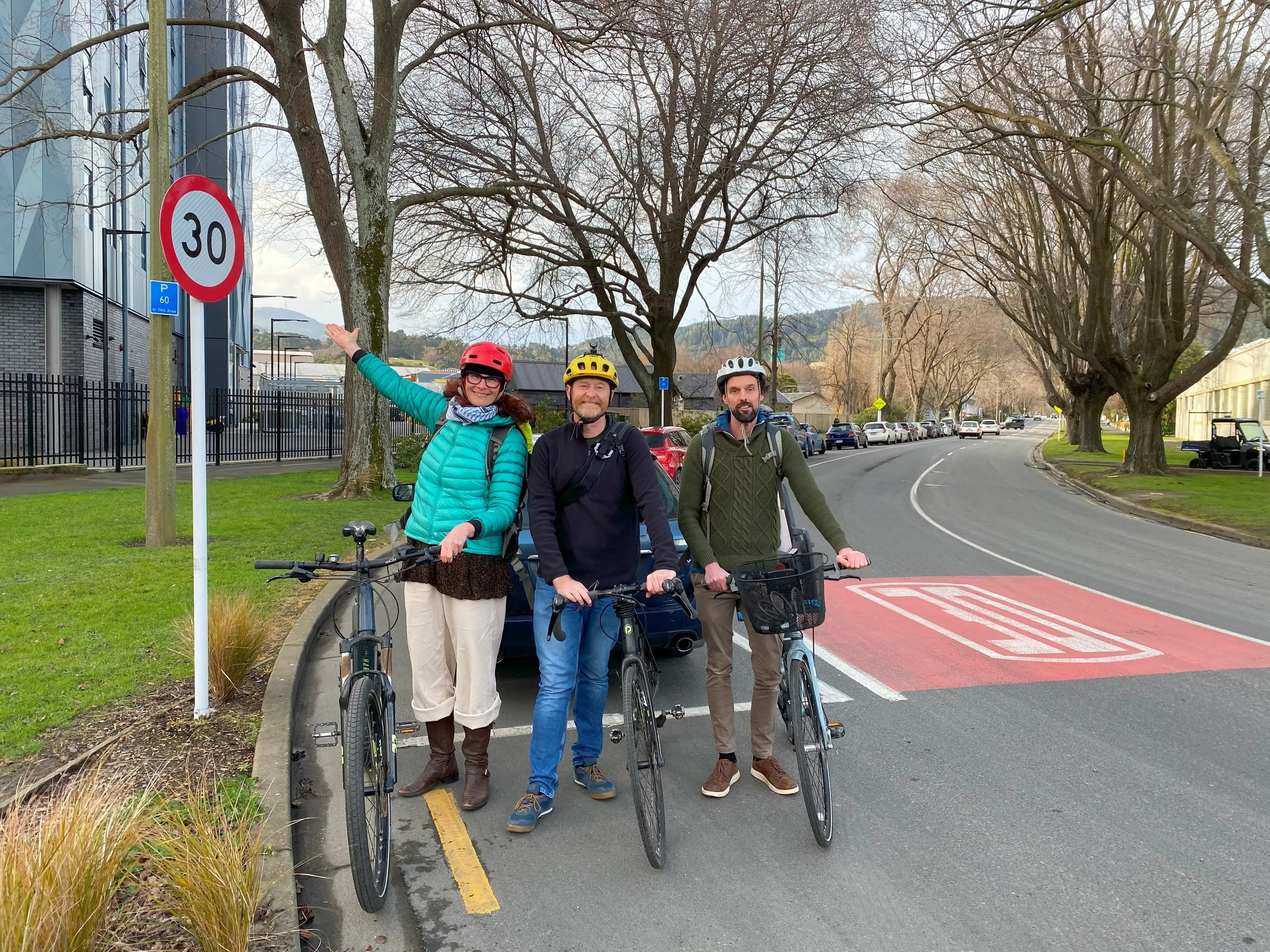
The need to encourage active transport and safe infrastructure for cycling and walking are issues close to the hearts of local advocacy group Spokes Dunedin.
As the infrastructure lies within the responsibilities of local government, Spokes Dunedin has launched a project to inform voters of how candidates in the upcoming elections regard active transport.
The project is the brainchild of Spokes Dunedin committee members Dr Nathan Kershaw, John Parker and Heike Cebulla — who is herself a candidate for Dunedin City Council.

Each of the candidates for Dunedin City Council, Otago Regional Council, and community boards are being sent a series of questions via email exploring the topic of active transport and its infrastructure.
The questions highlight candidates’ thoughts on making cycling easier and safer, top priorities for infrastructure, and improving quality of life in public spaces.
Their answers will be collated and distributed to Spokes Dunedin members as well as posted on the group’s website spokes.nz. Dr Kershaw said Spokes Dunedin was focused on making Dunedin better for cycling, "and therefore better for everyone".
"We work to promote active transport of all kinds, which can be using buses, cycling, or walking and to highlight the need for safe spaces for people to do those things," he said.
"We are also seeing a lot more people, including older people, riding e-bikes around our cycleways, which is great.
"The most important thing is to make these transport networks fit for purpose."
Ms Cebulla said another important aspect of active transport safety was in encouraging co-operation between drivers and those on bikes and on foot — particularly around sharing spaces.
"If we can educate and encourage people to share the space on our roads, it is better for everyone," she said.
There were roads in Dunedin, such as Anzac Ave, where there were safe speed limits in place, but these were not always observed by drivers, which put cyclists at risk.
"On Anzac Ave [between St Andrew St and Castle St], the speed limit is 30kmh, but many drivers don’t stick to that speed, and that puts cyclists and pedestrians at risk," she said.
This was the type of issue that members of local government should be aware of.
Dr Kershaw said the provision of safe spaces for active transport was being made more difficult by a "hostile" government, which seemed keen to get as many cars on the roads as possible.
"So, we need councillors who are prepared to stand up for it."
Spokes Dunedin had a good relationship with the city council, which regularly liaised with the group and supported events such as the annual Bike Breakfast.
Mr Parker said Spokes Dunedin wanted to highlight that better cycling infrastructure was better for all.
"We don’t want it to be an ‘us and them’ situation.
"If we have safe spaces for cycling, it’s better for everyone."
Forums
Election forums in the next week:
Dunedin Area Citizens Association Inc meetings, 7pm-9pm
August 21 — Fairfield Community Hall
August 26 — St Peter’s Church hall, Hillside Rd
August 27 — Waikouaiti Events Centre
August 28 — Pioneer Hall, Port Chalmers
The Star will publish election forums week-to-week.
If you wish to list an election forum, please email brenda.harwood@thestar.co.nz