
PHOTO
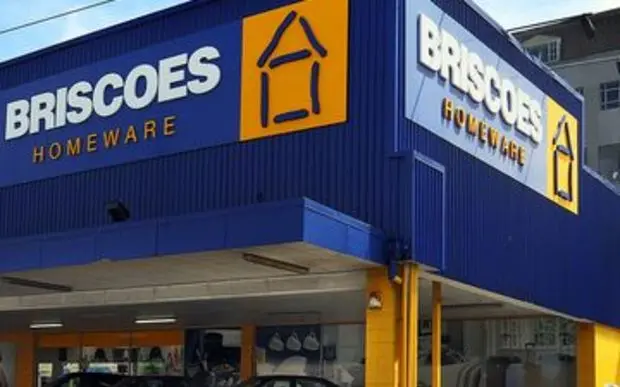
Facial recognition technology is being trialled at 18 Briscoes and Rebel Sport stores across New Zealand.
Briscoes Group, the country's fourth biggest retailer, is testing the technology in its North Island stores first.
Foodstuffs South Island and North Island have now deployed FRT permanently in 28 supermarkets, while hardware giant Bunnings is about to test the technology too.
Briscoes Group is halfway through a year-long facial recognition trial, which started in September 2025 and has been outlined on its website.
"For our customers’ safety and the safety of our team members, we are trialling facial recognition technology (FRT) at some of our stores to help us reduce the recurrence of harmful behaviour incidents - being crime, violence and threatening or aggressive behaviour," the Briscoes Group website says.
"The trial will be taking place in 18 Briscoe Group stores and is intended to run for up to six months. Each store will have clear signage at the entrance.
"We have seen a significant increase within stores in relation to assault (physical and verbal) and other aggressive, violent and threatening behaviour towards our team members and/or customers.
"We consider this type of behaviour as a harmful behaviour incident, and where a person has been involved in such incidents, they will be trespassed and added as a person of interest to our FRT database.
"With the use of FRT we hope to prevent harm to our team members and customers, making our stores a safe place to work and shop."
Briscoes Group told RNZ it has a thorough process is in place to ensure the technology does not negatively impact customers
Retailers use FRT to create a biometric template of every shopper's face, then check it against a watchlist of known risky people. Images that do not match are deleted quickly, they say.
Proponents say retail violence is growing and the tech makes stores safer.
In the UK, the ongoing debate about FRT in stores has also been about its use to combat shoplifting: "So much theft is driven by addiction - cameras alone won't solve that," a police outreach worker told the BBC.
Asked by RNZ if Briscoes anticipated the tech would cut down on theft, it said removing violent people from stores "as a byproduct, may reduce the loss".
"However, this was not the reason for the FRT trial, this is about the safety of our team members and customers."
Six other big retailers not using it yet
Briscoes is using a system that Auckland company Auror launched in NZ last September.
Auror said in an email to the sector earlier this month: "In New Zealand, leading retailers are already operating ASR (Auror Subject Recognition), building practical experience with governance frameworks, community engagement, and day-to-day controls that maintain trust while protecting teams."
It declined to identify which retailers when RNZ asked.
Bunnings and Briscoes were among 11 big box retailers and supermarkets that signed a statement in June 2025 supporting facial recognition to "protect workers and customers" following the Privacy Commissioner giving a cautious tick of approval to the Foodstuffs trial.
Of the others who signed, The Warehouse Group, Farmers, Mitre 10, Woolworths, Spark, and One NZ said they were not currently using FRT. Michael Hill Jewellers did not respond to a request for comment.
'Violent, threatening or aggressive'
Bunnings is about to begin its own trial in two Hamilton stores, Te Rapa and Hamilton South, in April.
"The FRT system is calibrated to an accuracy level of 93 percent - meaning only matches with an accuracy rating of 93 percent will trigger an alert," it said online.
Foodstuffs North Island is using FRT in 15 Pak'nSave stores and 10 New Worlds.
Foodstuffs South Island has deployed it in three Christchurch stores, where a trial ended in January.
"Only people who have previously been violent, threatening or aggressive in our stores are entered into the FR watchlist," the South Island chain said on its website.
It told RNZ on Wednesday: "We're taking this step by step. The stores in the trial were picked for a reason - they've got solid reporting processes, experienced teams and they've been dealing with threatening and harmful behaviour, so they're well-placed to see if this makes a difference on the shop floor.
"We're still working through the results, and any call on adding new stores will come down to what's actually working, how it stacks up from a privacy point of view and whether stores have the right systems and know-how to use it properly."
The four big retail groups all said only trained staff used the system. They all said they had done privacy impact assessments and engaged with the privacy commissioner.
Bunnings recently had what observers considered a partial win against a challenge in Australia to its use of FRT.
Auror, perhaps not surprisingly, saw it that way: "In Australia, the recent Bunnings appeal decision has opened the door to exploring how FRT can be used in retail settings for the purpose of crime prevention and safety. This decision gives retailers greater confidence," said the company, which last September said it had only recently become comfortable that the tech was accurate enough in identifying people that it should begin offering it to retailers.
Bunnings on its website said in New Zealand it had engaged a Māori digital sovereignty expert to align with tikanga Māori and also got independent research to understand what New Zealanders think about FRT.
Tech not linked to police
Briscoes said it let customers know about the trial with signs on the store doors.
Only people who posed a risk to team members and customer safety were uploaded to its watchlist, it said in a statement. That comprised customers who offended against staff or were threatening physically or verbally aggressive, and any known to carry weapons.
The system was not linked to police. Instead, a manager would call police to remove someone, but not approach the person themselves for safety's sake.
Staffers were grateful for it, Briscoes said.
"We will consider any future deployment based on the reduction of harmful events across the full trial period."
Rule three of the recently finalised national biometric code said companies using FRT must tell people it is being collected and why, say how long data is retained for and make it clear how they can complain or access and correct any of their biometric data that is held.
Auror said its system allowed retailers to focus only on known high-harm offenders, and had multiple points where humans intervened, but with strict access controls.
"It does not allow retailers to retain data of regular shoppers, it reduces bias by prohibiting the collection of sensitive characteristics, and ensures data is not shared between organisations."
Auror also operated an automated number plate recognition system for stores that generated over 10,000 reports of potential theft or assault or similar crimes to police a month. But it did not provide police access to FRT information, it said.
'The last thing you want to do... is to violate consumer trust'
Following Bunnings' announcement, Massey University marketing professor Bodo Lang warned a botched rollout of facial recognition technology could be costly for retailers - and said a business should signal its intention well before implementation.
"Many, many companies spend tens of thousands, or sometimes tens of millions of dollars in advertising to build their brand and get people in the store.
"So the last thing you want to do as a business is to violate consumer trust and I think by front-footing the issue, providing transparent information, you can avoid any erosion of trust."
He believed most people would accept it in retail as a "necessary evil" but such support could be easily lost.
"I think the public opinion would swing hard against it if they had a sense, a perception, an inkling that this might also be used for other purposes."
Assurances it was for "one purpose, and one purpose only", was therefore key to public buy-in.
Security consultant Nicholas Dynon said New Zealand was a laggard on research into how people felt about the tech, with just some data from the Office of the Privacy Commissioner on public attitudes towards privacy, including FRT.
"So we do have some numbers - but they are very limited and they are general," said Dynon, who wrote 'Licence to Operate' for the National Security Journal about public buy-in of FRT.
"What we don't have is that sort of objective peer-reviewed understanding of how the public in New Zealand feels about FRT."
Research in other countries showed acceptance varied depending on the environment, and that it had low rates of social licence in retail, compared to, say, at airports, he said.
Dynon also called into question the justification often used for deploying facial recognition, that retail violence was on the up and up.
The stores participating in the current Briscoes and Rebel Sport trial are:
- Briscoes and Rebel Sport Botany
- Briscoes and Rebel Sport Wairau Park
- Briscoes and Rebel Sport Panmure
- Briscoes Te Rapa
- Briscoes Rotorua
- Briscoes Hastings
- Rebel Sport Atrium
- Rebel Sport Hastings
- Rebel Sport Henderson
- Rebel Sport Morningside
- Rebel Sport Rotorua
- Rebel Sport Newmarket
- Rebel Sport Porirua
- Rebel Sport Mt Roskil
- Rebel Sport Manukau
-RNZ and Allied Media