
Fuel escalation level based on severity of impact


Despite the conflict in the Middle East and growing worries over global oil supply, New Zealand remains at the lowest level of official concern - but that could quickly change.
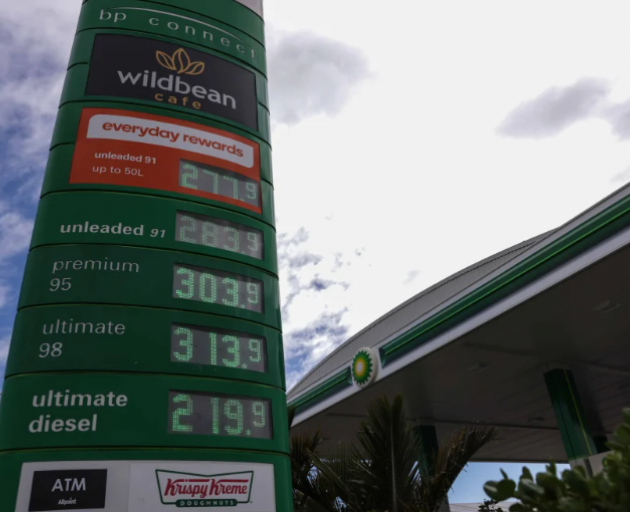
Motorists are being urged not to panic-buy fuel amid going concerns about rising prices, with the average 91 petrol price around country surging past $3.
The pressure on fuel prices is being largely driven by the effective closure of the Strait of Hormuz, as Iran launches attacks to halt maritime traffic.
The strait provides the only sea passage from the Persian Gulf to the open ocean. The area is critical because about 20% of the world's oil consumption or 20 million barrels a day, usually passes through it.
The National Fuel Plan - published in 2024 - includes details on how New Zealand could respond to a fuel supply disruption or emergency, with four levels of concern, similar to the levels seen during the fight against Covid-19.
The plan does point out that many events could disrupt fuel supply, including compromised overseas supply, pipes being sabotaged, earthquake or a damaged road network.
The Ministry of Business, Innovation and Employment (MBIE) says the country is not experiencing the types of sustained supply disruption that the would lead to the emergency measures outlined in the plan, and confirmed last week that Aotearoa remains at the lowest of the four levels.
But it has convened the Fuel Sector Co-ordinating Entity (Fuel SCE), comprised of officials and members from key fuel companies, and "increases lines of communications with the fuel industry and oversight of fuel imports".
The fuel escalation process in the plan includes four levels. The plan says an emergency may progress from one level to the next - due to something like a damaged pipeline that is taking longer than expected to repair - or move straight to a high level, in the case of a "sudden, major infrastructure disruption expected to last longer than a few days".
Level 1: Minor impact on fuel sector
As at March 17, New Zealand is at this level. Under it, there is the potential for escalating fuel supply disruption to higher levels, but "minimal current impact on fuel distribution".
The Fuel SCE is convened to monitor the situation and start planning for potential disruption and escalation.
Fuel companies are also directed to start planning for possible disruption.
Level 2: Moderate impact on fuel sector
In this level, "most" customers are still serviced, but there is a risk of shortages to critical fuel customers.
Critical fuel customers are organisations seen as "critical to response activities and have a reliance on fuel resupply to carry out response activities", including emergency services, the Ministry of Health, Corrections and the New Zealand Defence Force.
The Fuel SCE monitors demand levels and resupply options, and also coordinates government support "as required" for the fuel sector.
This may include air or overland vehicle transport; a range of support by the Defence Force, where resources are available, such as NZDF ships, drivers, engineering resources or specialist aviation resources; assistance with sourcing key international resources including barges and fuel air transport capacity; and relaxation of regulations, such as allowing night-time fuelling to increase distribution.
Fuel companies are also required to take steps to ensure critical customers are supplied and government powers may be used to enforce this.
Level 3: Major impact on fuel sector
Under level three, there is a "serious impact on fuel distribution with severe resource and capacity constraints and multi region and/or major impacts to critical customers".
Additional measures that may come into play at this level include:
• Opening hour restrictions (reduced hours, only open on alternate days)
• Setting maximum purchases at point of sale - either price or volume,
• Restricting sales into containers (to discourage hoarding), and
• Price limits can be set at unmanned fuel retail outlets (e.g. truck stops).
• There will also be critical customer prioritisation measures under level three.
"Critical fuel customers will continue to source fuel from, and be supplied by, their regular fuel suppliers until it is no longer possible or practicable to do so."
These additional actions will be implemented and coordinated through the Fuel SCE, which will also monitor fuel companies' compliance with any directions issued by the Minister for Energy or Civil Defence Emergency Management Controller.
Level 4: Severe impact on fuel sector
At this highest level, there is a severe impact on national fuel supplies.
As well as all the actions seen in lower levels, fuel companies will be required to supply only critical fuel customers and these customers can be serviced by any supplier.
Public help
As well as the fuel escalation process, the National Fuel Plan also notes that the public can be encouraged by the government and the fuel sector to voluntarily reduce fuel consumption.
"This can be achieved through reducing speed on open roads, car-pooling, working from home, checking tyre pressure and reducing unnecessary trips or using other transport modes."
The plan does note that this is "only considered a practicable option when managing a long-term supply disruption where immediate stocks are not at threat", as it could cause panic buying.


