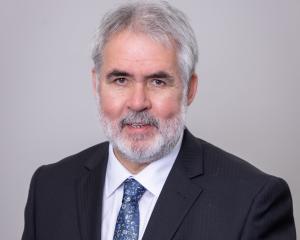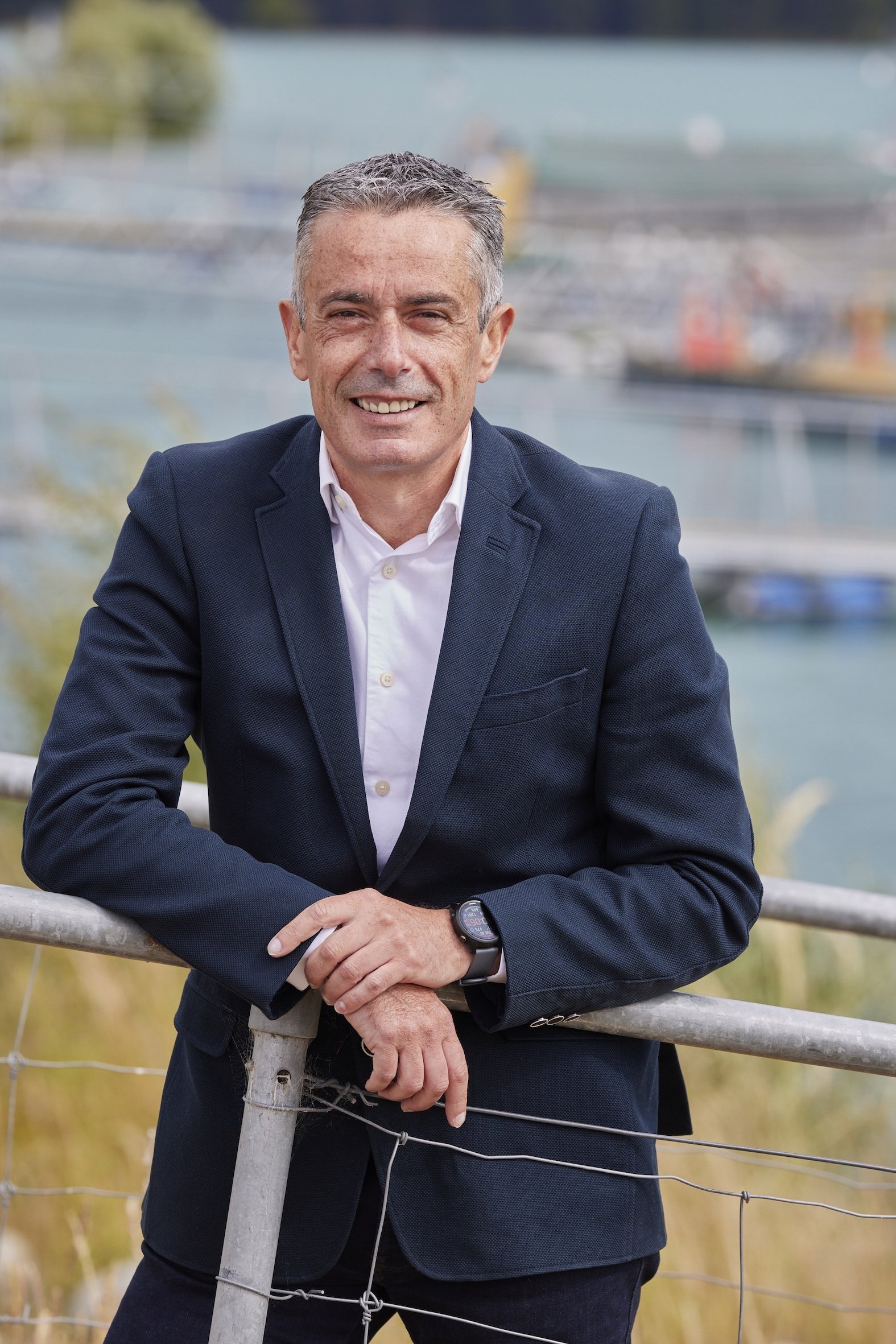
There is a theme when it comes to Todd Grave’s career and it is one that has been a conscious decision for the new chief executive of Mt Cook Alpine Salmon.
He grew up in Southland and said those living in the region had an inherent connection with the land and deriving income from it.
While there had been a "bit of lycra" in the career path of the former representative cyclist, it had been mainly spent in the primary industries.
In announcing the appointment, Mt Cook Alpine Salmon board chairman Sir Bill English said the board was delighted to welcome a leader of Mr Grave’s calibre to guide the company through its next phase of growth.
"Todd is an experienced CEO with deep expertise across New Zealand’s primary and food production sectors, having led teams and businesses in complex, fast-moving environments.
"He brings a strong track record of driving growth and operational excellence, and has already spent significant time with our people, farms and processing operations."
Mr Grave joined the company after four years as chief executive of Meadow Mushrooms, New Zealand’s largest mushroom grower, and five years leading southern meat processor Blue Sky Meats (now Blue Sky Pastures).
Prior to that, he spent nearly a decade in senior marketing roles with dairy co-operative Fonterra, based offshore.
Originally from Invercargill, Mr Grave said he grew up knowing how important the primary sector was to the economy and how everyone in the South seemed to have either a direct or indirect connection to it.
He attended Southland Boys’ High School but was not very present for his latter years as he was racing in Europe with the New Zealand junior road cycling team, living in Bordeaux for two years.
It was an experience he felt very fortunate to have had and it was never his intention to go to university "or wear a suit for a living".
But a back injury that was not resolved saw a doctor eventually tell him that it was time to "get a haircut and a real job".
He did a master’s degree in marketing at the University of Otago, with a side of French, and went straight into Fonterra’s graduate programme.
He became involved in the branded side of the business and every couple of years moved to another emerging or developing market.
He was very grateful for the level of exposure and responsibility given to him at a relatively young career stage and it proved to be an excellent grounding in fast-moving consumer goods (FMCG) and international markets.
After nine years with the dairy co-operative, Mr Grave decided it was time to tick off a bucket list item — to build his own business.
He and a French cycling team-mate started a sportswear business in Asia, making cyclewear, the idea being it was something close to what they knew.
They put an advertisement in a paper on a Saturday seeking seamstresses and turned up on the Monday morning to find 100 job seekers at their empty shell of a factory in Laos.
He spent seven years full-time in the business in Laos then moved it to Thailand.
He is now a passive investor in the business which still produces high-end bespoke triathlon and bikewear.
The experience taught him a lot about the challenges of cost management during what was his first exposure to the operational elements of a business.
From there, it was back to Invercargill and the role of chief executive at southern meat processor Blue Sky Meats, which he described as one of the defining moments of his career.
Coming into that industry with no experience in the sector was a "baptism of fire", and while it was the hardest job of his life, it was also one of the most fulfilling.
The sector was not for the faint-hearted or weak-willed, he said.
The business had been struggling and a reversal in a decline in livestock supply was needed. It also became more operationally efficient and some market-led thinking was injected into the way it worked with customers and farmer suppliers.
He remained connected to the sector as a director of Lumina lamb and he enjoyed that, saying it was an example of lessening the reliance on commodity market pricing.
He enjoyed working with people who had taken a supply chain and turned it into a value chain and he believed that was the future of New Zealand primary products.
Mushrooms came next and he described Meadow Mushrooms as an "incredible business", producing about 9million mushrooms a week, which were all hand-picked and were only ever touched once.
It had a strong brand and position in the market and it had been incredibly well run for a long time. He spent a lot of time working on operational efficiencies and, like Blue Sky, there were good people there from whom he learned a lot.
While consumers probably gave little thought to what went on behind the scenes to produce their mushrooms, it was an incredibly sophisticated science-based business, he said.
Mr Grave’s latest appointment was in an industry by which he had long been intrigued. The government had very defined goals of doubling exports and aquaculture played a significant role within that. That meant the scaling up of both Mt Cook Alpine Salmon’s business and other businesses.
Mt Cook Alpine Salmon operates five salmon farms in the glacier-fed hydro canals that run through the Mackenzie and Waitaki districts.
It owns two hatcheries and has shares in a third, and it owns a large primary processing plant in Timaru and a secondary processing plant in Christchurch, where it produces its Aoraki smoked product range. The corporate office was in Queenstown.
The company employed more than 200 people across Christchurch, Timaru, Queenstown and Twizel, where it was the largest employer.
While Mr Grave would continue to be based in Christchurch, he described Queenstown as his second home. He had close family there and would be spending time in the resort, along with at the other sites.
Most of the sector was farmed in the marine environment and one thing that attracted him to the role was how "genuinely unique" the company’s product was.
King salmon were being farmed at scale with pure glacial water which resulted in a taste and texture unlike other salmon.
"Growing salmon at scale in pure glacial waters — no-one else can say that. And with demand continuing to outstrip supply across the sector, puts both us and the industry in a good position," he said.
Mt Cook Alpine Salmon exported more than 50% of its production to markets around the world. North America was its biggest market, followed by New Zealand and Australia. Offshore, it was sold mainly under the Mt Cook brand, and in the domestic market, via the Aoraki brand.
He hoped that he would be in the position for a long period, saying there was a very good runway of growth planned for the business which kept people engaged.
The company had very good governance, people who were committed to the business and saw its potential, and a great bunch of investors.
While shareholders had gone through some ups and downs, the business was starting to "hit its stride now" and the undeveloped potential was massive.
The company recently reported a record first quarter, following its strongest financial year to date, with revenue up 37% to $53.5million.
Its artisan salmon brand, Aoraki, was also the only producer to win awards for two products at the recent New Zealand Food Awards.
"There is a very solid growth plan for the next five years and a strong team that’s starting to see the results of their hard work. The strong financial performance reflects many years working to strengthen the business and de-risk aspects of what is, by nature, a biological system. I think the company is now beginning to fulfil the vision that shareholders have had for a very long time," he said.
Sir Bill paid tribute to former chief executive David Cole, who announced his retirement last year, for his 12 years of "exceptional service".
"David Cole’s steady leadership, resilience and long-term vision have been fundamental in strengthening the company and turning it into the successful enterprise it is today.
"Under his stewardship, we have expanded our market presence and established ourselves as a leader in premium sustainable salmon production."
Salmon export revenue increased 28% to $230million in 2024-25 driven by high export prices and volumes, the Ministry for Primary Industries’ latest Situation and Outlook for Primary Industries report said.
High New Zealand summer temperatures during 2024-25 were expected to limit harvests in some farms and reduce salmon available for the market in 2025-26, weakening
performance.
The impact of reduced harvest on export revenue might be limited as strong US demand and a weaker NZD/USD made exports to the US more attractive, allowing exporters to prioritise that market and outcompete domestic buyers.
Tariffs appeared to have had little effect on salmon exports to the US, as the distinctive premium quality of the New Zealand product continued to underpin strong demand and push prices to new highs, the report said.