
The price of jet fuel has been fluctuating wildly since the conflict broke out in the Middle East, and has at times gone up more than 120%.
The critical Hormuz Strait, a shipping route for up to 20% of the world oil, is essentially closed due to the conflict in the region.
Air New Zealand raised its fare prices yesterday, adding it could be forced to raise them again and review routes.
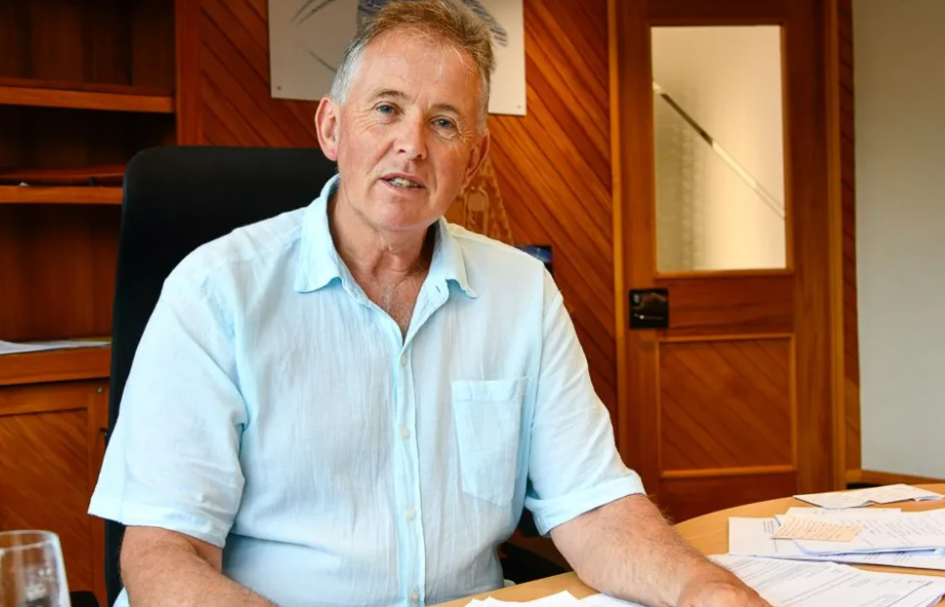
"At a personal level, I'm a loyal dog by nature and I'm struggling to get that loyalty kindled when they start treating us like this all the time, to be honest," Brough said.
He told RNZ's Morning Report programme today 1000 people a day go through the city's airport and the prospect of cuts of timing changes was "a bit of a worry".
"We just can't have it. We've all been encouraged to up the standard of airports, and we've all gone through them. I think we've spent about $60 million on ours in the last few years and it's largely paid for by arrivals, by landing costs.
"But when I look at this picture, regional airports get the whipping all the time, that's how it appears to me.
"We've sort of become price takers in this equation and if I sit back and I look at it, I go: what are Air New Zealand doing for us as regions?"
Taranaki's tourism arm had an early morning meeting today to go over what it can do to stem any cuts to flights.
Air New Zealand has not said whether its potential changes to its network and schedule would be on domestic or international routes.
However, Brough said the potential changes did not sit well with him.
Air New Zealand was a key partner for the region, he said, and the airline could expect to hear from it in the coming days.
He fired a warning at the airline, saying others could operate in the city.
"Just because they don't now doesn't mean to say they couldn't in the future," he said.
"We've got to stop accepting the status quo - that's my view."
Air New Zealand is raising one-way economy fares by $10 on domestic routes, $20 on short-haul international services and $90 on long-haul flights, with further price, network and schedule changes possible if jet fuel costs remain elevated, according to a Reuters report.
The national carrier has suspended the earnings guidance it issued less than two weeks ago because of what it said was unprecedented volatility in jet fuel markets.
The airline expects a meaningful impact on its second-half earnings.
Reuters also reported that Australia's national carrier Qantas was increasing international fares, and was exploring options to redeploy capacity to Europe as airlines seek to evade disruptions in the Middle East.
Singapore Airlines has raised fares to Europe by $140 for a return ticket.
$20 fuel charge for Air Chathams fares
Regional airline Air Chathams has announced it is introducing a $20 fuel surcharge on all flights due to increased aviation fuel prices.
The announcement came a few hours after Air New Zealand raised its fares.
In a statement, Air Chathams said aviation fuel prices in New Zealand "have risen significantly" due to the war in the Middle East.
The $20 charge will be added to ticket prices at the time of booking but will not apply to existing fares.
"This surcharge will be reviewed regularly and will be removed once fuel prices return to more normal levels," the airline said.
Warning 'substantial price rises' may be on horizon
A major retailer is warning prices could rise as the cost of shipping increases due to the conflict in the Middle East.
Key energy supplies and major shipping routes, including the Strait of Hormuz are being disrupted, adding fresh inflation pressure worldwide.
Briscoes managing director Rod Duke told Morning Report shipping companies have imposed surcharges and he was expecting future deliveries of containers would have surcharges of 10 to 15%.
While his business would absorb some of the cost, eventually it would need to be passed on to consumers.
If the Iran war continued for a period as long as 90 days, Kiwis would definitely feel the impact on their wallets, with "substantial price rises".
There could also be significant delays in receiving goods because of the disruption to shipping which could add 30 days to travel time.
Duke said the conflict also shaped as "a spanner in the works" for New Zealand's economic recovery.
"It largely depends how long this is going to go for."
There would be an inflationary impact from the rising costs of fuel which could flow through to interest rates and there was little New Zealand could do, he said.
Looking at New Zealand's infrastructure, Duke said with the US government "playing sheriff around the world" and other instability, he regretted that New Zealand no longer had an oil refinery and wasn't making much use of the Taranaki oilfields.
"Why a country like this can't refine its own oil rather than rely on other countries' third parties to have done is really beyond me."


