
PHOTO
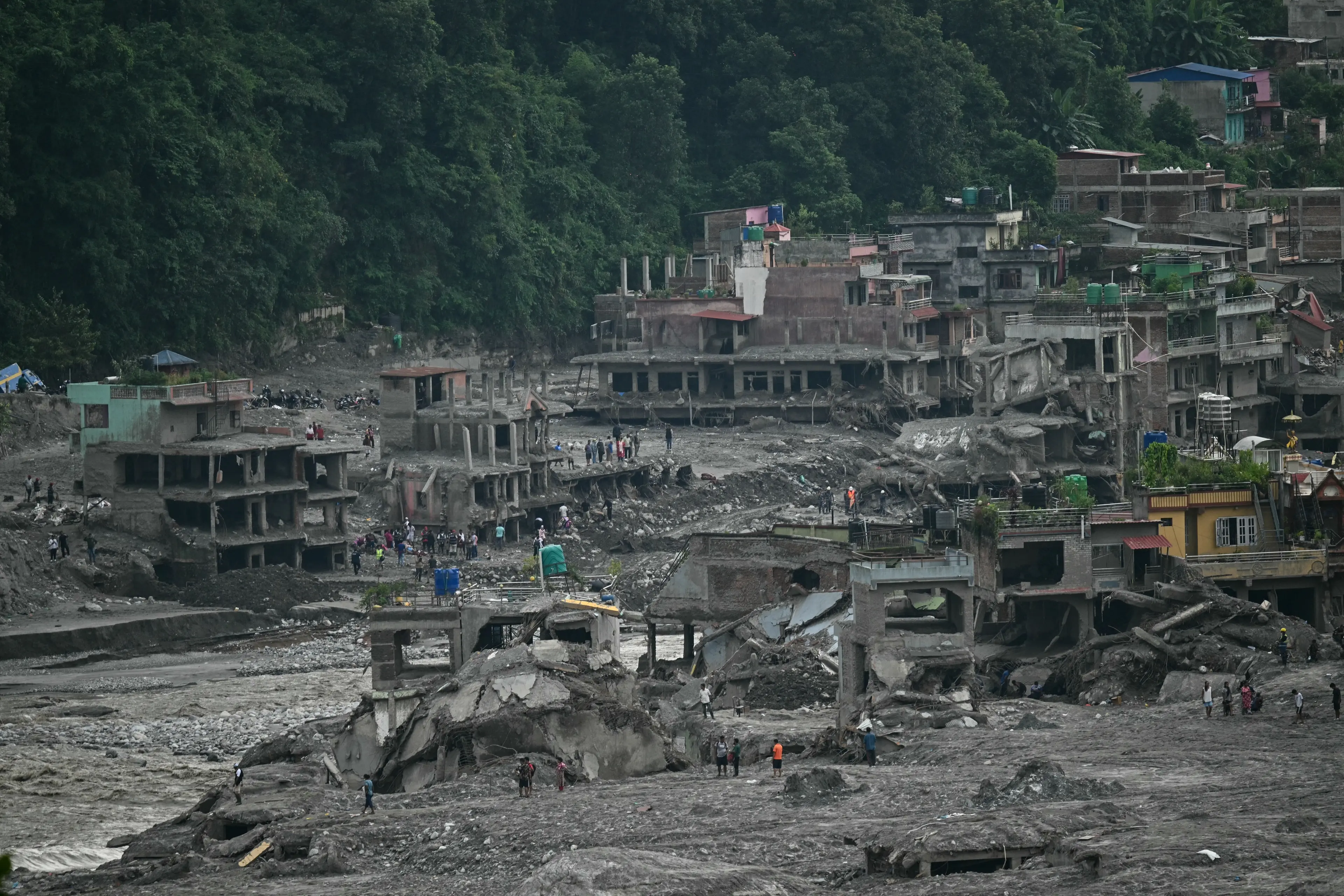
The catastrophic Nepal landslide has takeaways for the Southern Alps, says Canterbury University landslide expert Dr Tom Robinson, who has co-authored a major new study.
Robinson was part of an international research team investigating the August 26 disaster, when a massive rock and ice avalanche in the Himalayas rapidly transformed into a devastating debris flood.
The World Weather Attribution study brought together specialists in landslides, glaciology, climate change, flooding, data science and risk management to understand how such an extreme and complex event occurred.
Robinson said no single factor explains the disaster.
“When we combine the role of the earthquake in 2015 with longer-term trends of warming temperatures, the loss of glacial ice and permafrost, and changing snow and rainfall, it’s clear that a multitude of factors came together to cause this event,” he said.
The study found human-induced climate change has significantly increased temperatures around the site and across the wider Himalaya. Near the collapse site, July and August temperatures are now about 1.5°C warmer and annual temperatures about 1.9°C warmer because of human influence on the climate.
Robinson’s contribution focused on whether Nepal’s devastating magnitude 7.8 earthquake in 2015 played a role, and how this combined with climate-driven changes.
“We knew the earthquake had caused substantial damage in this area and triggered a catastrophic fatal landslide on the other side of the mountain.
“Since then, the number of landslides in this region has increased, particularly at high elevations. That suggests the earthquake damaged and weakened the rock, making these large collapses more likely even years after the event.”
Robinson said the conditions that contributed to the Nepal disaster are not unique to the Himalaya.
“We find many of the same conditions here in Aotearoa New Zealand. Our climate is warming, our glaciers are receding rapidly, and at higher elevations we are seeing less snow and more rain.”
While the Southern Alps have not experienced a major earthquake recently, there is a 75% chance of a major Alpine Fault earthquake in the next 50 years.
Said Robinson: “We shouldn’t be surprised to see events like this in the Southern Alps in the future.
“Fortunately, they are highly unlikely to be anywhere near the size we saw in Nepal and we have far fewer people living in our mountains.
“But as tourism grows, particularly in places like Aoraki Mt Cook National Park, we are likely to see more people spending time in mountain environments where these events can happen.”
Robinson said the disaster also demonstrates the limits of climate adaptation and the need to reverse climate change.
“No level of adaptation could have prevented or minimised the losses Nepal has seen. While climate adaptation is important, it cannot be our sole focus.
“We need to continue addressing climate change at the source and limit warming by reducing carbon and other greenhouse gas emissions, alongside adaptation.”
The study, ‘Rapid warming in the Himalaya exacerbates geohazard cascades beyond adaptation limits’, was published by World Weather Attribution last week.
-Allied Media