
PHOTO
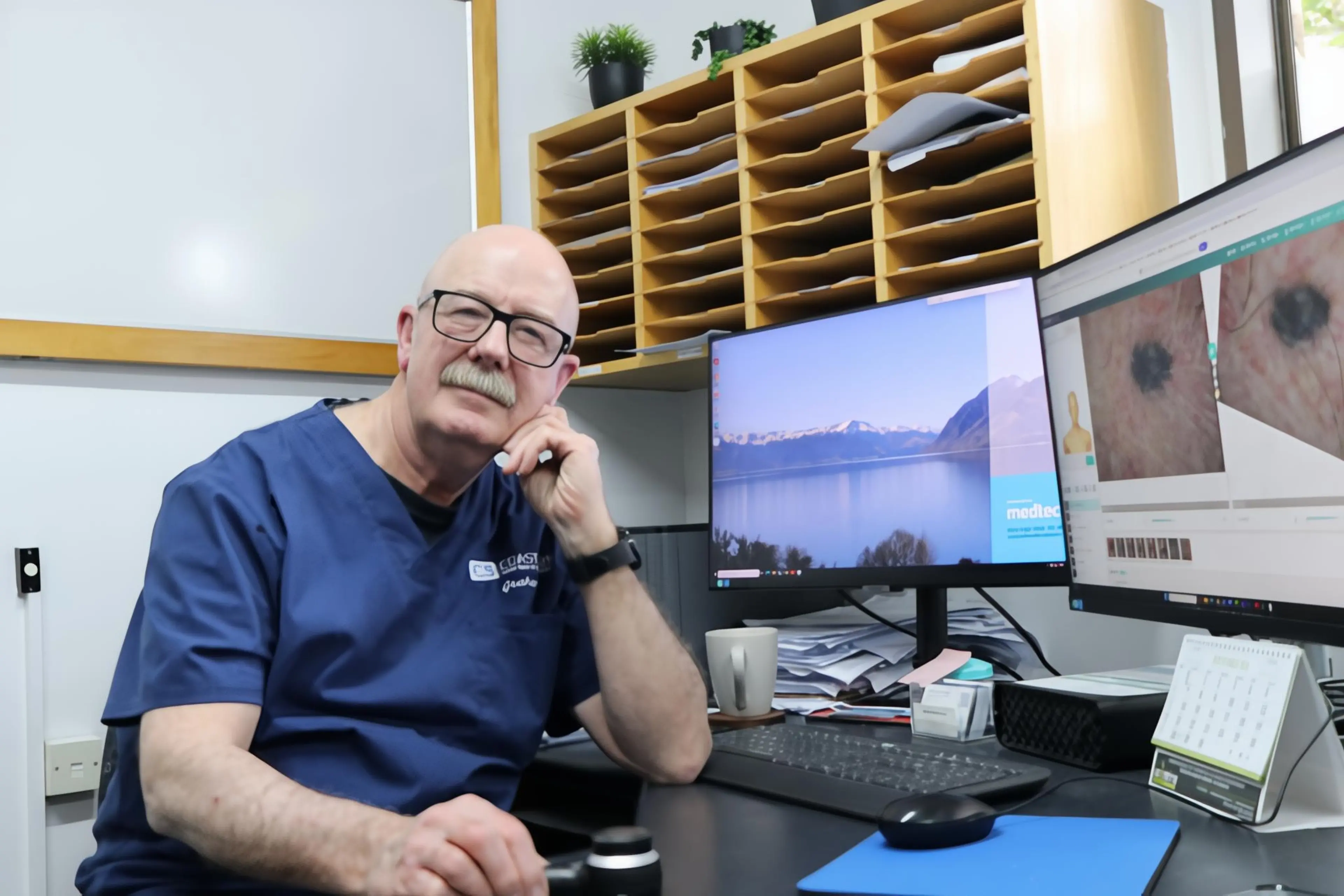
Dr Graham MacDonald is calling time on a 45-year stint as a GP in Redcliffs, finishing next month in exactly the same place where his career started. He spoke to reporter Kees Chalmers about what has kept him going.
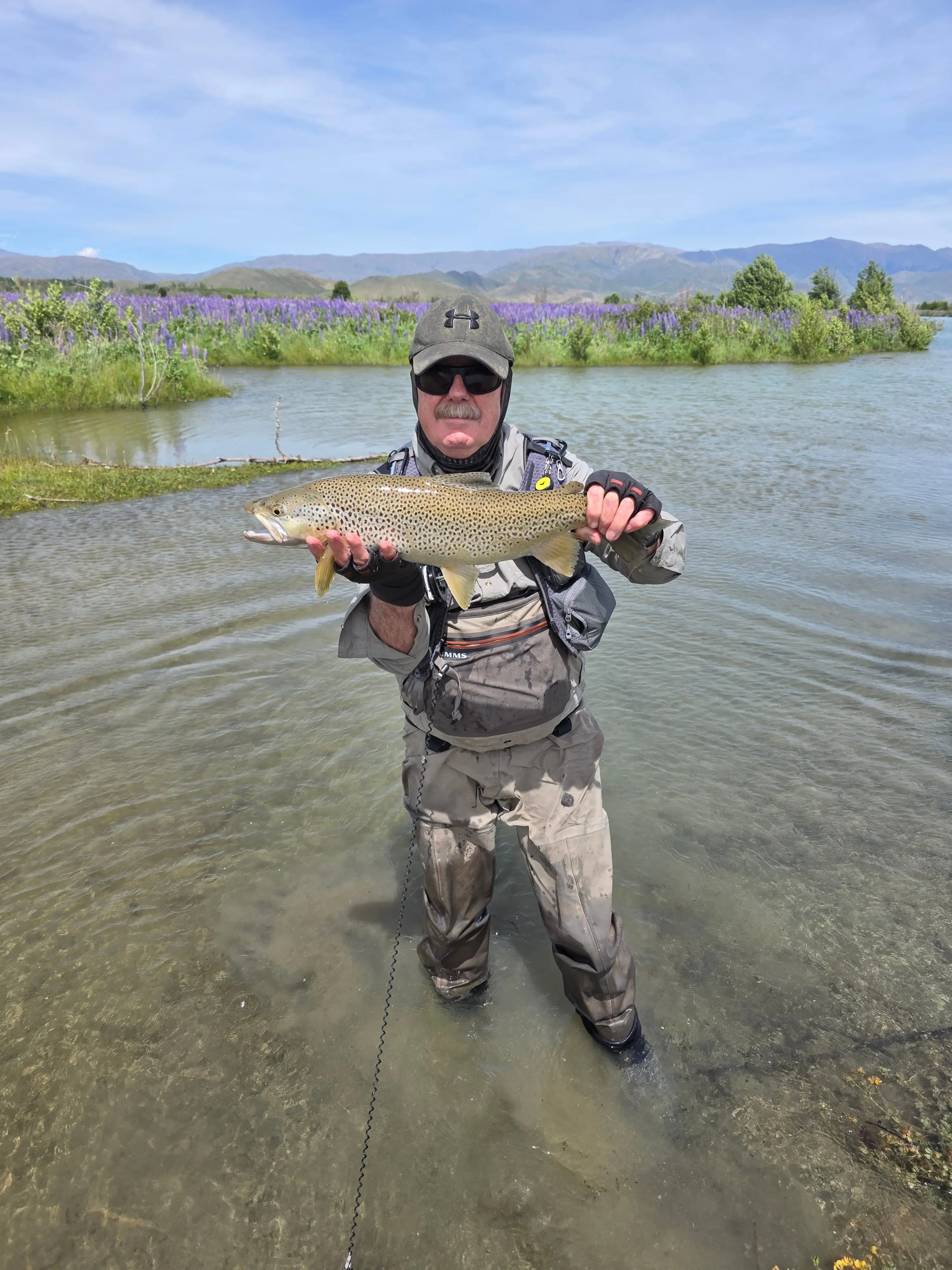
Long-serving Christchurch general practitioner and dermoscopy specialist Dr Graham MacDonald is almost a month away from retiring to a life of fly fishing on Lake Ruataniwha and cycling along Summit Rd – all while using good sun protection, of course.
The 74-year-old Redcliffs doctor has seen four generations of families through his consulting room doors during his 45-year career, which will end on October 29 in the same building where it began.
He has mixed feelings about calling time on medicine, something illustrated by an encounter with a woman in her 40s about six months ago.
“I went over to her, I said, ‘Do I know you?’
“She burst out laughing, she hopped up, punched me in the arm and said I delivered her
“I go back a while.”
MacDonald started at the Redcliffs Medical Centre in 1981 after completing his registrar rounds at Christchurch Hospital a year earlier. He also trained in obstetrics
He retired from general practice in 2021 to pursue his passion for skin cancer detection and treatment.
After completing a professional diploma in dermoscopy, he opened Coast Skin in 2023 in the former medical centre building across the road.
Coast Skin is a specialist GP clinic for detecting and treating skin cancer.
His first encounter with a patient at the Redcliffs Medical Centre was memorable for an entirely different reason.
A man with a large white beard resembling Father Christmas walked in, sat opposite MacDonald and placed a plastic bag on the desk containing a large, green piece of excrement.
“Gosh, they didn’t teach me this at medical school,” he thought.
“I looked at him and said, ‘looks like you’ve got a bit of a problem there, you’d better get up on that couch and I’ll examine you’.
“He jumped up and said, ‘Hi, I’m Peter Croft, I’m the pharmacist and by the way that was a sheep’s poo’.
“He was a bit of a prankster, it was a good initiation.”
After his hospital training, MacDonald had a choice of general practice positions in Invercargill, Queenstown and Redcliffs.
Forty-five years later, he knows he made the right decision.
“It’s a very friendly community to be in, most of my patients have been fantastic and I regard a lot of them as my friends,” he said.
“The beauty of general practice is that you have an opportunity to walk alongside people particularly during their vulnerable times.”
Aftercare is particularly important at a skin cancer clinic, so MacDonald gives patients his phone number in case of an emergency.
Only once has a patient needed him after hours – inconveniently, while he was stalking a trout on Lake Ruataniwha.
He was about to cast his rod when his pocket started to buzz.
“I had the choice to answer the phone or catch the fish,” he said.
MacDonald chose to answer it and, while he had the phone to his ear, watched the trout swim quietly away.
He took over the medical centre in 2010, just before the February 22, 2011, earthquake.
For the two weeks that followed, he described the clinic as being like a police cell, with portaloo toilets out the front, drop-in surgeries, a diesel generator donated by a resident, no phone and only a few computers operational.
“What that taught me was when the chips are down, people can really stand up and be really community focused and giving,” he said.
MacDonald decided to retire about a year ago. His main goal was to establish the skin cancer clinic, and now that it has a good team of doctors on board, he feels it is the right time to step away.
“We need purpose, we need goals, we need to be able to keep fresh and passionate. Coming to retirement is about having freedom of choice and control and not living your life out of enslavement or obligation.”
MacDonald had always been interested in connecting with people and making a difference, but he did not decide to pursue medicine until after graduating from Canterbury University with a Bachelor of Science.
He had the choice of staying in Christchurch and playing with sewage or studying medical microbiology at Otago University.
MacDonald chose the latter.
He found he could make a difference to people on a mental and emotional level, as well as the physical.
His passion for treating skin started early in his general practice career, when he worked part-time at Mole Check in Merivale under Dr David Langford.
It was there he learnt to use a dermoscope, a handheld instrument that uses polarised and non-polarised light and 10x magnification to examine the skin for clues that can aid a diagnosis.
He said that without the instrument, regardless of a GP’s skill or experience, 40% of skin cancers would be missed.
Combined with digital imaging, dermoscopy enables doctors to pick up 90% of skin cancers, he said.
MacDonald continued doing skin work in his general practice, but there were limitations, including the amount of time available to spend with each patient.
He opened Coast Skin to address what he sees as the rampant problem of sun damage in New Zealand. More than 8000 melanomas are diagnosed in New Zealand each year and more than 300 Kiwis die from the skin cancer, he said.
MacDonald typically picks up a melanoma every one to two weeks during routine screening.
He likens the way he hunts unsuspecting trout to the way he scans his patients’ skin with a dermoscope, looking for cancers.
“They’re very well camouflaged, you might just see the movement or you might just see a shadow or a mouth opening and that identifies it and you go for them,” he said.
“It’s the same with melanoma, they’ve got a lot of different disguises.
“I love finding melanomas because I know I can make a difference.”
Away from medicine, MacDonald is passionate about the outdoors, whether stalking trout around the edges of Lake Ruataniwha or riding his e-bike to the top of Summit Rd, which he calls his happy place.
The biggest fish he has caught was a 17lb rainbow trout at the Mackenzie Canals about five years ago.
Being among nature provides an escape from the stressful reality of being a medical practitioner.
“It can take everything you’ve got,” he said.
He is enormously appreciative of his wife, Sheryn, who supported him every step of the way, working as a receptionist at both clinics and taking care of their three children, Daniel, Bradley and Rebecca, during his long shifts, particularly early in his career.
On top of working as a GP, he would work one night a week and one weekend every five weeks, tending to after hours house calls.
“I wouldn’t be able to do this without her.”
MacDonald also thanked his staff and patients.
Doctors in New Zealand face a burnout risk of 22.7%, making them almost twice as likely to experience burnout compared with the general workforce.
“We have to guard our mental and emotional well-being.”
He said the work-life balance for practitioners had improved since he started, but it had come at the cost of continuity of care.
The profession had also changed significantly during his 45 years, particularly in the technology available to doctors.
He cited HealthPathways, which identifies further steps for investigating a patient’s symptoms, and HealthOne, which gives practitioners access to patients’ medical records.
“When I first started, there were just cards, no computer, just cards,” he said.
MacDonald can see artificial intelligence playing a larger role in medicine as a tool for doctors, but does not believe it will replace the clinical examination.
He has continued to rely on his tried-and-true systems, however, and finds AI confusing.
Looking to the future, he is concerned there is not enough emphasis on clinical examination skills for younger doctors and worries about the financial viability of general practices.
“They’re ripe for corporatisation. There’s advantages in the sense it can give them more resources, but the cost is that the GP hands control over to the corporate structure and can lose their personal touch,” he said.
In retirement, he plans to continue playing social golf, go to the gym more often and spend more time with his grandchildren.
But MacDonald’s passion for preventing and treating skin cancer will not end when he leaves the clinic for the final time next month.
He recently joined the Canterbury Fly Fishing Club and could not help noticing the amount of sun damage among its older members.
Next year, he plans to give a presentation at the club on sun damage and skin cancer detection and treatment. He is considering doing the same at various bowling and Rotary clubs around Canterbury.
So even after 45 years in the consulting room, MacDonald is not quite ready to stop looking closely at what is in front of him.
• From October 5, a retirement book will be available at the clinic for patients and colleagues to sign and leave their best wishes for MacDonald’s next chapter