
PHOTO
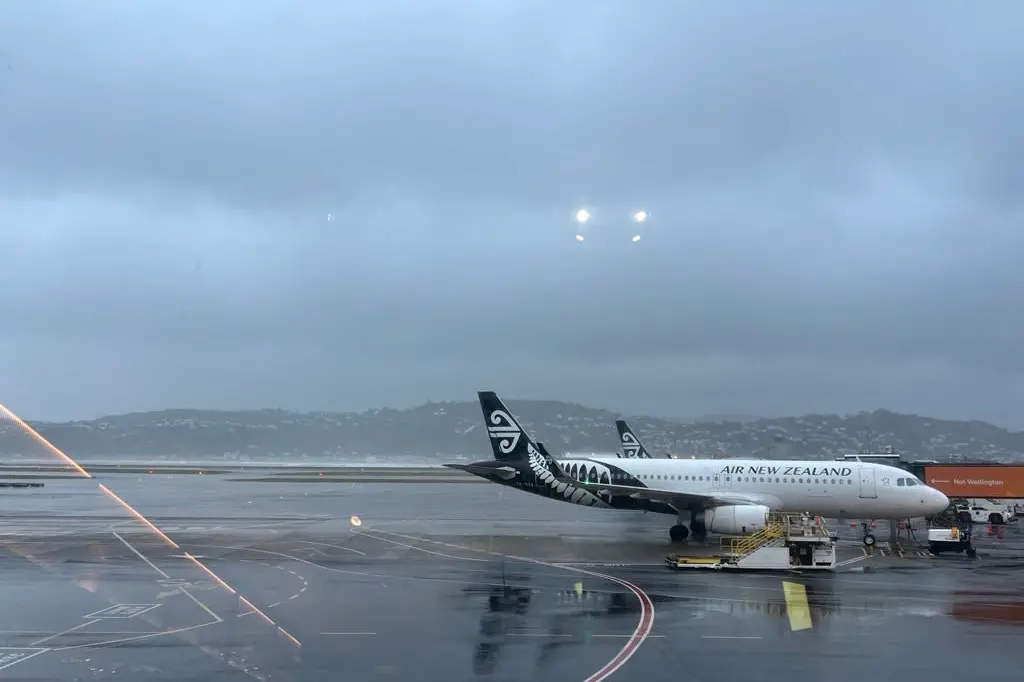
An inquiry has found it took too long to evacuate passengers after an engine fire on an Air New Zealand flight from Christchurch to Wellington in 2024.
The plane was about to land when the engine caught fire. It landed safely, and the captain ordered an evacuation.
A Transport Accident Investigation Commission report has found it took nearly twice the 90-second benchmark to evacuate the plane.
Chief investigator of accidents, Louise Cook, said if evacuations took longer than 90 seconds "the risk to life increases exponentially".
"So it's important that passengers and crew carry out that evacuation, quickly, correctly and safely."

The report recommended that Air New Zealand improve how it gave passenger safety briefings, Cook said.
It was important that the crew's procedures and commands were clear, she said, and that passengers followed them properly.
"For example of the 27 passengers that exited through the two forward exits, 19 of them took their luggage with them ... having been told not to, both at the safety briefing and while being directed to exit the aircraft."
Air New Zealand chief safety and risk officer Nathan McGraw said it accepted the findings and had already made changes to improve training, procedures and passenger safety information.
"The report identifies important lessons from the evacuation, which took longer than we would want. Real-world evacuations involve uncertainty, time pressure and different passenger responses, and there are valuable lessons from this event."
He was grateful to the crew for landing the aircraft safely and evacuating passengers, McGraw said.
The report also found a faulty turbine blade was responsible for the engine fire, which manufacturer Pratt & Whitney Canada could have spotted during quality checks.
"So we made a recommendation to them to improve their quality assurance processes around engine overhaul," Cook said.
