
PHOTO
Explainer: After the NZ Warriors made a premature and deflating exit from the NRL playoffs following a supreme regular season run, ambitious plans for a second NZ-based club are about to be formally presented to competition bosses.
The NRL's aspirations to expand the competition to 20 teams by 2030, underlined by a record-breaking multibillion-dollar broadcast deal, remain on track with the addition of Perth Bears from next season, followed by PNG Chiefs from 2028.
A decision on the 20th team was next on the agenda for the game's powerbrokers, with a Christchurch-based franchise emerging as one of the frontrunners, as rugby league's cultural currency in New Zealand continues to soar.
Across the Tasman, Ipswich Jets were another strong contender to nab the vacancy, which would cement their place as the fifth Queensland team, alongside Brisbane Broncos, North Queensland Cowboys, Gold Coast Titans and the Dolphins.
Christchurch City Council has implanted itself in planning efforts on behalf of the group leading one of the main bids to ensure a proposal to NRL executives is as compelling as possible.
Here is the state of play.
Who is involved?
Over the past few years, New Zealand consortiums have been working behind the scenes to get a Christchurch-based NRL club off the ground, jostling to get into the frame of the sport's administrators.
The latest iteration of one group fronting a bid, trading as Southern Sporting Limited (SSL), includes former Kiwis and Warriors coach, and Canterbury league stalwart Frank Endacott, former Christchurch East MP Poto Williams and Waikato Rugby Board president Coal Groves.
The collective has received the backing of the city council.
Endacott had been involved in a previous bid by South Island NRL Bid Limited (SINBL), led by former Canterbury Rugby League board chair Tony Kidd, Canterbury Rugby League board director Darren Littlewood and former chief executive Duane Fyfe.
Williams also came on board in a community and wellbeing role, but the consortium had disbanded.
SINBL first approached the city council in 2024 to support a bid, claiming a Christchurch-based professional outfit would result in a $50 million economic injection into the region each year.
The council then began working directly with the NRL, championing the region's assets and suitability for the competition's expansion roll-out.
Talks involving council, its economic development arm, ChristchurchNZ, and the NRL continued last year, although competition executives signalled in September 2025 that "expansion wasn't on the table", after the Perth and PNG deals were greenlit.
The council declined an RNZ interview request, but in a statement, head of recreation, sports and events Nigel Cox said it was working with key stakeholders to explore an "opportunity for the city" alongside ChristchurchNZ.
A working group of established figureheads had been established to drive the process, including former NZ Rugby League chairman and former Canterbury Rugby League president Reon Edwards, ChristchurchNZ chair and former Sky NZ executive Lauren Quaintance, and sports industry executive Michael Goldstein. Quaintance also serves as a director on the Crusaders board.
Documents released under the Official Information Act showed Mayor Phil Mauger, Quaintance and Cox met NRL bosses in Christchurch for the Warriors-Cowboys game in June, as part of a charm offensive by local authorities.
Southern Orcas, a separate proposal led by long-standing administrator and former coach Sir Graham Lowe, and millionaire businessman Andrew Chalmers was previously rejected by the NRL.
Its bid was bankrolled by an ambitious commercial investment, via private equity investors.
The Orcas made a curious play by attempting to secure the services of former All Blacks coach Scott Robertson, who was axed from the coaching role in January.
In August, Lowe told RNZ that its bid had been officially submitted, with the franchise waiting for a decision from Australian Rugby League Commission (ARLC) chairman Peter V'landys.
"All we know is we've had to put our best foot forward, which I'm confident that we have done," Lowe said. "We're just, sitting and waiting with our fingers crossed."
A separate South Island Kea bid, led by former New Zealand Rugby and NRL chief David Moffett, was also rejected by the NRL in favour of the Perth and Papua New Guinea proposals.
The project has since been scrapped, with Moffett publicly endorsing council-led efforts, while speaking frankly on the Orcas, describing the consortium's push as "pissing into the wind".
Do we need a second NZ NRL club?
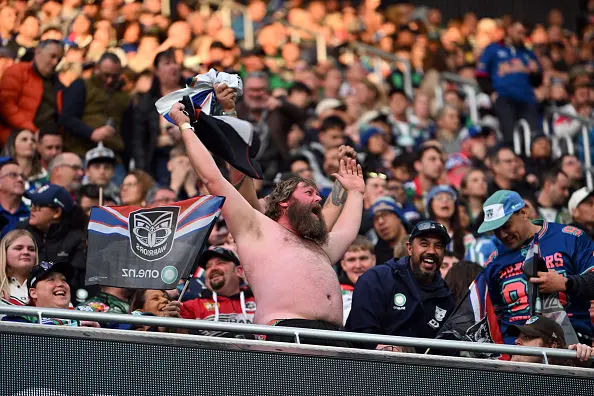
The regular sight of boisterous sold-out crowds at Go Media Stadium for Warriors home games, coupled with generous support for New Zealand's sole club across the Tasman, would have given competition chiefs, for better or worse, food for thought.
Endacott told RNZ that the bumper Eden Park crowd at Sunday's Warriors-Knights semi-final clash revealed rugby league's current popularity.
"That tells you something, doesn't it," he said.
Rugby league's ratings were also going through the roof. The latest ARLC annual report said, by last year, the NRL was watched by more than 224 million cumulative viewers in Australia and New Zealand, an increase of 64% in six years.
V'landys referenced gaining traction, when announcing Auckland's Eden Park as the venue for a State of Origin game in 2027 earlier this year.
"Rugby league is the No.1 sport in Australia and the Pacific, and the growth we have seen in New Zealand over recent years has been nothing short of extraordinary," he said.
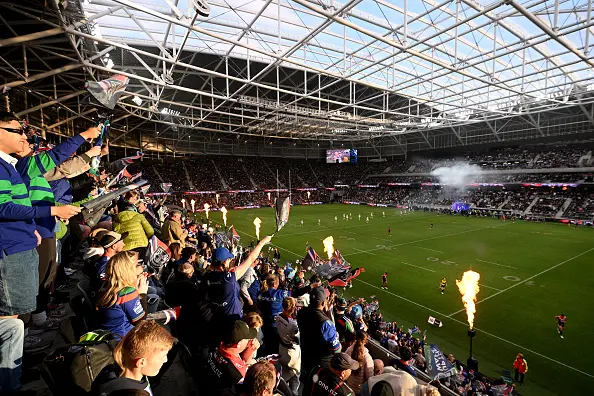
A major piece of essential infrastructure a new club would require is already open. Christchurch's 25,000-seat central city venue, One New Zealand Stadium, has been met with enthusiastic fanfare since its April opening.
"The crowds they get down here, every time a league game is played down here, now you pack it out," Endacott said.
"We've got so much going for it to have it in Christchurch. As a number of Australians have said, 'It's a no-brainer'."
Mauger expressed a similar sentiment in a letter to the NRL's executive general manager of corporate affairs in August 2024.
"Our fans turn up with passion and pride to support their national team, but having one team based in Auckland makes it difficult... for the southern part of the country to get behind their players, leaving fans and revenue on the table," he said.
The origins of some of the NRL's fiercest rivalries date back more than a century. Without the same historical lore, could the introduction of a Christchurch-based club ignite the NRL's first all-New Zealand grudge match — a classic North versus South Island faceoff for league fans?
There are concerns over whether a second New Zealand club could dilute the player pool and stifle the momentum of the Warriors.
The Penrose-based club has only made two grand finals since its competition debut in 1995 and a maiden premiership remains elusive.
Significant recent gains had seen the team emerge, for some pundits, as genuine contenders.
Putting its anticlimactic post-season showing of recent weeks to one side, the club had made the playoffs three times in the last four years, two of them inside the all-important top four.
Panthers and former Warriors head coach Ivan Cleary warned the game's administrators against fast-tracking a second New Zealand-based club, fearing the addition of a new club in the country could "cannibalise the progress of the Warriors". The four-time-premiership-winning coach led the Warriors to their last grand final appearance in 2011.
In July, Warriors chief executive Cameron George told Sport Nation that New Zealand remained a great option for NRL expansion plans, but more investment from competition chiefs was needed.
"Right now, there are no domestic competitions that are at the level we need to to sustain, not only for one team, because we fly all of ours to Sydney each week and vice-versa," he said.
"To underpin two teams, that would mean you're flying 12 teams to Australia every week."
Threat to rugby union?
In a letter to then-NRL chief executive Andrew Abdo in August 2024, released under the Official Information Act, Endacott argued that New Zealand's national game was in danger.
"Rugby union is vulnerable," he said. "If we get the second [NRL] club right, rugby league will become the preferred winter sport in New Zealand."
The NRL said it had appointed a new New Zealand general manager based in Auckland who would be "managing rugby league growth in the country and expanding participation programmes".
This did not mean union was floundering, especially not in red-and-black country.
Canterbury Rugby board member and former city councillor James Gough said broadcast audiences of Canterbury NPC games last season had tripled since 2023.
New Zealand Rugby (NZR) hosted a summit with the country's key stakeholders this week, tackling financial and structural problems facing the sport in the face of tens of millions of dollars of projected losses, largely at provincial level.
NZR chief executive Steve Lancaster downplayed the threat of rugby league, when talking to Newstalk ZB's Jason Pine in September.
"It's not a binary proposition for us," he said. "For one code to be strong doesn't mean the other has to suffer, there's plenty of space in the market for more than one code to be thriving."
How much will it cost?
A fair bit. V'landys has signalled an entry fee for new licensees would cost AU$100 million (NZ$124.3m).
There was also some serious coin behind the NRL's recently inked broadcast deal.
In July, Nine, Fox and Sky NZ signed a new broadcast rights agreement worth an astronomical $5.3 billion until 2034, underlining just how lucrative the sport had become in this part of the world.
Mauger did point out in correspondence to V'landys in September 2024 that the city council had invested more than $1.25b into rebuilding and developing the city's sports infrastructure, including almost $700m on its crown jewel, Te Kaha (One New Zealand Stadium).
Government supportive, but staying away
As has been shown with the deals struck with Perth Bears and PNG Chiefs, the NRL has an affinity for leveraging public, rather than private, funding models as part of its expansion plans.
Perth Bears are backed by a seven-year, AU$66m investment from the WA government, including A$35m ringfenced for the grassroots game.
PNG is supported by A$600 million of Australian government funding over 10 years.
The deal runs deep and has links within a broader geopolitical partnership between both countries, aimed at growing diplomacy and limiting China's influence in the region.
Christchurch City Council and the mayor have been keen to understand the key mechanics of the Perth bid, as outlined in emails to the NRL.
The New Zealand government had been kept in the loop on plans, with SSL meeting with South Island Minister James Meager last November.
In briefing documents, the group said Christchurch's best chance of securing a license was through a similar approach to that seen with Perth and PNG.
Unsurprisingly, any funding commitments or deal-making involvement from central government were off the table.
Sport and Recreation Minister Mark Mitchell said he supported any plans to advance New Zealand's sporting interests.
"To be clear, the government is not involved in Christchurch's bid for a new NRL team," he said. "At no point has government funding been discussed or requested - nor would I expect it to be."
Next steps
The city council has outlined several workstreams in preparing a formal proposal to the NRL. They include governance and ownership, financial, football high performance, community participation and pathways, infrastructure for elite pathways, fan acquisition strategy, economic development and community impact.
Endacott told RNZ that the proposal was now ready for presentation to the NRL.
If the case proved viable, the council would then commence formal investment discussions with ChristchurchNZ.
The league's 20th team was expected to be announced by the end of the year.
