
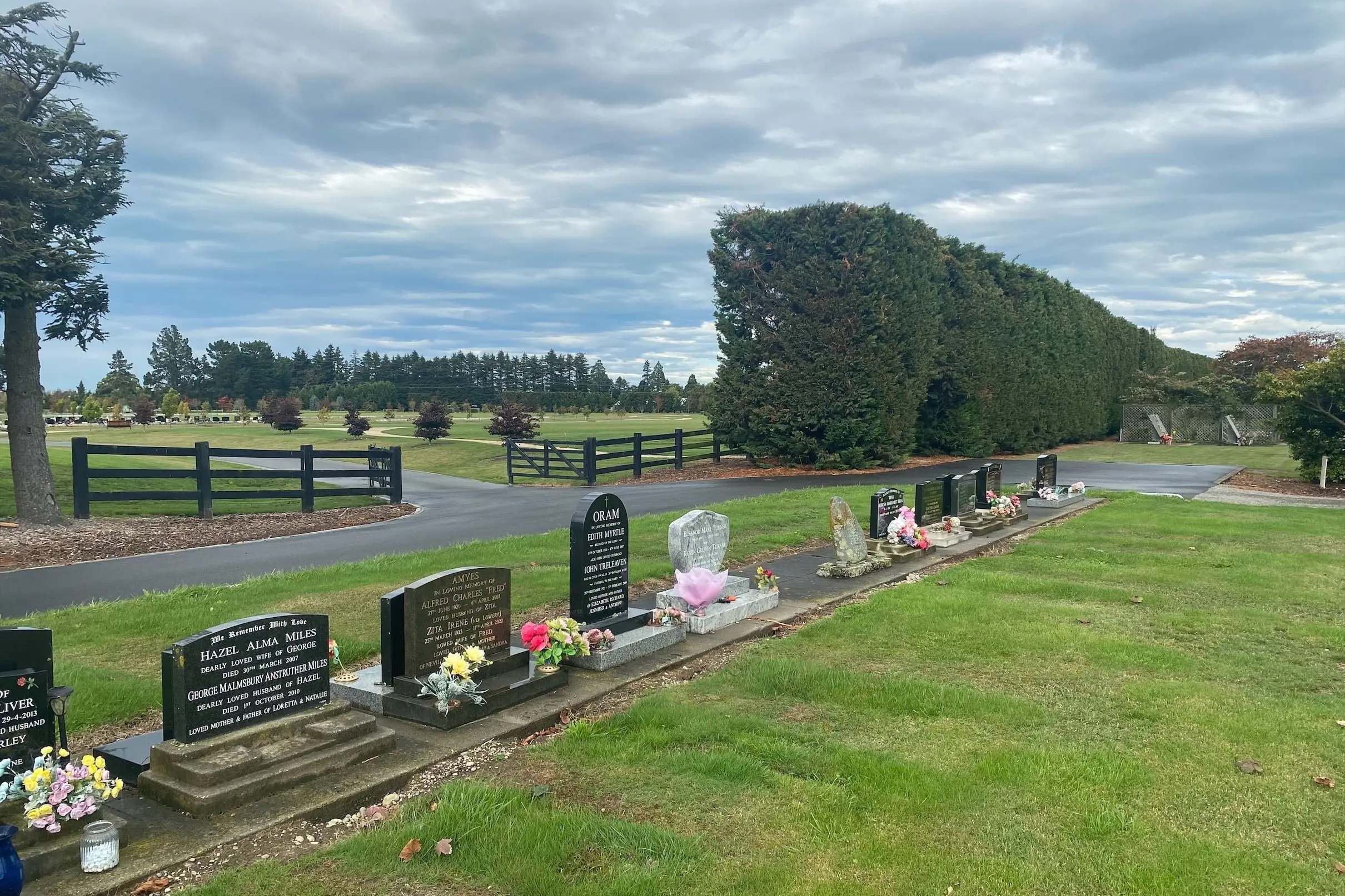
PHOTO
Ashburton councillors were fighting like cats and dogs during a heated debate over cemetery access, with a final vote of 5-4 vote to keep canines out.
The biggest bone of contention for councillors at Wednesday's meeting was whether dogs should be allowed in cemeteries under the updated dog control bylaw or remain prohibited.
Councillor Carolyn Cameron said cemeteries should be preserved as quiet places for mourning and reflection, while Councillor Julie Moffett argued leashed dogs should be welcomed, citing 70 per cent support in consultation.
Cameron said those without dogs deserve to have their community spaces preserved.
“When dog owners demand access to every green space, including final resting places, they infringe upon the peace of the non-dog-owning majority who visit cemeteries for quiet reflection, genealogy, or historical appreciation without having to navigate animal waste, tangling leads, or barking.”
Cameron was concerned about the risk to “the quiet atmosphere required for memorialisation and mourning” and of the “desecration of the earth” from dog urine, faeces, and digging.
She also said dog owners could “frequently overestimate their pet obedience” and believed cemeteries should remain off limits to dogs.
“The district already invests heavily in dedicated dog parks and other dog infrastructure, which is actually paid for by the general rate.”
Moffett said dogs should be allowed in cemeteries “provided they remain on a leash”.
“There aren't going to be hordes of rabid dogs off-leash going through cemeteries.
“There'll be a few people with their family dog visiting a grave of a loved one, and that's it.”
Councillor Phill Hooper said that “dogs are part of the family”.
“If we legislate against the bad dog owners, do we then have to legislate against vandals and bad people who go digging up stuff and vandalising at cemeteries. Do we then ban all people from the cemeteries as well?”
Cameron’s motion that dogs remain prohibited from cemeteries won on a 5-4 vote, with Councillor Tony Todd abstaining as he was absent for the hearings and deliberations.
The updated bylaw then passed unanimously.
New rules for cats
The dog debate was not the only animal-related change adopted by the council.
Cats over four months old would need to be microchipped, registered, and desexed.
The registration is not like an annual dog registration with the council – with dogs governed under the separate dog control bylaw, but a one-off registration with the NZ companion animal national register.
It also has restrictions on feeding stray or feral cats where it creates a nuisance or impacts on wildlife.
Hooper was the lone vote against the adoption of the bylaw, specifically introducing rules for cats.
“I don't see the point of having a bylaw that we don't intend enforcing,” Hooper said.
The updated bylaw comes into effect on December 1, but the cat rules don’t kick in until September next year.
Elderly housing rent rise
The council also updated the elderly persons housing policy, which included rent increases staged over two years for existing tenants to reach a target of 80 per cent of market rates.
The councillors agreed that rental income needed to increase to support ongoing maintenance, renewals, and healthy homes compliance without relying on ratepayer subsidies.
Individual rent increases will be dependent on each tenant’s ability to access financial support from the government’s Accommodation Supplement (AS).