
PHOTO
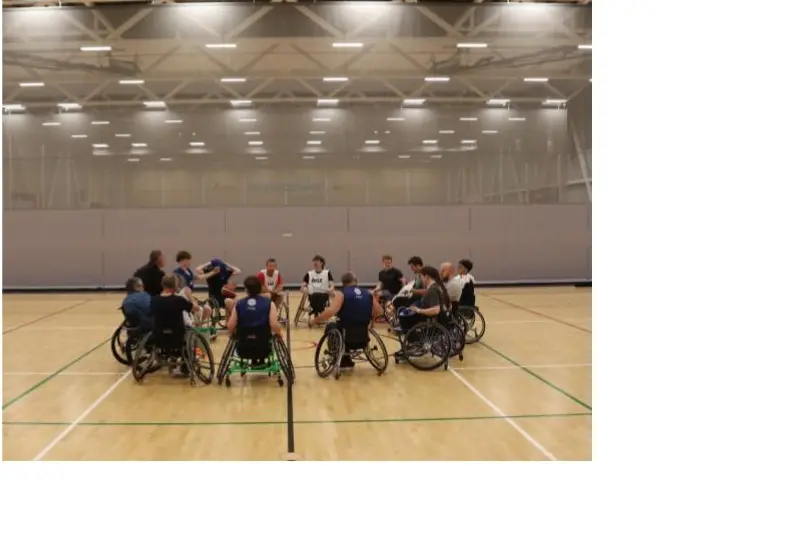
The squeak of rubber wheels and the scrape of metal frames sound out.
It’s Tuesday night and Canterbury Rollars wheelchair basketball players are on the court at Mainpower Stadium, Rangiora, where around 20 regulars hone their skills each week.
The Rollars start at grassroots level, offering ‘have a go!’ sessions which can lead into regular training.
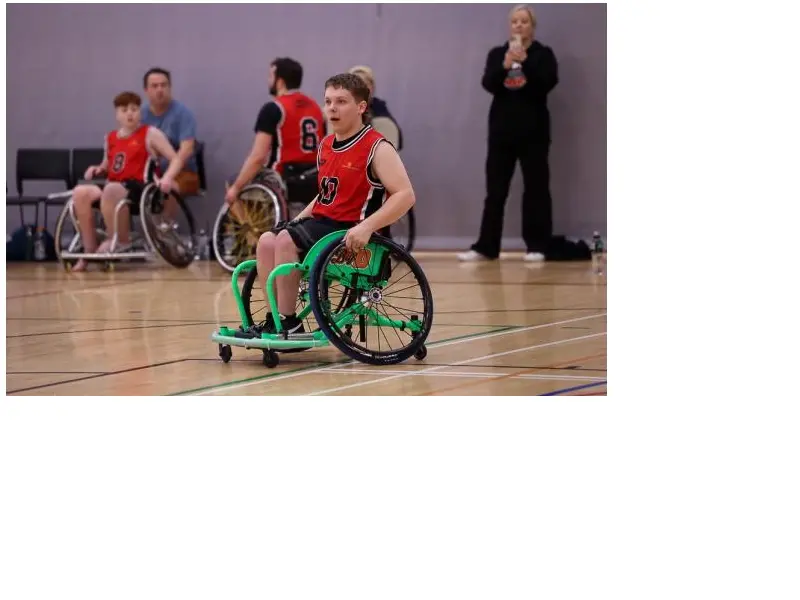
Nineteen-year-old Dylan Moore, who plays guard, has been part of the training group for five years and plays in the Rollars division 2 team.
He has higher aspirations in the sport.
“I’d definitely love to take it further. Hopefully I’d get up to the pro leagues at some point.”
Moore was in Palmerston North last month as part of one of two Canterbury Rollars teams competing at the National League tournament, and will compete in the Christchurch National League tournament from October 2 to October 4.
Basketball New Zealand disability and inclusion lead Matt Vernick said the training group welcomes all ages and abilities.
“Our youngest is 12 and our oldest player is 70 years old,” he said.
“We have a real mix of abilities, from first year beginners to New Zealand representatives.”
Moore said wheelchair basketball is an exciting watch, with all the key rules exactly the same as standing basketball. Even the hoop height stands the same, at 3.05 metres.
“People always get so shocked when we say the hoop height doesn’t get lowered for wheelchair basketball,” he said. “The rules are all the same, we’re just sitting down.
“It is super physical though, and it’s a lot of pushing. Sometimes you can even tip people over in their chairs.”
Moore is one of many young players hoping to take their code to the next level.
There are six national tournaments for players to compete in. As they move up through the divisions, the next step is the competitive Australian leagues, in which six New Zealanders are playing this year.
For younger players, there is also the United States’ collegiate system with athletic scholarships available.
The US National Wheelchair Basketball Association governs the collegiate level teams. There are 12 men’s teams from universities across the USA, including the University of Alabama and the University of Arizona.
Alongside that, New Zealand sends a men’s team, the Roller Blacks, to World Cup and Paralympic qualifiers every two years.
“We sent a team to the Commonwealth Games qualifiers this year, but we unfortunately didn’t qualify,” Vernick said.
“It’s still worthwhile to go to qualifiers and for players to get some more experience.”
At the top, there are professional European leagues, where “players are sometimes paid even more than standing basketball athletes in New Zealand”, said Vernick.
Only one Kiwi has been able to crack the European leagues so far, Cantabrian Eamon Wood.
After progressing through New Zealand and Australian leagues, in 2019 Wood played a season with the Munich Iguanas in Germany, before Covid-19 lockdowns drove him home.
“I had a go at a lot of sports as a kid, but when I was 13 someone suggested I try wheelchair basketball. “From there I’ve just kept playing,” he said.
Wood said he had to be very self-driven and trained hard, just like any other elite athlete.
It was a huge adjustment playing in Europe, where “the best players come to play”.
“You were expected to perform, and if you didn’t, you didn’t play.”
Wood said that one season in Europe gave him many tools and skills to become a better player, and his only regret was not having done it sooner.
He now lives in Sydney, playing in Australia’s National Wheelchair Basketball League for the Manly Wheel Eagles.
As for the Canterbury Rollars, they’ll keep training in Rangiora ahead of their upcoming tournament held in Christchurch in October.