
PHOTO
Over 35,000 people participated in a “march for nature” in Auckland on Saturday, September 19.
The event was authorised by Forest & Bird and Greenpeace and supported by a further 34 not-for-profit community organisations, such as WWF, Environmental Law Initiative, Zero Waste Aotearoa, 350 Aotearoa, Peace Movement Aotearoa, The Tree Council, New Zealand Botanical Society, Coal Action Network Aotearoa, New Zealand Nurses Organisation, Tertiary Education Union, to name a few.
Smaller events were organised in other parts of the country in solidarity to the march in Auckland, regionally in Christchurch and Geraldine, and further south in Dunedin.
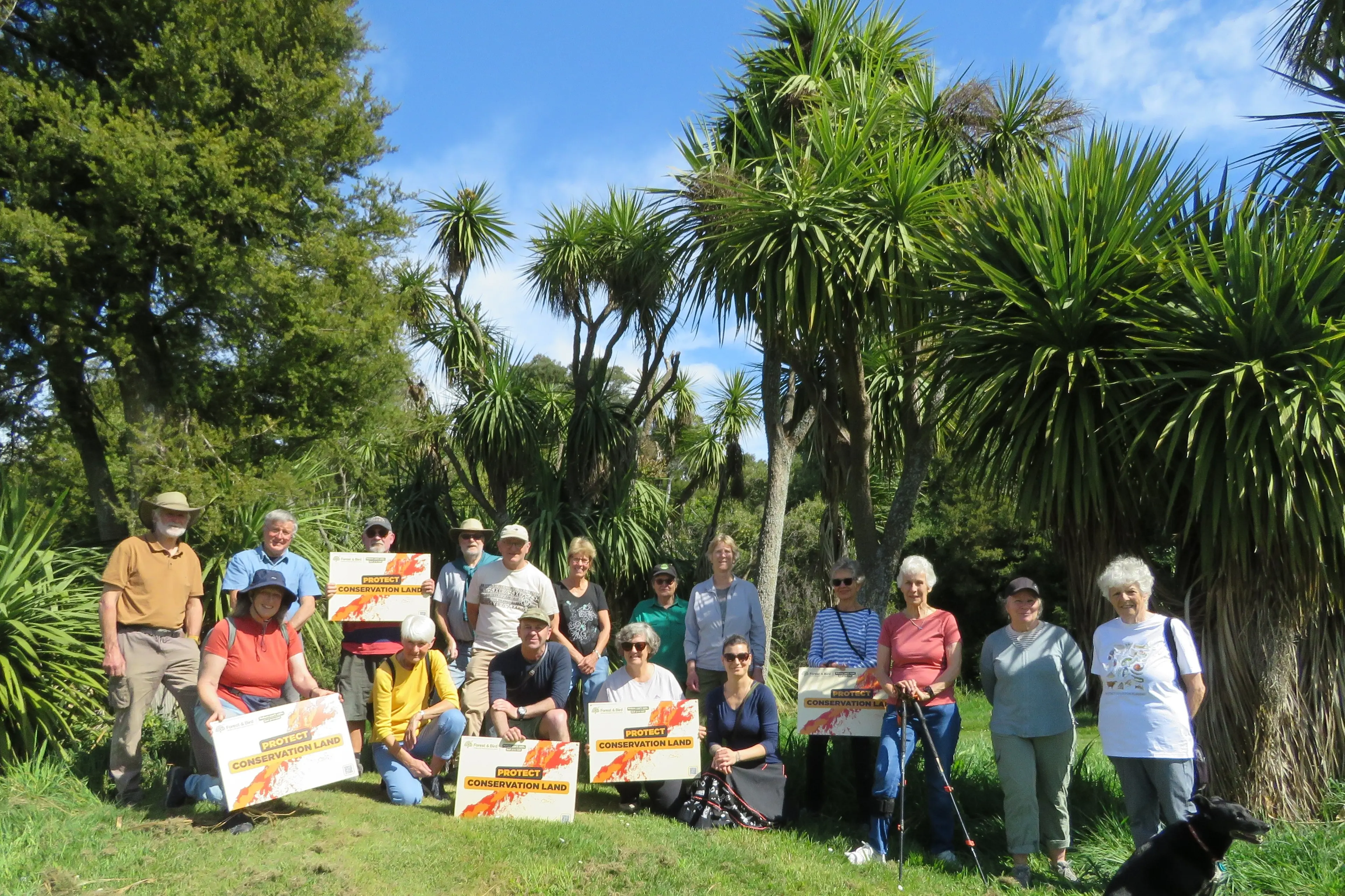
A group of people gathered at Talbot Forest Scenic Reserve in Geraldine supporting the national event in Auckland, standing up for the protection of public conservation land.
New Zealanders are very fond of public conservation land for holidays, recreation and simply to appreciate nature. These legally protected areas are habitat and a last refuge for many threatened species.
Public conservation areas are a very important defence against climate breakdown. The value of nature cannot be measured via economic transactions.
The Fast-track Approvals Act, the Fisheries Amendment Bill and the new RMA bills, set in place by the current government, have massively reduced environmental and climate protection. If adopted, the proposed Conservation Act Amendment Bill would enable exploitation of public conservation land, undoing over four decades of heritage protection.
Seven former conservation ministers from three political parties have written to the Prime Minister and the Minister of Conservation asking for changes to this controversial Bill.
“The bill takes us backwards to the colonial ethos of resource exploitation, instead of recognising that our wellbeing depends on protected nature and a healthy environment,” the letter says.
“We encourage you to make substantive changes to the Conservation Amendment Bill to restore New Zealanders’ trust that government manages conservation land and waters to preserve their intrinsic values and as a shared treasure.”
The signatories of the letter are former prime minister Helen Clark, Chris Carter, Steve Chadwick, Poto Williams, and Kiri Allen, all of Labour, former National minister Denis Marshall, and Eugenie Sage, of the Greens.
A further excerpt from the letter reads: “The Bill reflects a neoliberal ideology of shrinking the state, advantaging individual interests ahead of the collective; and facilitating privatisation of public assets to private interests.”
Although the government has partially backed down on the initial plans to sell and exchange conservation land, Shane Jones is adamant about making economic return a priority function for the Department of Conservation under the proposed Bill. This will undermine efforts by several generations of New Zealanders who have worked to legally protect public conservation land.
The Bill is still before the Parliament’s environment committee. While the committee has heard from organisational and iwi submitters, none of the thousands of individuals who submitted have had a chance to be heard yet.
We understand that the Bill will not be progressed until after the elections.
Nature can’t vote, but we can. Future generation New Zealanders deserve to benefit from the natural heritage.
Ines Stager is a landscape architect based in Geraldine, and a committee member of the local branch of the Royal Forest & Bird Protection Society.