
PHOTO
(Dunedin Public Art Gallery)
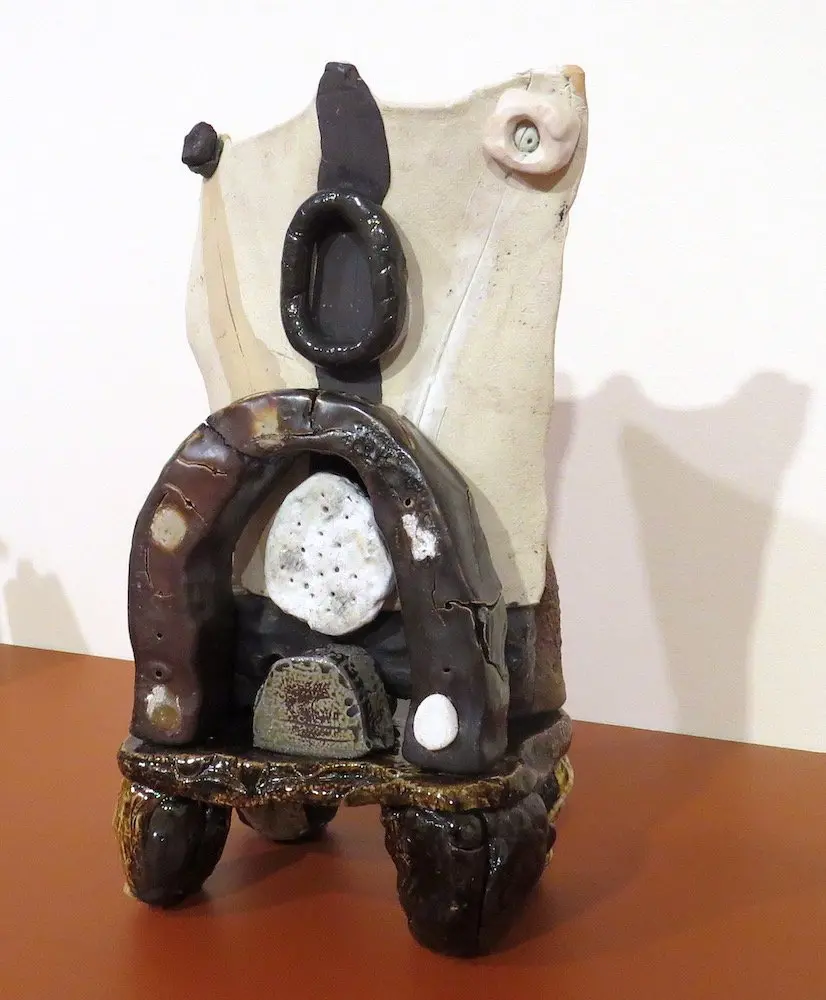
One of this year’s "Suite" exhibitions at the Dunedin Public Art Gallery is an array of ceramics by Peter Hawkesby.
Hawkesby has been living in Dunedin for the last five years, during which his work has proceeded in two directions, both of which are on display, which contrast with and complement each other well.
The Heart Basket series is the more contemplative half of the display — subtle open vessels modelled on simple baskets.
These works flows together, forms rising and falling like boats anchored on an undulating tide.
The salt and electric-fired glazes reflect the solidity and groundedness of the works with a series of rich deep browns, ivory blacks, and speckled creams.
Though gentle, there is a slight irreverent air in the hints presented as to the baskets’ possible contents.
The remaining works turn the dials up on the satire. These pieces are created from "loose parts" — bits and pieces which the artist has created over many years.
Hawkesby refers to these works as "re-jigged" sculptures, lively accumulations and accretions of pre-formed parts.
The artist has allowed his imagination to run wild with these wry assemblages, allowing the humour to come to the fore in pieces such as The Twins With Shared Ties and Ōtepoti With Missing P.
(Moray Gallery)
Ceramics are also central to the Moray Gallery’s current exhibition.
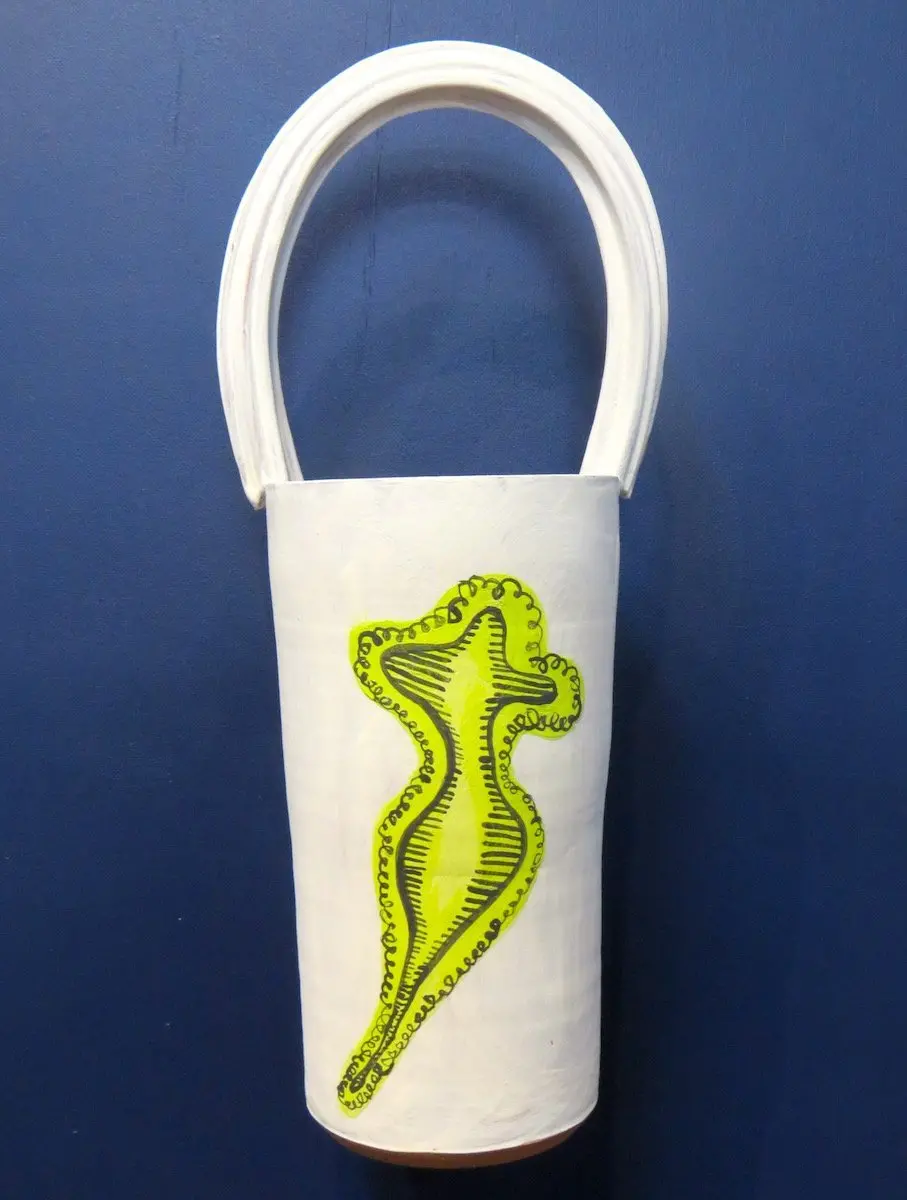
"New Objects: New Objectives" displays works by two local artists, Marion Familton and Ben Cole.
Familton’s art is based around the phytoplankton which inhabit Otago waterways. These fascinating miniature creatures come in many forms, some useful and some dangerous. In the artist’s work, they are presented in yellow, green, and black wallpaper-like designs on off-white plates, small hanging vases, and notably on two sculpted waterfowl.
The intention is to acknowledge that the organisms can be transported between waterways by boats, by container, or by wildlife.
The works succeed as effective artefacts as well as being a reminder of the diversity of life in our rivers and streams.
Cole’s pieces carry less of a subliminal message, but are equally fine work.
His small vessels, most of them usable forms, are active experiments in glaze and soda kiln effects.
The resulting works show the impressive effects of the rich glazes which flow across their surfaces. Many of the pieces have been created so as to reflect elements of chance in their design, with several of the pieces also including found objects in their construction.
The result is a series of attractive pieces — teapots, vases, and bottles — which succeed on both the functional and the artistic level.
(Milford Gallery)
It isn’t just Marion Familton who is reacquainting us with hidden nature. At Milford Gallery, a group show is also exploring the country’s ecology, focusing on its fragility and the need for us to acknowledge the symbiosis by which humans and the wild coexist.
"The Lost Garden" presents a series of artworks which examine this interrelationship and the changes in both us and the environment which result from it.
Pieces range from the titular work, a massive Paul Dibble sculpture featuring the extinct huia, down to a small carved boulder of pounamu, Chris Charteris’s Te Punga — Anchor.
This latter work deliberately shows both a highly polished side and a side left rough, "as nature intended", giving the work a warm, living air.
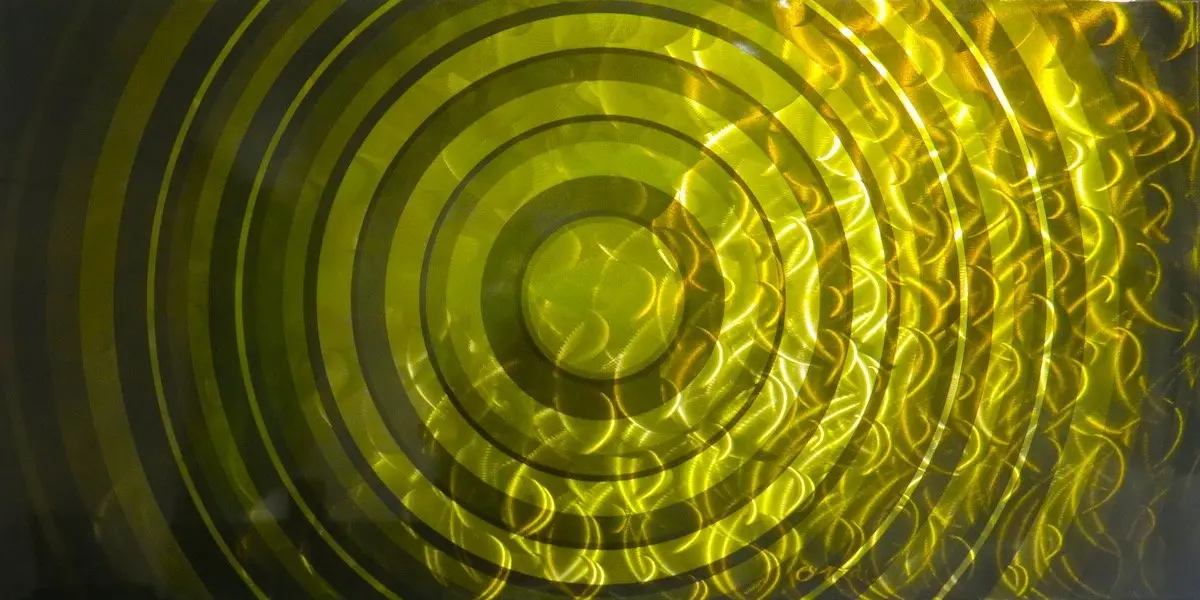
Other impressive works in the exhibition include the lacquered, etched steel Toi Ora, by Israel Tangaroa Birch, depicting the shimmering sun which is the source of our life and health, Chris Cordon-Scott’s excellent study of a coal mine office slowly becoming returned to nature.
Also eye-catching are Lisa Reihana’s shadowy bush scene A Spirit Voice in Running Water and a lush triptych by Elizabeth Thomson, its three hypnotic blue-flecked green panels equally suggesting impenetrable bush and the luminescent striations of fine pounamu.
By James Dignan