
PHOTO
(The Artist’s Room)
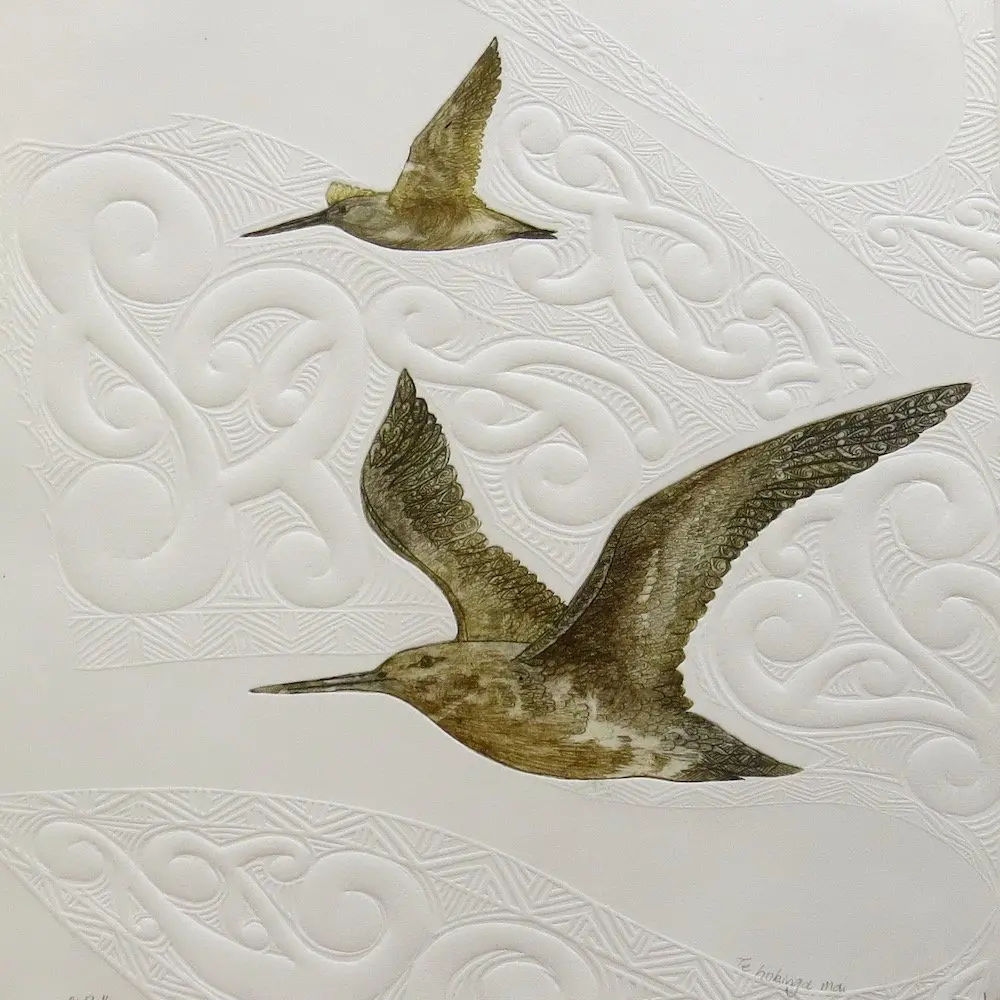
The Artist’s Room is the setting for a veritable convocation of birds, a ‘‘Hui o Ngā Manu’’, depicted in a series of bronze sculptures by Matt Gauldie and etchings by Al Bell.
Gauldie’s sculptures are fine works, presenting native bird species perched on various distinctively New Zealand objects which they might well encounter in the wild, ranging from fence palings to discarded beer bottles.
The artist’s humour can be seen in the dancing kea, its expression simultaneously realistic and caricatured.
The artist’s most impressive work on display is the superb Kāhu Poutama, with its falcon poised ready for flight on a post patterned with the traditional stairway tukutuku of the work’s title. Al Bell’s works are equally, if not more, impressive.
Finely etched on hand-embossed paper, these pieces provide the sense of airy movement to counterbalance Gauldie’s beautiful solidity.
In Bell’s capable hands, toroa wheel, pīwakawaka flit and kuaka glide. The traditional and stylised koru of the embossing is echoed in similar markings used for the birds’ feathers.
Each piece is accompanied by text linking the birds with puūrākau and tikanga.
The two series not only complement each other well, but care has been taken where possible to pair sculptures and etchings featuring the same birds, turning the gallery into an impressive artistic aviary.
(Blue Oyster Art Project Space)
Blue Oyster has gone back to the future in a gallery redesign which reverts to its former division into a main gallery and a smaller space which has been fittingly christened Pearl.
The first exhibitions in the new space are an immersive dreamscape from Sena Park and meditations on whakapapa by Hineaorangi Pakaua.
Park’s installation, ‘‘When the shelter is needed . . . ’’ occupies the larger space, and is created from a series of smaller interconnected pieces which become a veritable Garden of Eden. Incongruous groups of animals gather, waiting to be viewed from the several small shelters which dot the gallery.
The light is subdued, tinted by gels which cover lights and multicoloured fabrics which hang across the window.
The space becomes an antediluvian sacred site, and the viewer is asked to imagine rituals relating to these small gods of the environment.
Domestic connection of another form is evoked by Pakaua’s array of artefacts Tu ¯hono, created via traditional Ma ¯ori and Pasifika art practice.
The work reaches out to the artist’s own whakapapa, and also across the strands of Pacific lineage, both indigenous and settler.
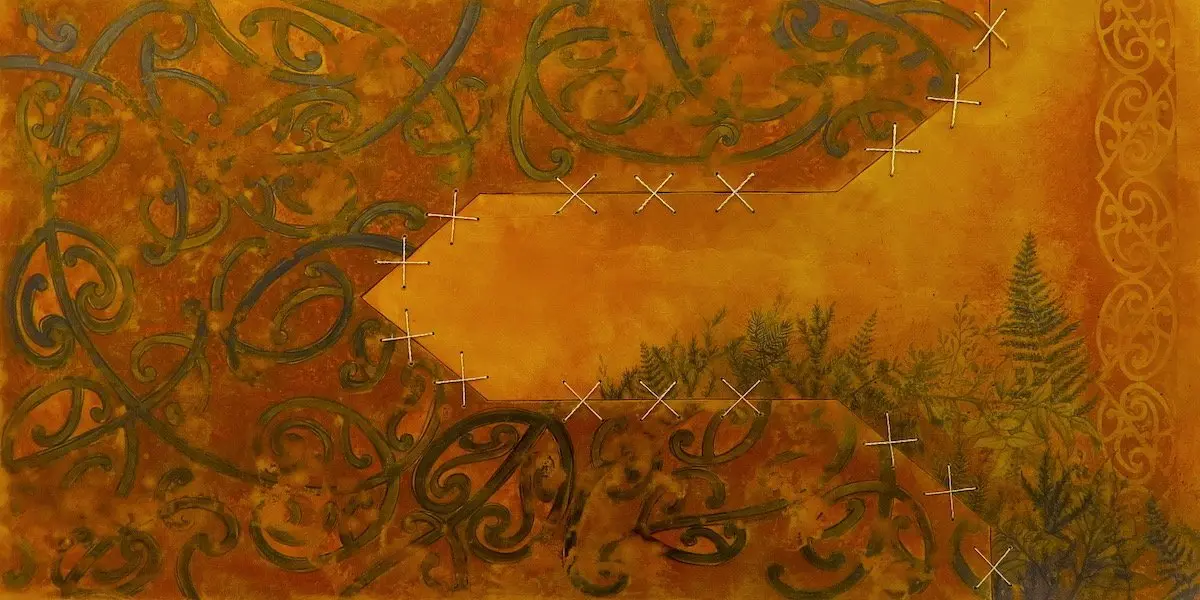
This interweaving is represented by the twine webs which connect the finely carved pieces.
Perhaps the show’s star work is an impressive study of interweaved sections of waka and their potential Freudian meaning, Haumi e Hui e . . .
(Milford Gallery)
The late Ian Scott’s art is most frequently remembered for his extended ‘‘Lattice’’ series of works.
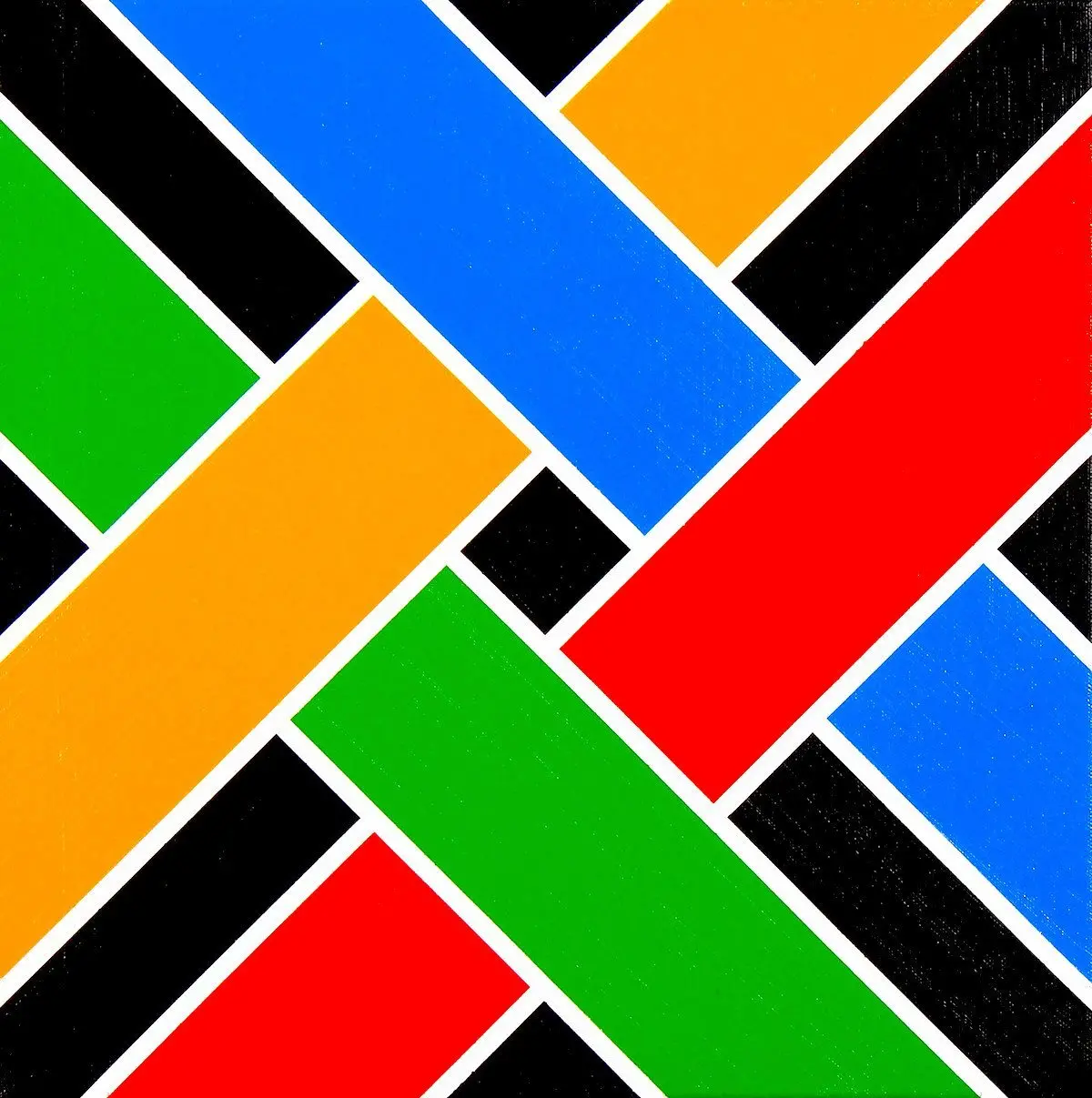
This geometrical abstraction was a major subject over more than 40 years of Scott’s career, and combined pure saturated colour with the patterns of traditional weaving.
The latter was initially intended to be a reference to the artist’s birthplace in the heart of northern England’s textile cities, but has since widely also been seen as a connection with traditional Māori design.
The current exhibition mainly covers works from Scott’s mature Lattice series in the 2000s and 2010s, but also includes a few earlier works which hinted at the path ahead.
The dynamics of the two Express works from the 1980s and an untitled work from the same era foreshadow Lattice no. 226, though the full flowering of the artist’s later pieces really begins with paintings such as Small Lattice no. 319 from 2008.
In these later works, the three-dimensionality of the art’s appearance is strong, with the different strands of colour crossing over and disappearing under each other, often seeming to pass out of the picture and into the gallery itself.
During this time, the artist was also experimenting audaciously with the picture plane itself, deliberately tilting the canvas so as to leave the ostensibly diagonal lines as horizontals and verticals.