
PHOTO
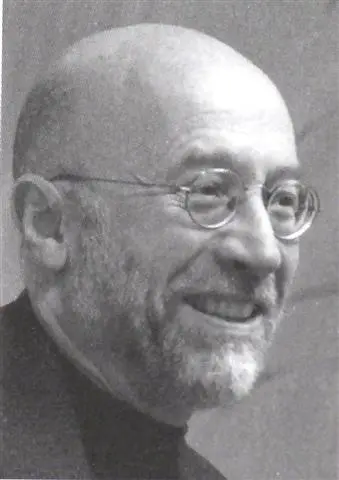
books editor Bryan James reviews Ill Fares the Land.
Ill Fares the Land
Tony Judt
Allen Lane, $35, pbk
Every decade or two, a book appears that has the potential to change the way people think of their world and their circumstances.
Those of us, readers "of a certain age", will remember the books or book of great influence on our teenage or young adulthood, be it a novel, book of poems, or philosophical essays.
The British "left wing" historian, Tony Judt, published Ill Fares The Land with just such a readership in mind, and I believe it has the potential to have a considerable influence on thoughtful youth today.
Judt was one of the world's best analysts of modern European history - Postwar: A History of Europe Since 1945 is his best-known book - and an outstanding public intellectual.
Some of us knew him best through his regular essays in various publications, including the New York Review of Books.
They were eagerly looked forward to - even here in remote Dunedin - and when, almost exactly two years ago, he gave what was his final lecture at New York University (where he was teaching), needless to say the auditorium was packed to capacity.
Judt spoke without notes for 90 minutes.

was formed from that lecture, written as a letter to the young people of the West.
He felt strongly that this book, although it contains a caustic criticism of the politics and economic policies of the past 40 years, was "about not forgetting the past, about having the courage to look at the present and see its faults without walking away in disgust or scepticism."
Disgust and scepticism about the state of the world and its future seem to be very prevalent among the young these days, with good reason: we have bequeathed an awful mess to them.
Judt's call for a revival of social democracy offers hope, however, of a way to restore their faith in the future.
He argues for a new way of living that is, in essence, based on political and social systems we have not seen for 40 years: the ideal of community, where the obsession with money and the unregulated market have no place, discarded as the shallow cure-alls they have proven to be.
After all, to whom did the money market con-men turn for salvation when the Great Recession - triggered by greed - occurred? To the State, of course, and the State has bailed them out.
So much for the theory of the benign good of market forces, and the "trickle down" mirage.
Judt argues that much of what we have lost is because of the collapse of confidence in ourselves in the 1970s, and in our politicians and parties, and the turning to other prophets - the Austrian intellectuals Popper and Hayek, and the Chicago school of Friedman - for easy "certainties".
In New Zealand's case I also think this was a consequence of the oil price shock and the creation of the European Union, and the inability of our politicians to quickly overcome their effects.
In fact, Judt several times refers to New Zealand as one of a handful of social democratic states seemingly secure in their own confidence whose experiments with market theory have largely been superficial.
The core welfare state remains intact - though one would have to wonder for how much longer.
He cites Margaret Thatcher's notorious bon mot: "There is no such thing as society; there are individual men and women, and there are families" as a key trigger for market-led economic policy-making, and points out what the consequences for society have generally been: "Broken highways, bankrupt cities, collapsing bridges, failed schools, the unemployed, the underpaid and the uninsured" - all suggestive also of a collective failure of will.
He is most passionate in discussing another grievous consequence of Thatcherite thinking (and, in our case, of Rogernomics): the growth in inequality.
The inevitable social problems that have followed have "(rotted) societies from within".
There isn't, in fact, much history in this little book - there's hardly room, nor is it needed - and so there is little attention paid to the revived phenomenon of the private home as the moated castle in retreat from the public community (although he does mention the creation of the now commonplace "gated communities").
Does he offer answers, a new politics? In essence, no; rather, he asks for idealism, especially the idealism of youth, to be respected.
You'd have to be blind, deaf and dumb not to realise he is arguing for a return to the homogeneous society, the shared community (realised as a fact in this country in 1935, and in Scandinavia), one with a broader sense of trust.
And perhaps the political exemplars of Judt's ideal may still exist, albeit in much-truncated form - in New Zealand where our politicians still clutch (just) the social democratic straw, and in some of the Scandinavian countries.
We need to talk about it, and most especially encourage our younger citizens - they who will build the future - to think about it.
I can't imagine a better book to give them as a starting point than Ill Fares The Land.
Tony Judt's voice has been silenced. He died, aged 62, just last week.
Ill fares the land, to hast'ning ills a prey,
Where wealth accumulates, and men decay;
Princes and Lords may flourish, or may fade;
A breath can make them, as a breath has made;
but a bold peasantry, their country's pride,
When once destroyed, can never be supplied.
- Oliver Goldsmith, 1730-1774