
PHOTO
Reif Larsen
Harville Secker/Penguin Random House
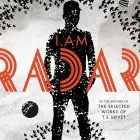
From its imposing length (648 pages) to the austere severity of the font, Reif Larsen's second novel is an intimidating piece of work.
It opens in 1975 New Jersey with the birth of the titular Radar Radmanovic, an event that creates a minor sensation because although his parents are both Caucasian, he himself is, to quote one newspaper report, ''blacker than the blackest black''.
Although his mother Charlene spends the first few years of his life dragging him from specialist to specialist in search of answers, nobody can say for certain what is wrong with him, let alone how to ''cure'' him.
Then she receives a telegram inviting her to Kirkenesferda, a community of physicists and artists who live in a no man's land between the borders of Norway and Finland.
Although the principal focus of the collective is the development of puppet-based explorations of quantum theory they then perform in war zones, the note suggests that in the course of their research they have developed a technique that might help her son.
A desperate Charlene agrees to meet them, and their procedure, which involves electrical manipulation of melanocytes, successfully alters Radar's skin colour.
However, it also leaves him bald, lame and epileptic, and gives him an almost intuitive connection with electronics and radio signals.
Nor is it the end of his involvement with this obscure artistic movement; years after his Norwegian experience, he finds himself participating in their fifth and final performances, deep in the heart of the Congo.
As if this were not enough for one novel, Radar's story is interspersed by sections set around and during the Bosnian and Cambodian civil wars, both sites of Kirkenesferda ''happenings'' and the novel as a whole is intended to embody their thematic preoccupations.
Did the first of the collective's performances occur at the point at which it was installed, or 15 years later when it was first discovered?
Does the truth of a story actually matter at all, or is the mere fact of it being told sufficient in and of itself?
This pattern extends even to the selection of the headline for the promotional release: ''The only thing I am certain of is uncertainty itself and of this I cannot be certain.''
The writing also varies markedly in tone.
At times it reads like a conventional novel, with pages dedicated to Charlene's guilt about her son's fate and Radar's adolescent angst.
At other points it resembles a work of historical scholarship, drawing extensively on two other such histories (both of disputed veracity), littered with photographs, newspaper clippings and diagrams, and supplemented by an extensive bibliography.
There seems to be at least a kernel of truth behind the story; Kirkenesferda apparently did exist and is commemorated in a puppet museum at Kirkenes where the community was supposedly based.
But in today's Google-centred world it is easy to create a substantial ''history'' to support a fictional enterprise, and there are a number of websites showing ''found footage'' of their performances that promote the novel.
Yet surely the whole point is that a story should succeed without such external supports.
I am Radar is an impressively clever and recursive work, but rather than become a self-sustaining creation, it ultimately crumbles under its own weight.
• Cushla McKinney is a Dunedin scientist.