
PHOTO
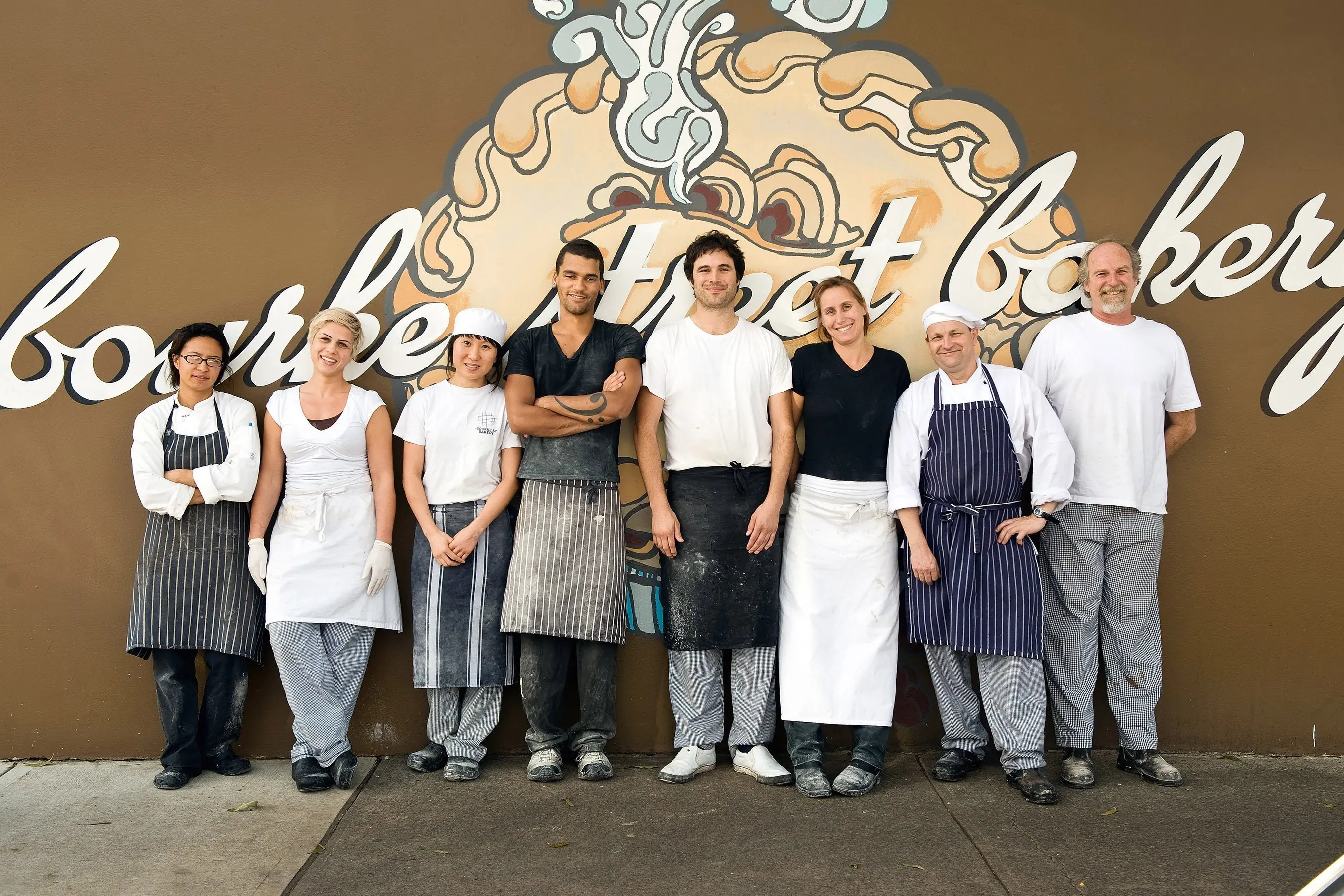
Baking is part science, part stoneground milling and part river-running romance, Paul Allan and David McGuinness say.
"But it’s not the romance that will keep your baking consistently good, it is the science.”
The owners of Bourke Street Bakery in Sydney’s Surry Hills are celebrating 21 years in business with a special edition of their recipe book of the same name. They now have more than a dozen outlets in Sydney as well as New York City.
They buy organic flour directly from a stoneground mill and believe if they took out their electric deck oven and mixer from the production process, then it is not far away from how bakeries operated in the 16th century.
Their book includes their favourite recipes, tested and retested, but allowances do need to be made for the equipment and experience of each baker.
"Hopefully with good quality ingredients and a little technique, the rest of the baking process will take care of itself.”
Climate is also a large variable in any commercial bakery let alone a residential kitchen.
"If your first attempt doesn’t look exactly like the pictures in the book don’t give up. Think about why it didn’t turn out and you’ll have a greater chance of fixing it next time.”
Doing this is a slow but necessary part of becoming a good baker, they say.
"For any baker, and in particular a home baker, creating something from scratch is a beautiful thing. Being able to share your creation is a double pleasure.”
Instead of worrying about the look of the product they urge bakers to worry about the ingredients making sure they get the best quality flour, butter and salt possible.
"That will ensure a superior end result.”
The book includes plenty of advice on what to seek out, equipment needed and basic techniques.
“Patience in baking is not a virtue: it is a necessity. A good baker can control the dough if they can control the environment where the dough is created.”
At Bourke Street Bakery, they do not subscribe to the theory that the better the machine, the better the product will be.
"Having better toys will not make you a better baker. Technique and knowledge, and, of course practice, are the only things that will help you make great bread.”
As well as recipes for breads, yeasted and sourdough, there are recipes for pastry, cakes, biscuits and desserts.
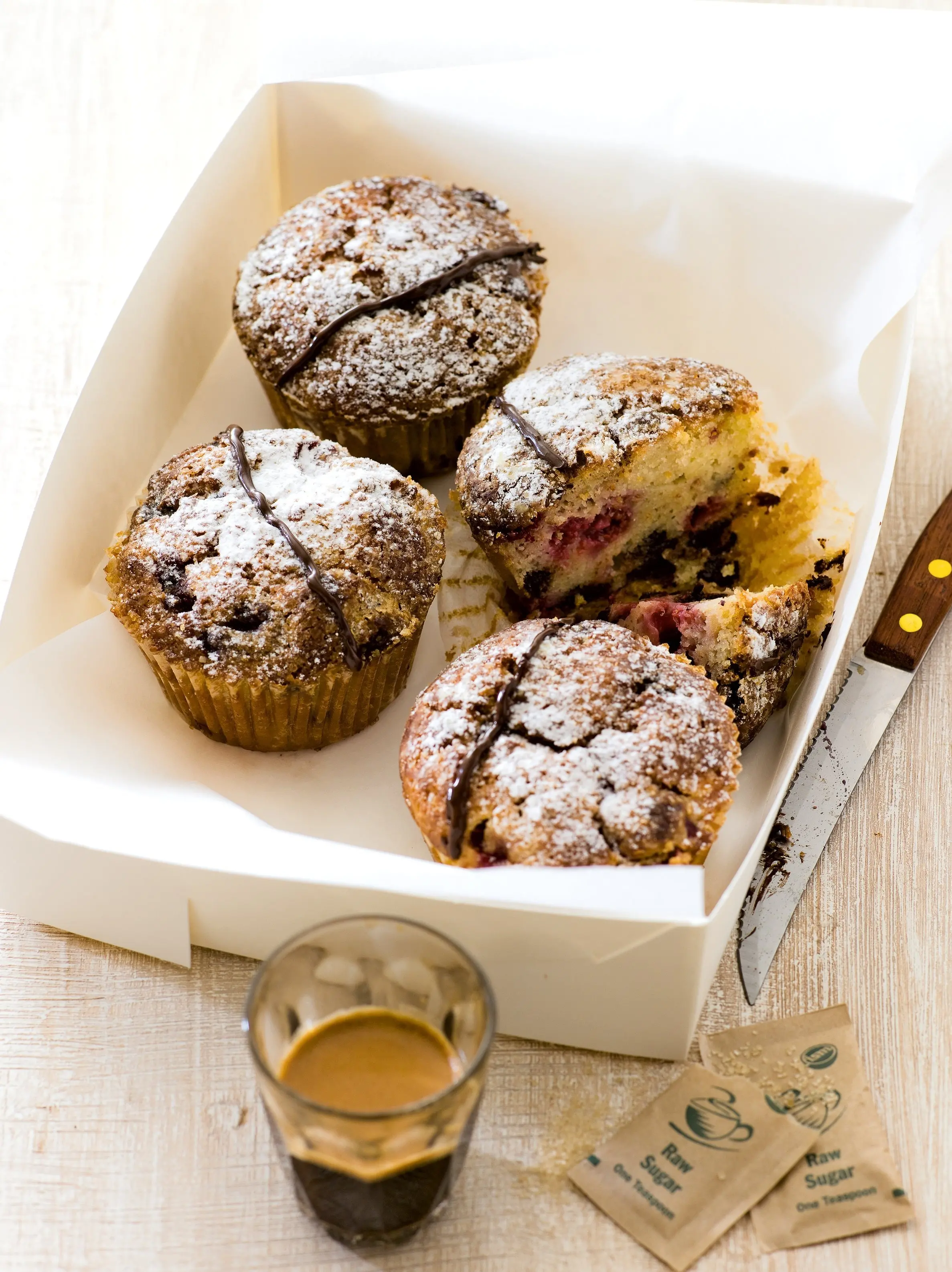
Dark chocolate and raspberry muffins
These are the most popular muffins sold at Bourke Street Bakery. Warm from the oven when the chocolate is still soft these muffins are a real treat.
Makes 12
400 g (2 2⁄3 cups) plain (all-purpose) flour
2 teaspoons baking powder
300 g caster (superfine) sugar
310 g unsalted butter
480 ml buttermilk
3 eggs
225 g dark chocolate (55% cocoa), roughly chopped
225 g raspberries, washed
55 g (1⁄4 cup) raw (demerara) sugar
icing (confectioners’) sugar. for dusting
Method
Preheat the oven to 190°C . Lightly grease two large 6-hole muffin tins and line with paper cases.
Sift the flour and baking powder into a bowl and add the sugar, mixing well to combine.
Melt the butter in a saucepan over low heat, then remove from the heat and stir in the buttermilk. Using a whisk, stir in the eggs to combine. Pour over the dry ingredients and whisk to combine — don’t worry if there are still some lumps of flour at this stage. Use a large spoon to gently fold through the chocolate and raspberries.
Spoon the mixture into the prepared muffin holes. Sprinkle the tops with the raw sugar. Reduce the oven temperature to 180°C and bake for 25–30 minutes. It may be necessary to drop the temperature about 10 minutes before the end of baking time if the muffins are starting to brown on top. To test if the muffins are done, push the top gently to feel that it is firm and turn one out of the tray and see that the bottom has coloured. Remove from the oven and allow to cool in the tins for 10 minutes, before eating. Dust with icing sugar to serve.
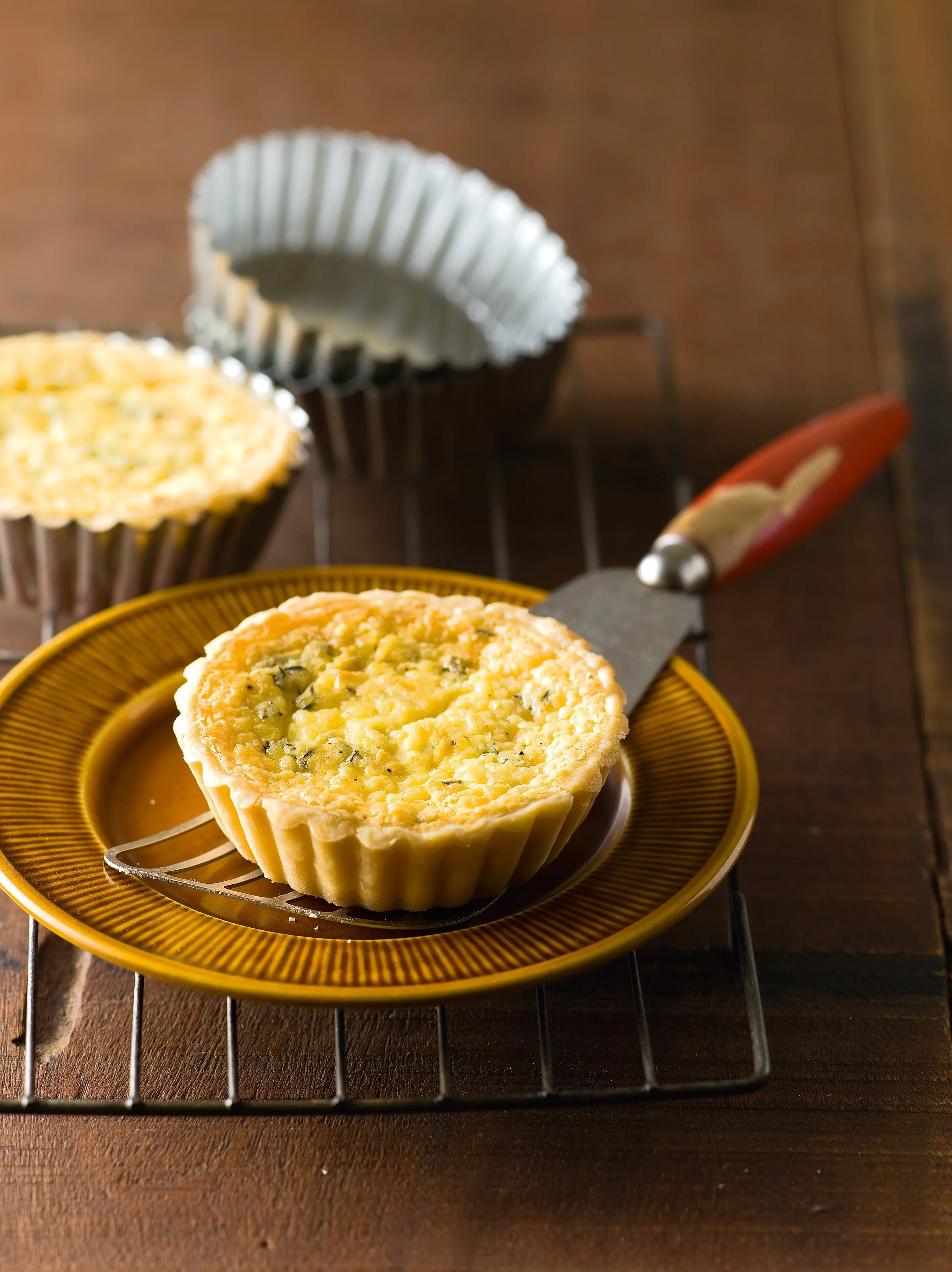
Goat’s cheese and leek tart,
Sunday brunch, sitting under the grapevines on the terrace watching the river flow in the distance, glass of Semillon in hand, a pear and rocket salad with croutons and a goat’s cheese and leek tart. Drop a couple of roast tomatoes or field mushrooms sauteed in butter and parsley on top of the tarts before popping them in the oven if you so desire.
Makes 8
1 quantity savoury shortcrust pastry
35 g butter
1 large leek (about 200 g), white
part only, washed and finely sliced
80 ml (1⁄3 cup) white wine
300 ml pouring (whipping) cream (35% fat)
300 g soft goat’s cheese
4 eggs
3 thyme sprigs, leaves picked
1⁄2 teaspoon salt
1⁄2 teaspoon freshly ground black pepper
Method
Preheat the oven to 220°C . Roll out the savoury pastry and use it to line the base and sides of eight 10 cm fluted, loose-based tart tins. Place in the refrigerator.
Melt the butter in a frying pan over medium heat and saute the leek for about 5 minutes, or until softened. Add the wine, swish it around, and allow it to evaporate completely. Remove from the heat and set aside.
Heat the cream in a saucepan over medium heat and crumble the goat’s cheese into it, stirring continuously until the cheese has completely dissolved and the cream thickens. Remove from the heat and set aside.
Put the eggs in the bowl of an electric mixer fitted with a whisk attachment and mix for about 3 minutes on high speed, or until light and fluffy. Add the cream mixture, thyme, salt and pepper, and continue mixing on low speed
for about 30 seconds to combine.
Put the pastry shells on a baking tray lined with baking paper and scatter the cooled leeks into the shells. Pour over the cream mixture to fill each tart. Slide the tray onto the middle shelf of the oven, reduce the oven temperature to 180°C and bake for 30–35 minutes, or until golden.
Remove from the oven and allow to cool a little before serving
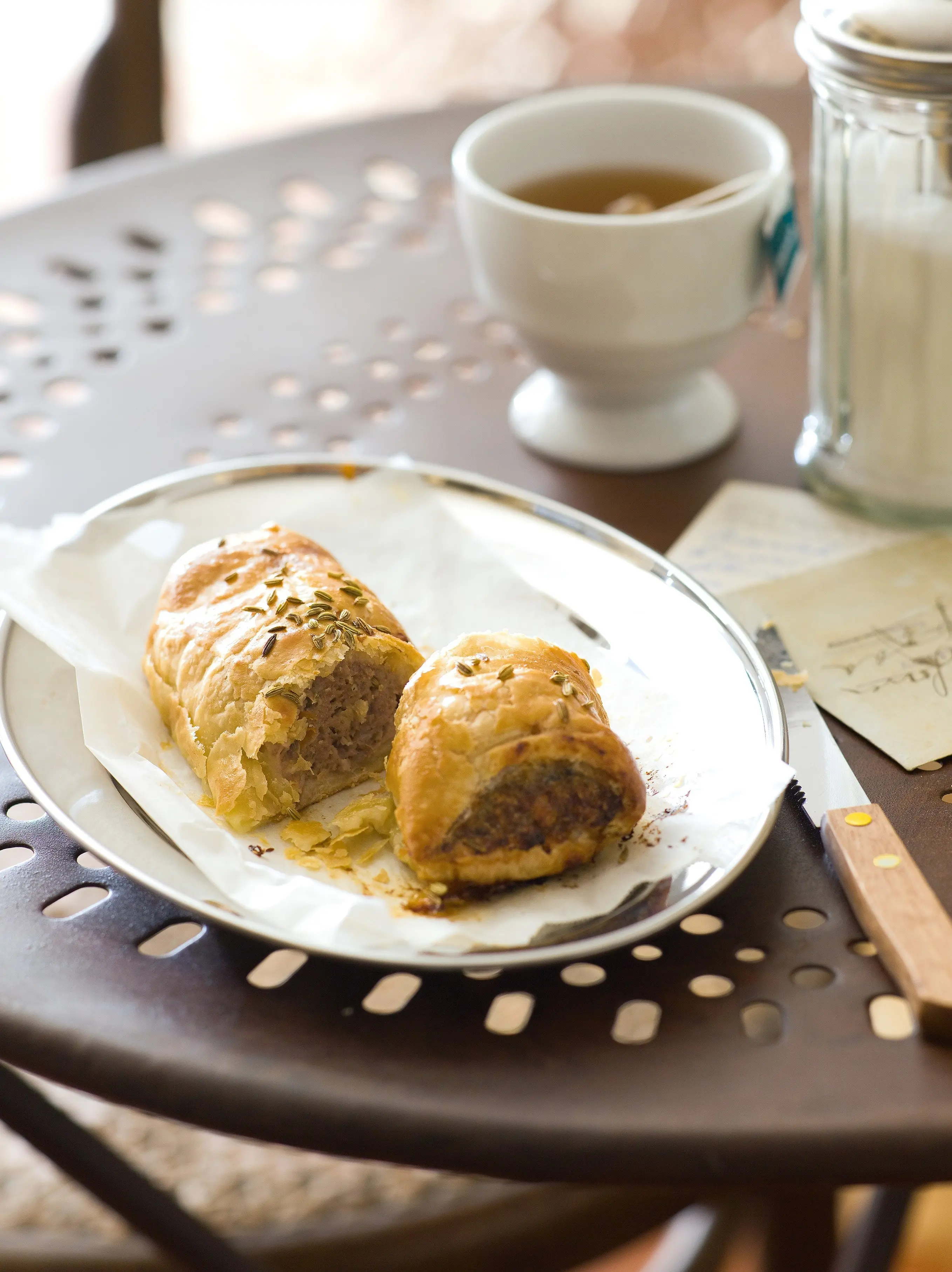
Pork and fennel sausage rolls
Sydney’s best butcher shops are filled with a multitude of gourmet sausages for sale, and we have often thought that these flavours would taste far better wrapped in butter and flour than bung. (Bung, if you’re wondering, is the name for sausage skin, which is made from animal intestine.) Sydney’s backyards are always alive with pork and fennel sausages rolling on barbecues, so we knew this sausage roll would be popular, but we never dreamed it would be this popular. Sydneysiders are addicted to them. In Surry Hills we are often asked if narcotics feature as an ingredient. But, as you can see above, we only use the best produce we can find (and besides, the food costs would just not allow it).
Makes 12
30 ml (11⁄2 tablespoons) extra virgin olive oil
6 garlic cloves, finely chopped
40 g fennel seeds, finely chopped
4 thyme sprigs, leaves picked
150 g brown onions, finely chopped
150 g celery, finely chopped
150 g carrots, finely chopped
1.2 kg lean minced (ground) pork
40 g dry breadcrumbs
20 g (1 tablespoon) salt
15 g (3 teaspoons) white pepper
1 quantity puff pastry
egg wash, for brushing
fennel seeds, for sprinkling
Method
Heat the oil in a saucepan over medium heat. Add the garlic and cook for 30 seconds. Add the fennel seeds and thyme and stir together for 1 minute, or until aromatic. Add the onion and celery and cook for 5 minutes, or until the onion has softened. Add the carrots and cook for about 20 minutes, stirring often, until the vegetables are mushy. Remove from the heat and allow to cool.
Put the pork mince into a large bowl and add the cooled vegetables, breadcrumbs, salt and white pepper. Using your hands, mix the meat quite forcefully for 3 minutes to thoroughly combine (this will also work the protein in the meat). At this stage it is best to roll up a little ball of the meat mixture and cook it in a hot frying pan for 2 minutes to check the flavour. You may find it is too salty. However, once the mix is encased in pastry the saltiness should even out. But if you cannot taste the salt at all then you need to add a pinch or two more.
Roll out the puff pastry into a rectangle, about 92 x 32 cm. Cut the pastry into six rectangles about 15 x 30 cm each.
Preheat the oven to 200°C .
Divide the filling mixture into six even-sized portions. On a clean work surface, roll each portion out into a 30 cm log with a 3 cm (11⁄4 inch) diameter. Place each log lengthways in the centre of a pastry rectangle and brush one long edge with egg wash. Firmly fold the pastry over, pressing to enclose the log tightly, leaving the ends open. Cut each roll into two even-sized pieces and place on baking trays lined with baking paper, seam side down. Brush the top of each roll with egg wash and sprinkle with fennel seeds.
Reduce the oven temperature to 190°C and bake for 35–40 minutes, or until they are a golden-brown roll of steaming oozing goodness