


Very soon there are seaward views of nearby Waimate, and you’ve earned them.
On the day a friendly local called the White Horse route ‘Heart Attack Hill’, after her own previous real-life actual hillside heart attack. Staunchly, she still walks the hill and was spotted casually returning to town on foot.
A secret trick is to walk the steepness alone and stop whenever you want.
Hot tip: "Is that a flowering broadleaf? Must check."
Bonus tip: Photograph the scenery.
Pro tip: "That sounds like a shining cuckoo? There it is! Stop — if I don’t photograph it, it hasn’t happened."
Premium: Remember something that must be said to a friend right now. Stop to voice-message it. God willing, it could become a two-way exchange. Modern technology is amazing.
Soon the terrain’s flat. Wind whistles apocalyptically through powerlines crossing farmland.
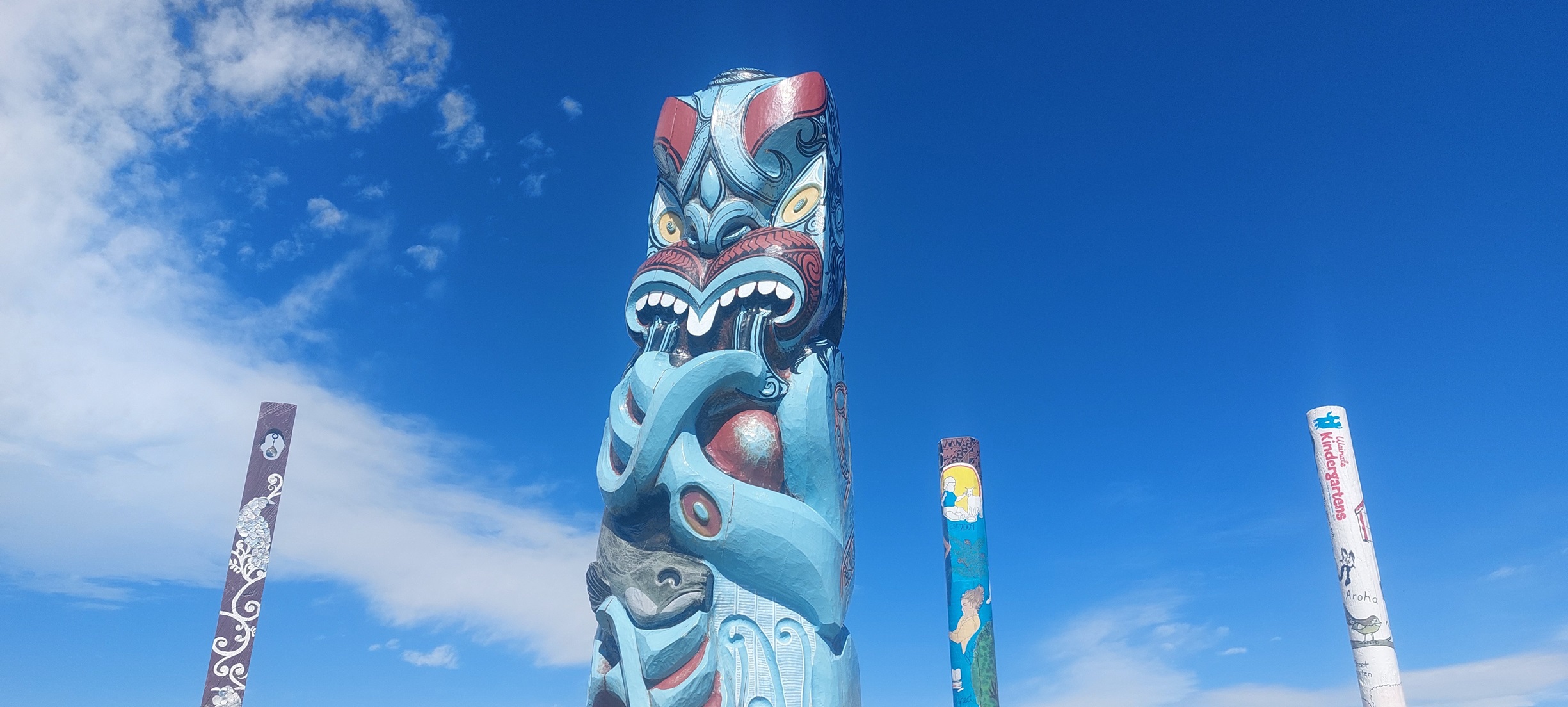
The walkway continues, entering the fenced Point Bush Ecosanctuary.
Mystifyingly it seems to be a sanctuary for gorse.
Then something special happens. Not spoiling the surprise here, it involves happy native bird call and even a small totara forest. You can almost guess the number of years of conservation effort from the even height of the understorey.
Predator traps were first set out in the 90ha sanctuary in January 2021. A particularly local bent to this story is the weed-eater wallabies released for sport in nearby hills in the mid-1800s. Along with goats and pigs they eat the forest. The pest-proof fence stops animals from entering the forest, allowing people to productively remove the animals inside it. Work has begun on a staged extension of the fence, pending funding, protecting a much larger area.
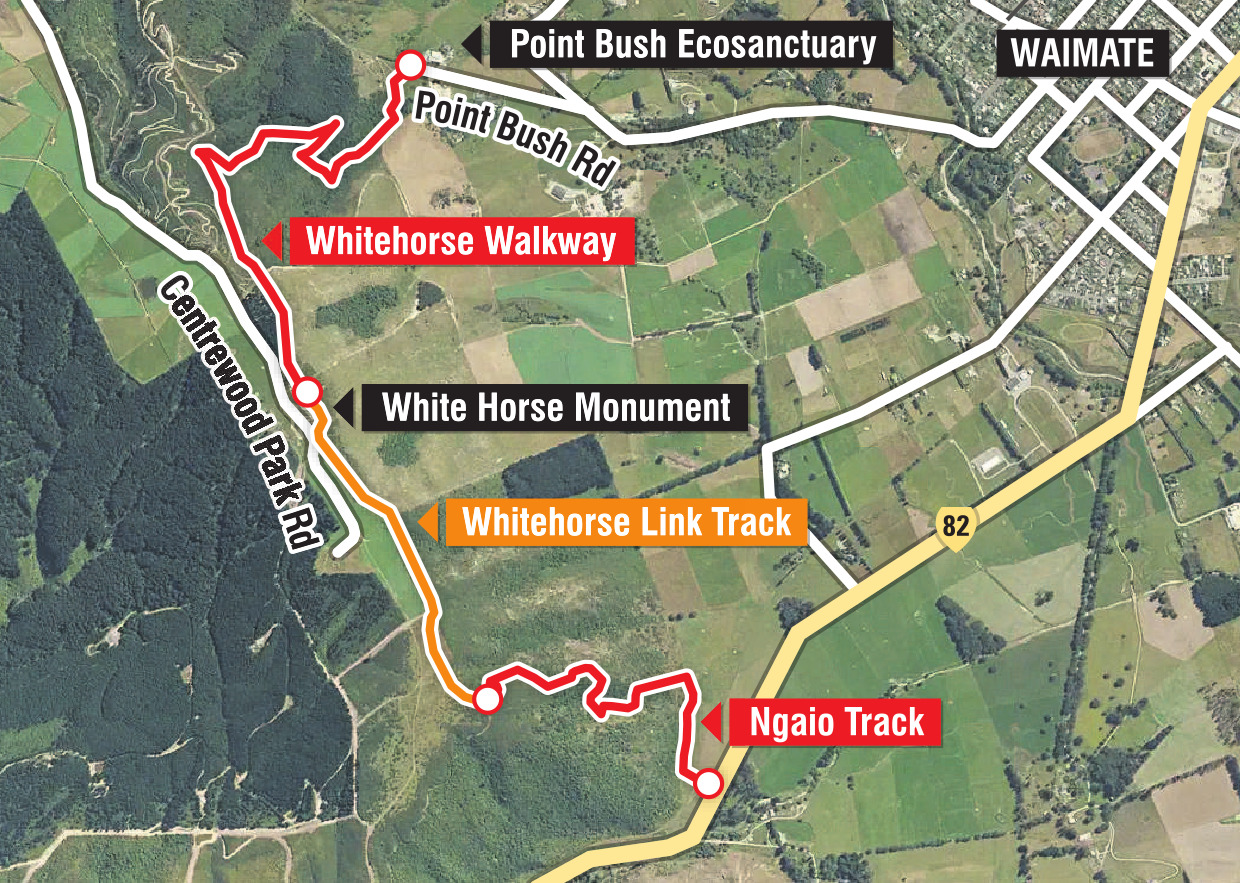
Turn round and go back. Oh, there’s the monument. Yes, of course, at the heavily infrastructured lookout area.
It was built in 1968 on land donated for a park by a generous farmer. Other farmers, the Haymans, led on building the monument, celebrating the draught horses previously used in farming. Norman Hayman said in his diary, "The terrific strength of the draught horses was clearly demonstrated to me when I purchased my first tractor. Three horses could pull a dray load of shingle from the pit but a presumably powerful tractor could not." Local councils even had teams of horses for building roads.
Maybe one day someone will build a memorial to the landline.
There are other ways to visit this ridge but if you want the Get Fit option this is it — a big uphill, a flat tourist spot with toilet, a big downhill, then all in reverse.
The return walk is 10km and a good few hours, depending on physicality and individual desire to kick back and enjoy the experience.
Things are only getting better as work is happening on a much bigger walking-biking loop, the Waimate Trail / Te Ara Waimatemate.


