

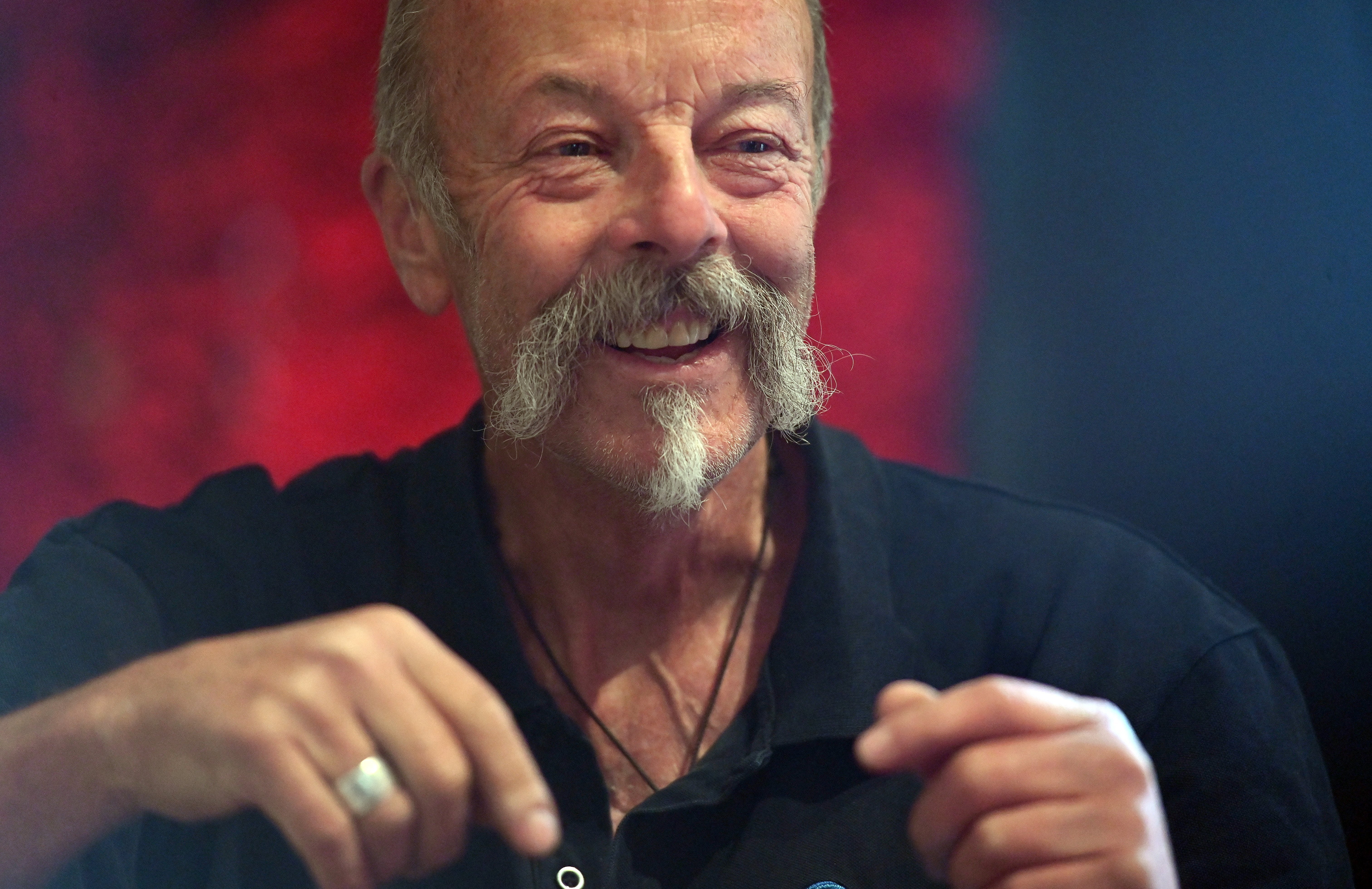
Over almost half a century, TVNZ camera operator Ross Wilson has worked to keep viewers squarely in the frame, doing whatever, wherever and however, all around the South.
He’s trained his lens on some of the biggest stories to have played out in Te Waipounamu over those years, often under trying circumstances.
But it’s a lesson learned early in his career that he nominates to illustrate the craft to which he dedicated his working life.
Back then, zooming in through either the round, square or arched window on long-running children’s show Play School was one of the most difficult tasks for the camera person, Wilson says.
‘‘In the middle of the very small windows was blue and with chroma key you could remove the blue and put a picture in it. So, you had to zoom through that particular window and that was a real test for a young guy to do that smoothly and steadily.’’
Generations of television watchers have had reason to be thankful for that steady hand in the decades since.
Indeed, as a further result of Wilson’s longevity in a high-profile role, many of those watching will have had a pretty good idea precisely whose handiwork they were witnessing. Unusually, it could be that one of the South’s most well-known faces belongs to the guy behind the camera.

TVNZ news operation manager Mike Fitzgerald says Wilson has had 13 work vehicles which needed replacing every few years, not due to accidents but because of sheer mileage.
‘‘He hasn’t stopped. He has a real passion for news, a real drive to tell a story. He has told so many stories — a legend of the game.’’
After 48 years with TVNZ, Wilson, who turned 70 on May 4, says it’s time to slow down and enjoy life, though he hopes to continue as a freelance cameraman.
Wilson has worked on some of the highest-profile, grimmest stories to come out of the South in recent decades, including the Aramoana shootings in 1990, the Bain family murders in 1994, the killing of Kylie Smith in 1991 and the Sophie Elliott murder in 2008.
He also covered the Christchurch earthquakes and the Pike River and Cave Creek disasters on the West Coast, as well as filming thousands of human-interest stories and lots of weather events, mostly snow and ice.
‘‘A lot of the tragedies are the things that stick in your mind,’’ he says.
‘‘I guess you remember them because they are creating Dunedin or Otago history, whereas your cute story of Auntie Miriam knitting is a nice one to work on but will be forgotten tomorrow.’’
Born in Dunedin, Wilson went to Corstorphine School and then John McGlashan College. He was keen on landscaping as a career but, without consciously realising it, may have been destined to work in television. His father Ernest (Ernie) was a musical director for programmes made in the Dunedin studios and his mother, Joan, did part-time makeup work there too.
‘‘I’d come back from overseas and didn’t have a job and I thought, ‘TV? — I’ll go and have a look’. I got interviewed by a guy who had worked with dad. It turned out there were a few of them there that knew dad, and mum to a lesser degree, so I think that probably helped.
‘‘In 1978 I started as a floor manager, for about a year, and while I was doing that I got on well with the camera guys and they let me play with the cameras.’’
One day, a cameraman on Super Sale broke his ankle and Wilson got his chance.
‘‘They asked, ‘can you do the wide shot?’ and I said ‘OK’ and it just started from there.’’
Working on Play School was ‘‘the absolute best place to learn your trade’’, he says.
‘‘You were working with a lot of trainee directors, and they were learning their thing as we were learning our craft.’’
There were also shows such as Beauty and The Beast, Spot On, and Of Course You Can Do It coming out of the Dunedin studio.
As Wilson gained seniority throughout the ’80s, he worked on rugby coverage and large-scale productions such as Miss New Zealand. Over several years into the early 1990s, studio and film camera operator roles were combined and Wilson began heading into the field to shoot news items.
‘‘I was excited. And the news thing developed from there.’’
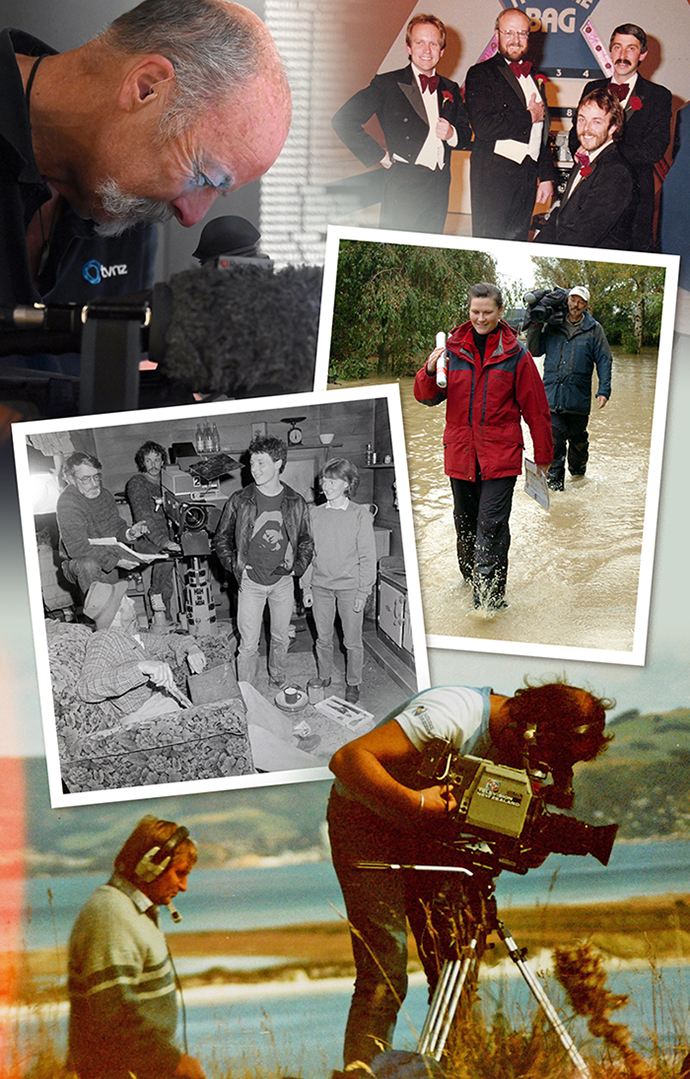
‘‘We were like an old married couple, basically,’’ McDermott says of his many years on the road with Wilson.
‘‘Ross and I worked together almost on a daily basis for about 21 years from about 1990. Ross always did the driving — it’s the tradition in television that the cameraman drives. He’s probably driven more than two million kilometres on the roads of Otago and Southland, and I sat beside him for a least a million of them.
‘‘He was a brilliant driver. He had been a truck driver in Scotland, so he was very skilled, and in all those kilometres we never had an accident.
‘‘Sometimes we drove on roads that were very, very dicey. In the early ’90s there was a period where there was a massive chill in Central, with lots of snow. And the whole region went into permafrost. That meant lots of stories for us. I think we went up to Central eight days in a row, on roads that were pretty much closed, and we’d be sliding all over the place.’’
McDermott was happy to use the time in the passenger seat to write his stories.
‘‘We talked a lot of sport, we talked families. We obviously talked quite a bit about the story we were on. Ross has a great knowledge of music and he’s a good singer too — we’d often listen to the radio.’’
On June 20, 1994, McDermott got to work as usual about 8am.
‘‘I got a ring from a taxi driver, saying ‘I don’t know what’s going on, but there seems to be a lot of police activity in Every St’. The cops wouldn’t say anything, so we just went there, and we got in before they really cordoned it off.’’
About 7.09am, David Bain had called 111 to report finding his mother and father Margaret and Robin, and three siblings Arawa, Laniet and Stephen, dead in their Andersons Bay home.
Wilson was driving into town about the time McDermott was talking to the cabbie.
‘‘I was just by Moana Pool and the phone rang. It was John to say he’d got a report that there’d been a shooting over in Andersons Bay and there may be people involved.’’
McDermott says Wilson’s footage of Bain being wheeled out of the house to an ambulance has been used more often than any other sequences he took.
Wilson recalls being in the old Karitane training hospital above the Bain house.
‘‘From there you could look down on to the house. The next thing the door opened, and they wheeled him out in a wheelchair. I got that shot.
‘‘But I could see Pete Stone, the TV3 cameraman, was coming, and I could see something was about to happen. So, I said to John ‘talk to Pete’ and I was getting the camera ready. And John said, ‘what are you talking about?’. And I said, ‘just f . . . . . . talk to Pete’, so he turned round and started chatting to Pete and they missed that shot.’’
After the Aramoana massacre, locals had burned down the home of shooter David Gray. There was word the same might happen to the Bain home.
‘‘We did 24-hour shifts outside, just in case. I woke up about seven in the morning and these couple of firefighters started walking round the place. So, I got out of the car and went across and asked if I could have a look round too and they said sure. It wasn’t under guard or anything.
‘‘I just followed them around. I went right around the back to where the father’s caravan was and looked in there. But it kind of gave me a false impression, because the local cops had taken everything out, dumped it all in the front area of the house and then the family came and took what they wanted, and then they just threw everything back inside again.
‘‘I went in, down the stairs into a laundry-type area, and then upstairs and could see into the lounge, and that’s where they’d just dumped this big pile of stuff. It was footage you couldn’t really use because it didn’t really look like the way it was.’’
The Wilson-McDermott team covered ‘‘countless bloody weather stories’’, McDermott says.
‘‘Auckland were obsessed with snow. Basically, every time it snowed in Dunedin or wherever they’d want coverage.
‘‘On one occasion there’d been snow around for a few days, and we got called down to Clinton, because they’d had a real big snowstorm down there and State Highway 1 was blocked. And we got down there quite early in the morning.’’
Wilson recalls the occasion.
‘‘We got on the Clinton back road and there were these people on [push] bikes on the snowy road. So, we stopped the get the camera out — but the camera wasn’t there. I just happened to have a little handycam in the car and we shot the story on that instead. It was sort of a different colour.’’
The camera was back in Dunedin, drying out from the previous day’s adventures.
Over a long career any journalist will have to cover horrific events — ones that stay in the mind and come back to bite when least expected.
Wilson has seen plenty of tragedy and heartbreak, but says to some extent the camera provides an emotional shield.
‘‘Your eye’s in the viewfinder and you’re concentrating on what you’re doing. I can go and film open-heart surgery because I’m looking through the viewfinder.’’
Sharing the worst experiences with other journalists also helps, along with a dose of black humour. He says the worst jobs have often turned out to be the ones where the strongest relationships are forged, which keeps him going.
But he does wonder if he should be more affected by the trauma he has seen.
‘‘I said this to my wife, it should be a concern that it doesn’t actually affect me that much.
‘‘TVNZ’s really good, they offer us a support service, but I just don’t seem to have a problem with it. But you think of things later on, you drive past and you think, ‘I saw such and such there’.’’
When it comes to clangers, he remembers the departure of then United States president Bill Clinton after his visit to Queenstown in September 1999.
There were three crews there to cover every eventuality. After the live cross to the six o’clock news, they had to figure out where the Clintons were going for dinner.
‘‘A policeman from here walked past and said, ‘if you don’t go too far from here’ and he looked over his shoulder . . . So, we set up three cameras, one either side of the entrance and Clinton came. He got out of his car and he went over to these people. I’d put a camera right there. Then he went across to the other side and we had a camera right there, and then I was on the other side of the road getting the wide shot.
‘‘We had the whole thing, and the TV3 guys were sitting back at their motel.’’
Wilson and colleagues were told Clinton would talk to some fundraisers at the airport.
‘‘We got to the airport early and the FBI or whoever checked the camera and you had to show it worked. We had an hour to spare and we were the only camera there, and we had guys along the road saying he was on the way.
‘‘I put my camera up on a baggage trolley, turned it on and yeah it worked. Turned it off. OK and then he’s coming into the airport, I turned the camera on, I could see the wheels turning, but there was nothing.
‘‘So, I said to Vicki Wilkinson-Baker, ‘if you go to where those girls are, I’ll be [filming] over your shoulder — if we get it, we get it’. Sure enough, Clinton came over to talk to these girls, really close and friendly, and we walked back through the airport and these other media guys were asking, ‘oh bugger, how was it?’. ‘Oh, it was great’ and we got back in the car and checked it and we had nothing.’’

‘‘We went from the high of getting him at the restaurant to the low next day.’’
Wilson’s last official day is May 22. Farewell speeches are being written and polished. But he is still planning to be out and about, doing what he considers has been ‘‘a well-paid hobby’’.
Fitzgerald says it was a sad day ‘‘when he said he was going to hang up his boots’’.
‘‘He’s got so much passion for telling stories in his own ’hood. He is a very, very proud Dunedinite, he truly is. You couldn’t ask for better, he’s a workhorse, so committed and keen.’’
Wilson says retirement is all down to age, health and timing.
‘‘I’ve had a triple bypass, I’ve got a pacemaker, I’ve had cancer, I’ve had two back operations, two shoulders and a knee. We’d just done major renovations of our property and I was sitting at home one day having a beer, and the place was looking absolutely spick and span, and I was thinking, ‘yeh, this looks good’.
‘‘It’s time to enjoy it.’’


