
PHOTO
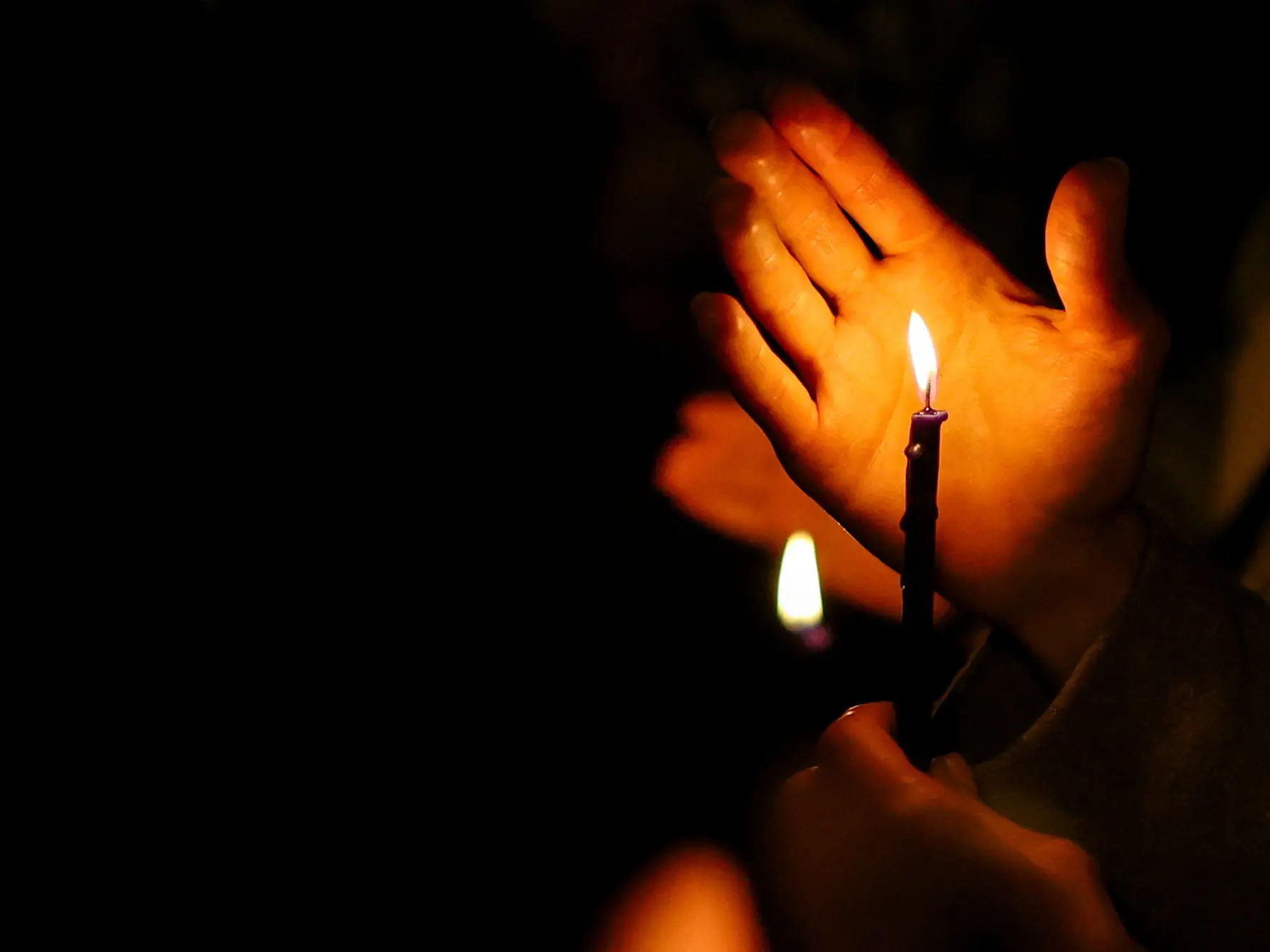
It doesn’t feel tika (appropriate) to not acknowledge those who have passed in the Bondi Beach tragedy.
To every mother, son, daughter, father, friend, colleague lost in this brutal terror attack, kia au te moe.

A targeted and cruel attack on Jewish Australians is a pure act of evil as far as I am concerned. The continual antisemitism that just never gives up is arduous and heart-rending. I fear for the Jewish communities across the world, this loathsome hatred on race is an illness that seeps into the young and impressionable minds and turns reason into the illogical and irrational. As the news unfolded of the Bondi terror my mind turned to a Jewish elder I had the privilege of meeting years ago. My impression of him is beautifully etched in my memory. He was quite remarkable, a legend in fact and his name was Joshua A. Fishman.
He was an incredible scholar and his superpower was his dedication to minority language revitalisation. It is said that there are more than 7000 languages spoken in the world today but up to 90% of them will be extinct by the end of the century.
Yiddish was the language of Fishman’s home as a child. Yiddish is a language spoken by Jewish people in central and eastern Europe before the Holocaust. It was their whānau language and its survival was so important his father would ask him daily, "what did you do for Yiddish today?".
Language is the life blood of a community, a race, a culture. We call it the mother tongue for a reason, it’s the embryonic language of the mother to the child, the first sounds, words, unique communication and it’s the signpost and the heart of a culture. When a language is suffering, some might say dying, doing something for the language daily is critical — as it takes one generation to lose it and three to get it back.
Joshua Fishman was a guru who fought for the "reversal of language shift" and he created a somewhat Richter scale-like model, called the Graded Intergenerational Disruption Scale, to describe the health of languages, with eight stages. This is also defined as "Stages of Reversing Language Shift: Severity of Intergenerational Dislocation". Level eight is when there are a few speakers, mainly elders and not living in the same area. Level one is when the language has an official status in its own country, it is also visible in workplaces, mass media, governmental operations and at higher and nationwide levels, as with te reo Māori. If a language slots into level one it is considered a healthy language that will survive.
Fishman also published close to one hundred books and thousands of articles on language issues. He travelled extensively in support of cultures that were looking for help to preserve their endangered language. He is remembered by many cultures, such as the Catalans and Basques of Spain, the Navajo and other Native American cultures, the speakers of Quechua and Aymara in South America — and also te iwi Māori and, in particular, my tribe, Kāi Tahu.
I met Fishman and his wife in the early 2000s when he visited Māori speakers and our tribal leaders in Christchurch. He shared his wisdom and knowledge about language revitalisation. I was struck by his personal story. That he lived in a house where he and his wife spoke only Yiddish to their children. The intergenerational transmission from parents to children is critical to normalise the language and embed it into every aspect of daily life. It inspired both my husband and I to speak Māori to our children, which we did.
I also remember this moment when the hui started, and a full room of Māori stood to all do karakia and all sing the same hīmene (hymn). Fishman turned around and stared at all of us, dumbfounded, singing the same hymn. In disbelief, he made the comment that it was something he hadn’t witnessed before. A culture whose language is endangered yet has the ability to stand as one and know the same waiata and karakia on mass. There was something in it that was simply amazing to him.
He died in 2015 at the age of 88 years. One of his obituaries stated his scholarly work with minority groups and with others engaged in the struggle to preserve their languages, cultures and traditions, was inspired by a deep and heartfelt compassion that was always sustained by the markedly human tone of his most objective scholarly writing.
So, as I conclude here, I want to acknowledge Joshua A. Fishman for being a selfless human in the constant struggle to save languages and cultural institutions. However, my aroha reaches across the Pacific to the victims of the Bondi Beach tragedy. An attack on race is an attack on humanity. May peace be with you all.