

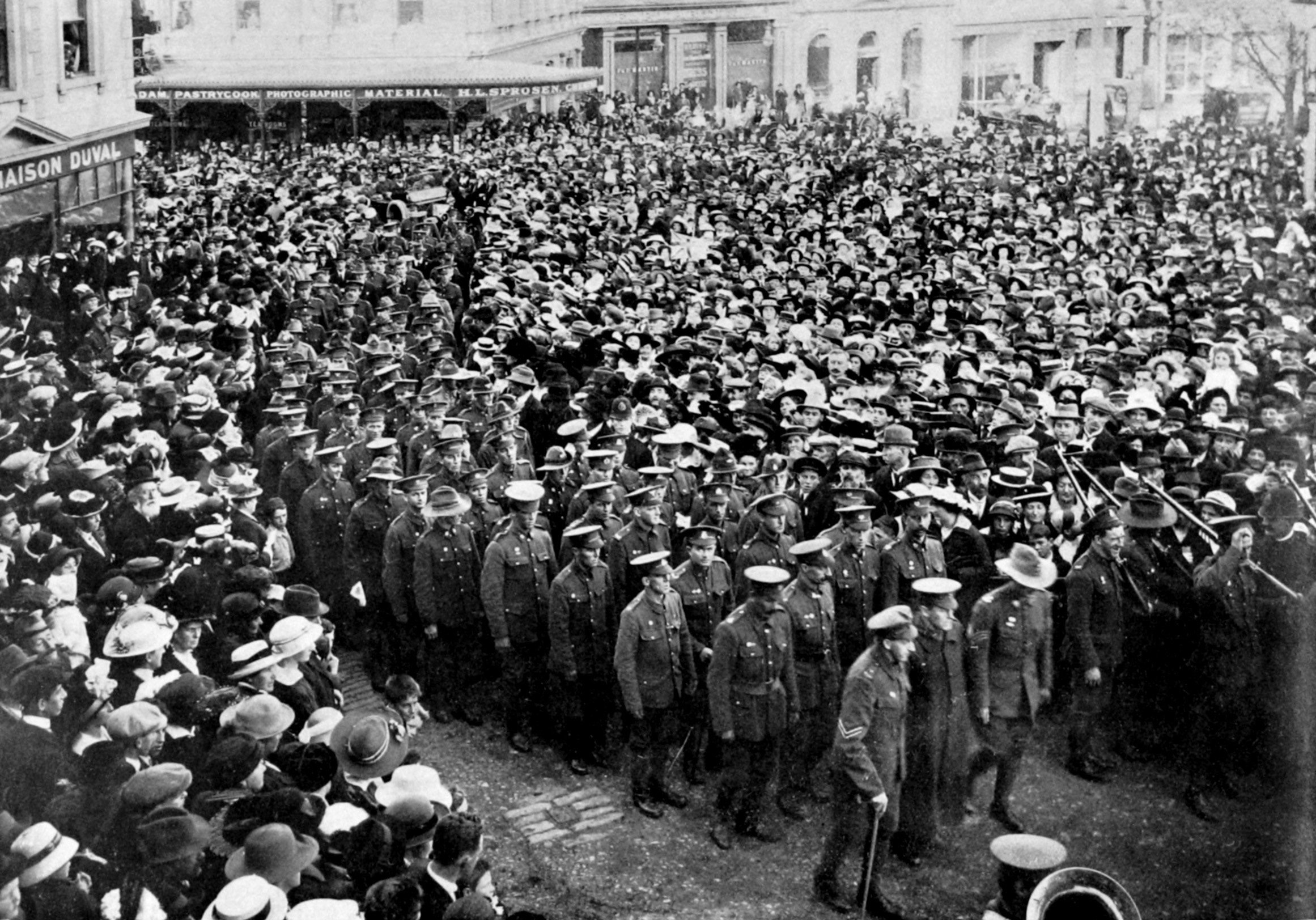
For modern day New Zealanders, the ceremony and solemnity of Anzac Day is part of our DNA.
But, on April 25, 1916, as the country marked its first Anzac Day, all citizens - including those in Dunedin - were creating rites and rituals as they went along.

No-one was in any doubt that what had happened on a Turkish beach 365 days beforehand had been of enormous significance for New Zealand.
It had not been as immediately significant for the good folk of Otago - the province’s battalion did not start landing until the afternoon of April 25 and was initially deployed in a defensive trenchline. Its appalling sacrifice as part of the doomed campaign was soon to come.
An estimated 147 New Zealanders died on April 25, 1915, five of them from the Otago Battalion. The entire Dardanelles campaign claimed 2779 New Zealand lives; dozens upon dozens of Otago lives were lost, and the Otago Mounted Rifles were almost wiped out by the end of August.
The campaign brought the horror of modern war into every New Zealand home; in a small country with a large and enthusiastic response to the recruitment drive for soldiers, almost everyone was personally affected by the Gallipoli slaughter, or knew someone who was.
In Dunedin, a partial holiday was observed on April 25, 1916; "owing to the interruption in business caused by Easter holidays only a portion of the afternoon will be observed," the Otago Daily Times reported.

The editorial in the ODT of April 25 was suitably downcast.
"The anniversary is no gaudy-day, to be celebrated with martial jubilation or patriotic noise. It is a solemn, we might almost say a sombre, unemotional festival, though not without a half-hidden element of pride and triumph . . . the grief of bereavement is still fresh and keen in the hearts of hundreds of New Zealanders.
"The silent voices of the dead of Gallipoli still sent a message to all whose ears rightly attuned."
On the same page, the paper ran a cable report of preparations for a "very impressive form of service" to be held in London at Westminster Abbey, as well as the text of a special message from King George V noting that he joined with New Zealand in solemn tribute for the heroes who died in Gallipoli.
The next day the ODT reported on the extensive memorials of the previous day, which began with the women of the Otago Recruiting Committee laying wreaths at Anderson Bay, Northern and Southern cemeteries.
"A wreath was also sent to Outram for Private M’Leod’s grave to be put on yesterday morning. Thirteen others who have fallen and were buried in strange lands were named in a quiet ceremony at the Oval."
The day’s main event was the procession by 170 veterans, lead by the band of the Fourth Regiment: "It seemed as if the entire population had turned out to do honour to the occasion."
The mayor, J J Clark, told the crowd that all over the British Empire people would be united in celebrating the splendid devotion and magnificent heroism of the men from our southern lands: "no monument that we could build could adequately commemorate the magnificent work they have done for the Empire and for us."
A few hours later the mayor presided at the united religious service, at which Dean Fitchett dipped into the purple prose, to seemingly satisfactory effect.
"Our New Zealand lads were willing to apply their courage in this great quarrel, to endure hardness as good soldiers, to suffer and if need to die, because they had learned something of the moral at stake, the value to humanity of the principles for which our nation at so great cost is making stand."
That day’s editorial nodded with approval of the day’s events.
"In the blood spilled so generously upon the harsh and arid beaches of Gallipoli the name of Anzac has found its enduring consecration. The celebration of Anzac Day is but a fitting mark of our remembrance of what we owe to the heroic dead."


