

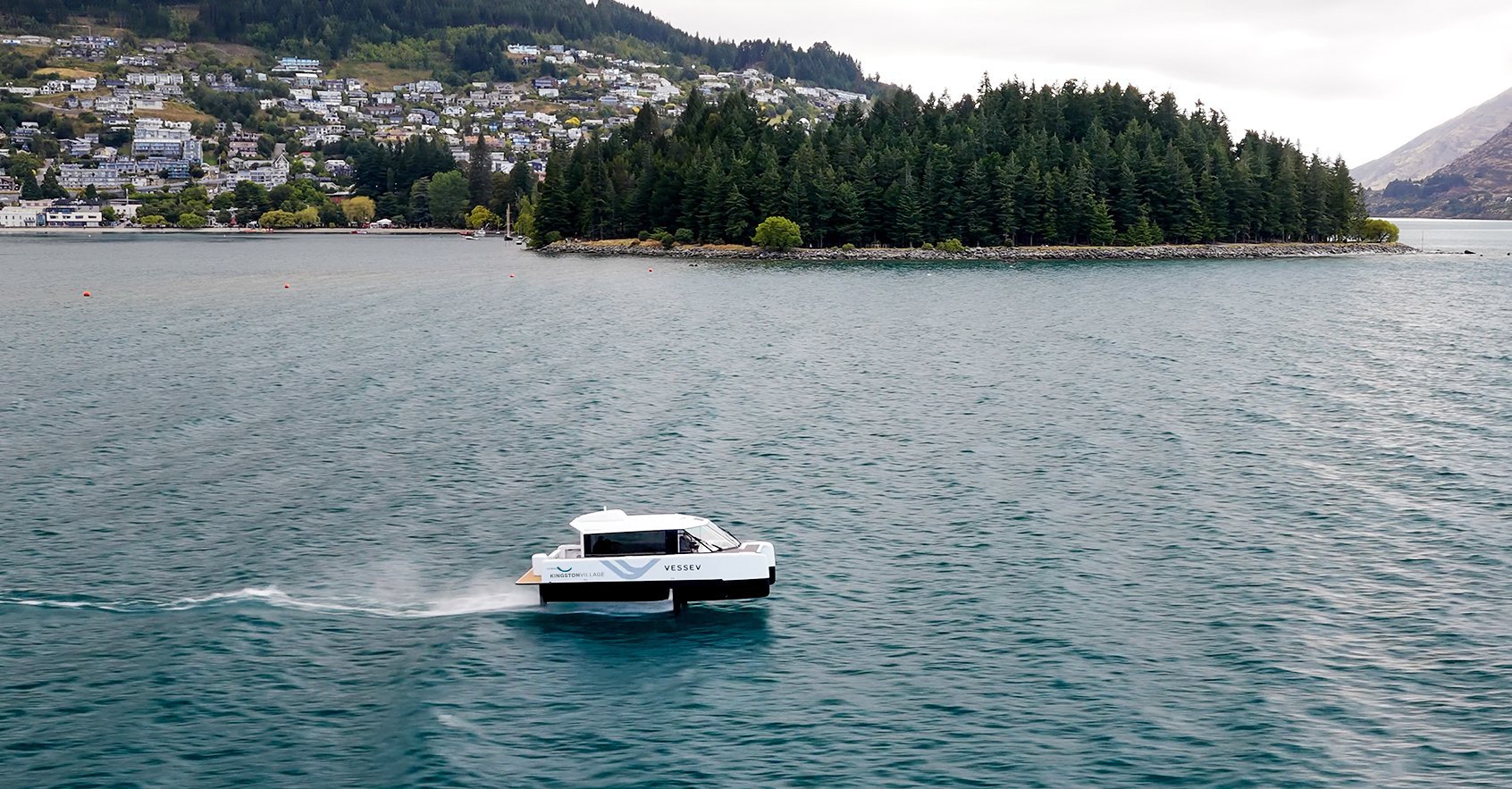
Led by Kingston Village Ltd in partnership with marine technology company Vessev, the first trial of an electric hydrofoil took place on Tuesday.
More trials are planned this month.
In a statement, the company said the trial was part of an investigation into how future passenger connections between Queenstown and Kingston could operate, looking at things such as travel times, passenger experience and operational factors specific to the lake.
A wider feasibility study into an electric foiling ferry between the southern end of Lake Wakatipu and Queenstown Bay was planned for later this year, the company said.
Kingston Village general manager Nicola Tristram said the trial reflected a focus on planning for long-term liveability as the Kingston community grew.
"This trial will provide valuable insight into how lake transport could complement existing road and bus networks, as well as the proposed cable car for residents, commuters and visitors," Ms Tristram said.
"As the technology continues to evolve, the potential exists for future hydrofoiling ferries on Lake Wakatipu to carry up to around 30 passengers a time, and this work will help ground these possibilities in real-world testing."
Southern Infrastructure chief executive Ross Copland said Frankton Rd exceeded 1million vehicle movements a year for the first time last year and while projects such as his company’s Queenstown Cable Car Network represented an important move beyond the sole reliance on roads, no single solution would address the resort town’s transport challenges on its own.
Last year, his company funded and installed New Zealand’s first publicly-accessible electronic marine-side chargers at Frankton’s Queenstown Marina, to promote the resort as a research and development hub for electric marine transport.
"Queenstown has long been a place where transport innovation is tested on the water," he said.
"As I child, I remember watching the foiling ferry, Meteor III, operated by tourism pioneer Frank Haworth, travel across the lake with remarkably little wake.
"It is exciting to consider how this next generation of technology could re-establish the lake as a viable transport corridor more than 30 years after Meteor III retired from service."
Vessev chief executive Erick Laakmann said by lifting vessels above the water, it became possible to deliver fast, comfortable services that could continue operating in conditions that would typically slow or limit ferry services.
Electric hydrofoils reduced emissions, and produced "very little wake", meaning people could move quickly across Lake Wakatipu more sustainably, he said.
"That opens up the possibility of using Lake Wakatipu as a transport corridor while respecting the shoreline, wildlife and other lake users."
Kingston Community Association chairwoman Kimberley Marshall said the trial was a positive opportunity for Kingston, and could make it easier for residents to get to work, school and events, while also giving visitors another reason to spend time in the township.
Destination Queenstown and Lake Wānaka Tourism chief executive Mat Woods also welcomed the trial, saying electric hydrofoiling ferries could showcase Queenstown’s reputation for embracing innovation and support Electrify Queenstown’s goals.


