A visit to remember

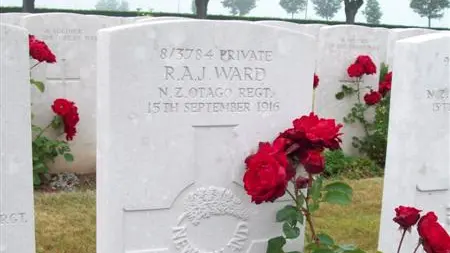
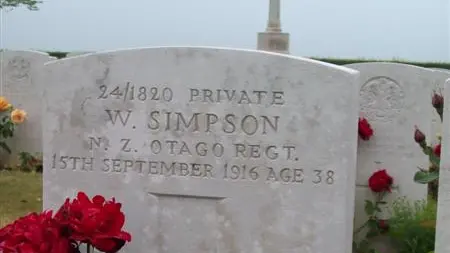
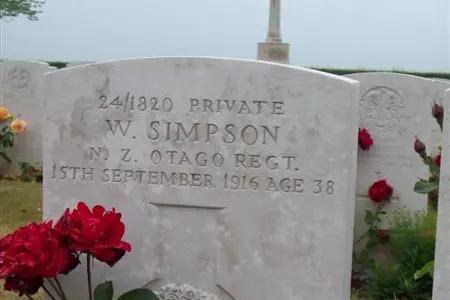
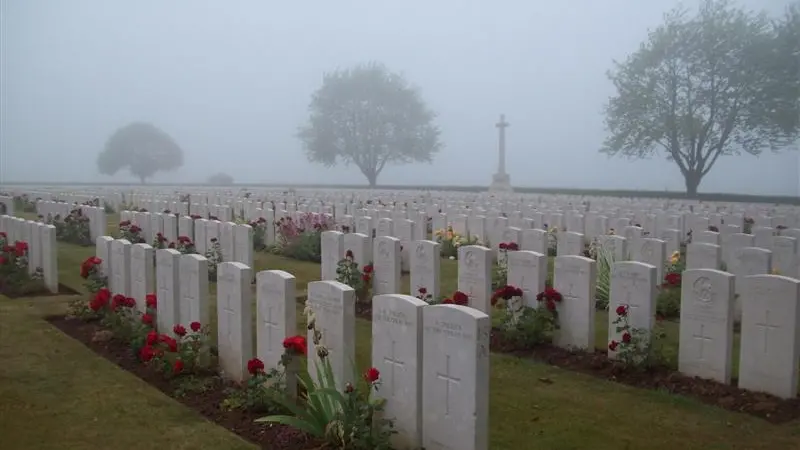
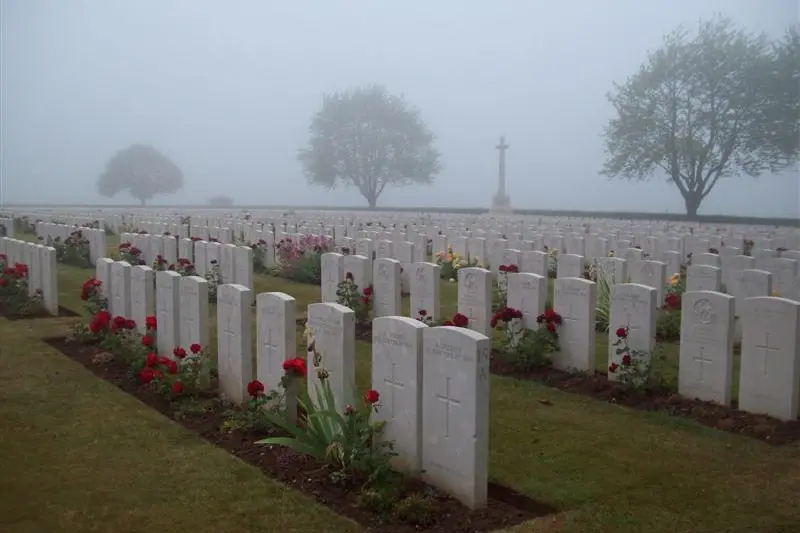
Gravestones at Caterpillar Valley Cemetery in the Somme, France, one morning in June. Photo by...
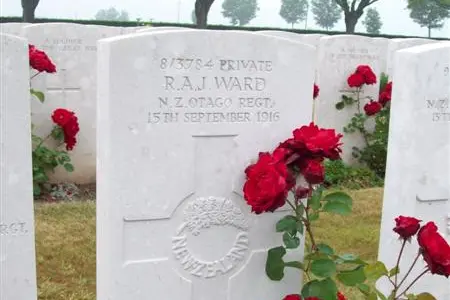
Gravestones at Caterpillar Valley Cemetery in the Somme, France, one morning in June. Photo by Shona Somerville.
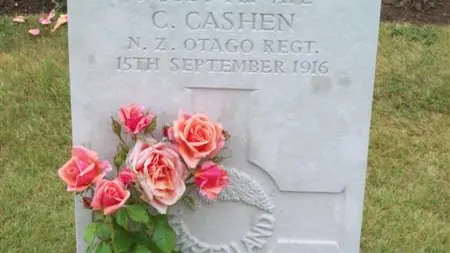
The graves of soldiers from the Otago Regiment are placed around the Caterpillar Valley Cemetery....
The graves of soldiers from the Otago Regiment are placed around the Caterpillar Valley Cemetery. September 15, 1916 was the day New Zealand forces joined the fighting at the Battle of the Somme. It was on that day also that 20,000 British soldiers...
The graves of soldiers from the Otago Regiment are placed around the Caterpillar Valley Cemetery....
The graves of soldiers from the Otago Regiment are placed around the Caterpillar Valley Cemetery. September 15, 1916 was the day New Zealand forces joined the fighting at the Battle of the Somme. It was on that day also that 20,000 British soldiers...
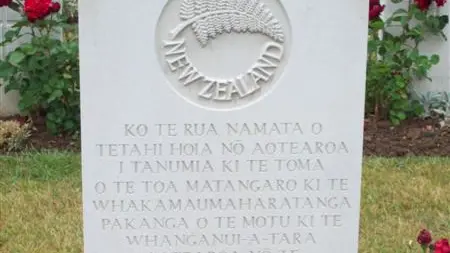
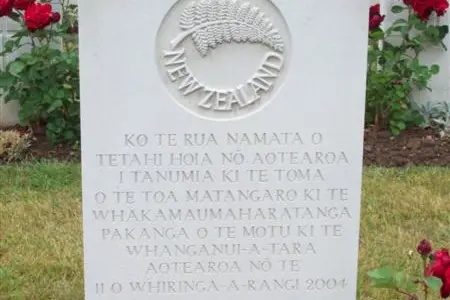
The former grave of the unknown warrior at the Caterpillar Valley Cemetery. Photo by Shona...
The former grave of the unknown warrior at the Caterpillar Valley Cemetery. Photo by Shona Sommerville.
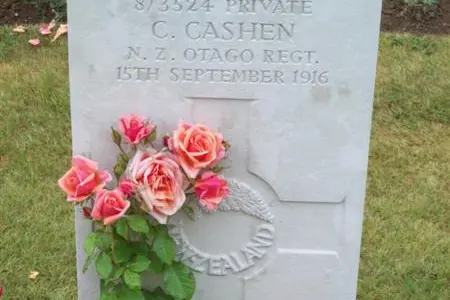
The graves of soldiers from the Otago Regiment are placed around the Caterpillar Valley Cemetery....
The graves of soldiers from the Otago Regiment are placed around the Caterpillar Valley Cemetery. September 15, 1916 was the day New Zealand forces joined the fighting at the Battle of the Somme. It was on that day also that 20,000 British soldiers...

Gazing through the eerie mistiness and across the sea of white gravestones, I couldn't help but be moved by the thought of such a vast waste of life.

I could imagine these men and youths, clad in their regimental uniforms, rising to attention from where they lay.

With an unplanned few days to spare in our five-week trip to France earlier this year, we had an unexpected chance to pursue briefly my husband's interest in the Battle of Passchendaele in Belgium and quite serendipitously, on the way, ended up at Caterpillar Valley World War One Commonwealth cemetery near Albert in the Somme.

Because of heavy public-holiday traffic on the outskirts of Paris, petrol stations selling out of diesel, fast disappearing hours in the day, and a hard-learnt lesson that accommodation not pre-booked on public holidays is very difficult to find, we were forced to change course.

We regularly reminded ourselves of the reassuring words - from adventurous and well-travelled couple Robin and Judi Charteris back in Dunedin - that they always, in the end, found somewhere to stay.

Beggars can't be choosers though.

As I wandered around Caterpillar Valley Cemetery, I found graves from the Otago regiment as well as other New Zealanders, and then the now empty but still marked grave of the " unknown soldier" returned to New Zealand and interred at the National War Memorial in 2004.

A catalogue of graves, their location and some personal details are kept safe from the weather in a locker built into the entrance archway.

It's useful for those who know whom they are looking for and the curious. I find it intriguing that the contact person for each known man is his mother.

From Albert we travelled north to Belgium finding, through the internet initially, a lovely bed and breakfast called Valet Farm situated on the Passchendaele battlefields in Flanders.

The countryside around there is scattered with numerous war memorials and cemeteries. The poppies in June were still flowering among the fields and along the roadsides.

The massive cemetery at Tyne Cot, containing the most number of graves of New Zealanders beyond our shores, is a short drive away.

In the greatest disaster in New Zealand's history, 845 New Zealanders died in one day on Bellevue Spur, a gentle knoll only a few hundred metres from where we were staying.

Who would think looking across this smoothly undulating, peaceful countryside that it was once pitted with craters and mud that sucked under whole horses. A living nightmare.

Soldiers lost their lives trying to capture and gain footholds over pitifully short distances.

After visiting Tyne Cot and in the aftermath of our emotional visit to Caterpillar Valley we decide we have seen enough of war cemeteries.

As we read the long lists of those missing in action an older Australian couple we met at our bed and breakfast agree: "There is only so much you can take. The sheer scale of loss is just too overwhelming."

New Zealand graves are scattered among those of other Commonwealth and British soldiers as remains were uplifted from where they fell and reinterred by the workers of the War Graves Commission set up in 1917 to bury all soldiers equally, whatever their rank.

I read a book about Rudyard Kipling's search for the remains of his precious only son from the well-stocked World War 1 bookcase at our bed and breakfast. Jack was posted missing on his first day of active duty and Kipling, who was to become the first literary adviser for the War Graves Commission, began a lifelong search to discover his fate.

Every family, it seemed, from whatever background or rank, including the aristocracy, sent their sons to fight for King and country knowing that there was little chance they would return.

We also joined the crowds one night at the Menin Gate Memorial, Ypres. Every evening at 8pm, since 1928, the Last Post has been played there to commemorate those British and Commonwealth soldiers killed or missing in the Ypres Salient during the Great War. Present were school groups on field trips from Britain, tourists like ourselves including Germans and Australians and, that night, officials and dignitaries from the War Graves Commission whom we saw again at Tyne Cot.

Our bed and breakfast hostess, in her 50s, said growing up in and around the battlefields she was completely oblivious to the devastation of almost 100 years ago, biking past cemeteries without a thought of the immensity that was represented within.

Her now growing interest and expertise was triggered by a random inquiry by someone who wanted to know more.

We ourselves were moved more than we expected by the visual evidence of the sacrifice of lives lost. It brought home to us the poignancy of Kipling's famous phrase "Lest we forget".

- Shona Somerville


Add a Comment