ESNZ meteorologist Chester Lampkin said the only places in the South where January temperatures were above average were coastal areas of Fiordland, and Westland.
Interior Otago and northern Southland had below average temperatures and the remainder of the southern regions had near average temperatures during the month.
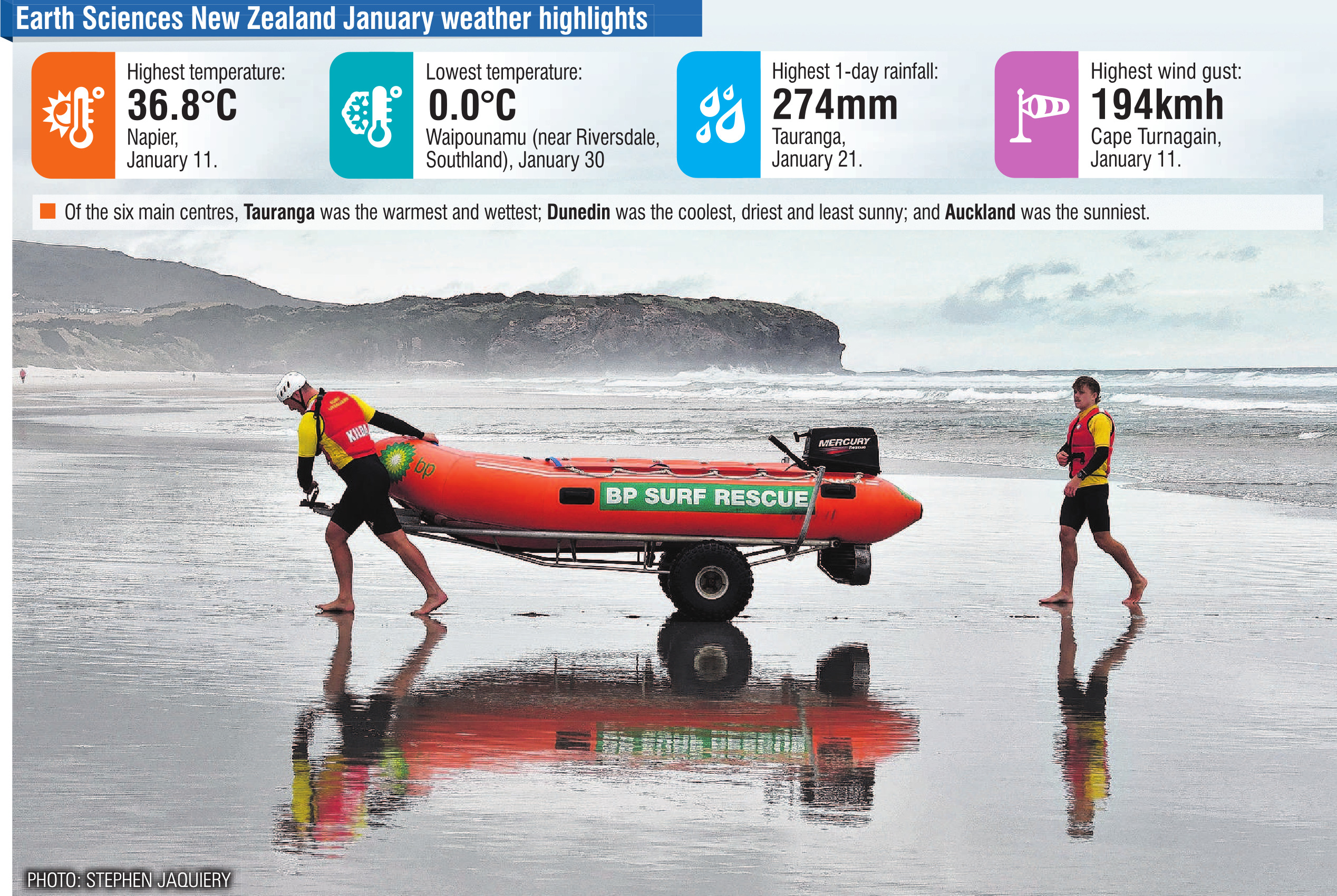
The only temperature record to break in the South was at Waipounamu, near Riversdale, in Southland, which had a January record coldest daily minimum air temperature of 0.0°C on January 30.
Mr Lampkin said, nationwide, no location observed record-setting high or low mean air temperatures in January, because they were moderated by unsettled weather and clouds for both islands; southerly winds across parts of the South Island late in the month also had an impact.
Only four locations observed near-record high mean temperatures.
The country’s warmest location relative to normal was Kawerau, where the mean temperature of 22.1°C was 2.3°C above normal.
The nationwide average temperature in January 2026 was 17.2°C.
While rainfall was well above normal or above normal for most of the North Island and the top of the South Island, Mr Lampkin said it was below normal or well below normal for the West Coast, Southland and much of Central Otago.
Elsewhere, near normal rainfall fell in January.
He said 15 locations recorded their wettest or second-wettest January, including "an astounding" 494mm of rain at Whitianga, in the Coromandel Peninsula.
The only rainfall near-record to be set in the South was at Manapouri, which had its second-highest January extreme one-day rainfall total on January 10, when 163mm fell.
At the end of January, soil moisture levels were higher than normal in coastal areas of Otago, but lower than normal in lower Westland, Fiordland, most of Southland and the far west of Otago, he said.
Strong winds on January 11 helped South West Cape record its highest-equal January extreme wind gust, when it reached 180kmh.
Windsor in Southland recorded its second-highest with 91kmh and Oamaru had its third-highest with a gust of 93kmh.
Of the six main centres in New Zealand, Tauranga was the warmest and wettest; Dunedin was the coolest (mean temperature of 15.2°C), driest (75mm for the month) and least sunny; and Auckland was the sunniest.
Overall, Mr Lampkin said January 2026 was much like December 2025.
"While there were several periods dominated by high pressure, overall the month was unsettled, much like December, with a distinct tropical connection around the middle to end of the month, leading to warm nights and record setting rainfalls."