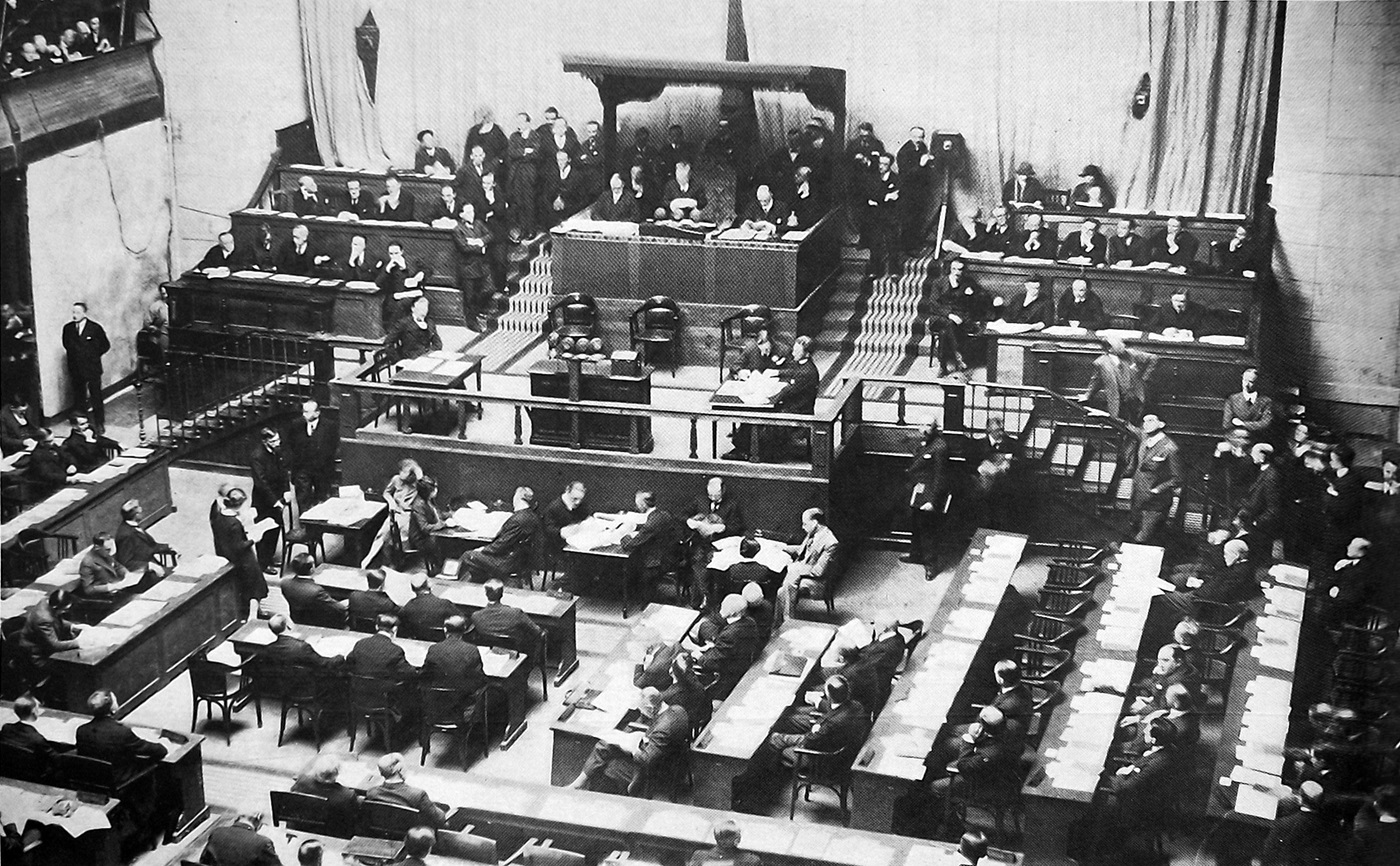

It is understood that Spain is still obdurate remaining firm in her request for a seat on the Council, but well-informed people believe that the morale behind Spain’s insistence is weakening. Spain’s attitude is based on the ardent nationalism of General Primo de Rivera.
Singing the praises of radio
With the establishing of radio stations in the main centres to supply definite areas throughout the Dominion, which, when in operation, will cater to all listeners, has come great and renewed interest in wireless matters. Throughout the country people, particularly members of farming communities, are commencing to realise fully the service that is already being offered by the New Zealand broadcasting stations, and the wonderful possibilities that lie in the future.
Wool from far flung islands
Six shepherds, who have been attending to the stock on the Campbell Islands, returned to the Dominion by the whaling vessel Sir James Clark Ross last week. The men stated that the weather during the past six months bad been very wet and cold, and the mustering of the stock in the difficult country which comprised the main island had been seriously hampered. The stock, however, were in fair condition, and the shearing had produced some 70 bales of wool, as compared with 78 the previous season.
Dangerous actions by lorry driver
Stipendiary magistrates are called upon very frequently to deal with motorists for driving cars while under the influence of liquor. In view of the heavy penalties recently inflicted, one wonders what would have happened to the driver of a Ford lorry on the Main South road yesterday afternoon. Just before entering Green Island he passed a large six-cylinder car at a speed which could not have been less than 50 miles an hour — a dangerous speed for any lorry. At the small bridge at the foot of the hill he was soon to stop, and on the arrival of the bigger car it was found that the bonnet of the lorry had dropped off and was being salvaged by a passenger, who bore evidence of having been drinking. The driver, too, appeared to have imbibed slightly more than was good for him, and a demijohn in the cab pointed to the fact that the supply had not been limited. The pitiful aspect of the occurrence was that the body of the lorry was occupied by three very scared-looking youngsters, who appeared to have had more than enough of their thrilling ride. Had the fallen bonnet dropped under a wheel of the vehicle the speed at which it was travelling must have spelt disaster. A passing motorist gave the driver of the lorry his opinion of him in no measured terms, and insisted the children be taken to their destination in a less hazardous fashion. — ODT, 12.3.1926