
PHOTO
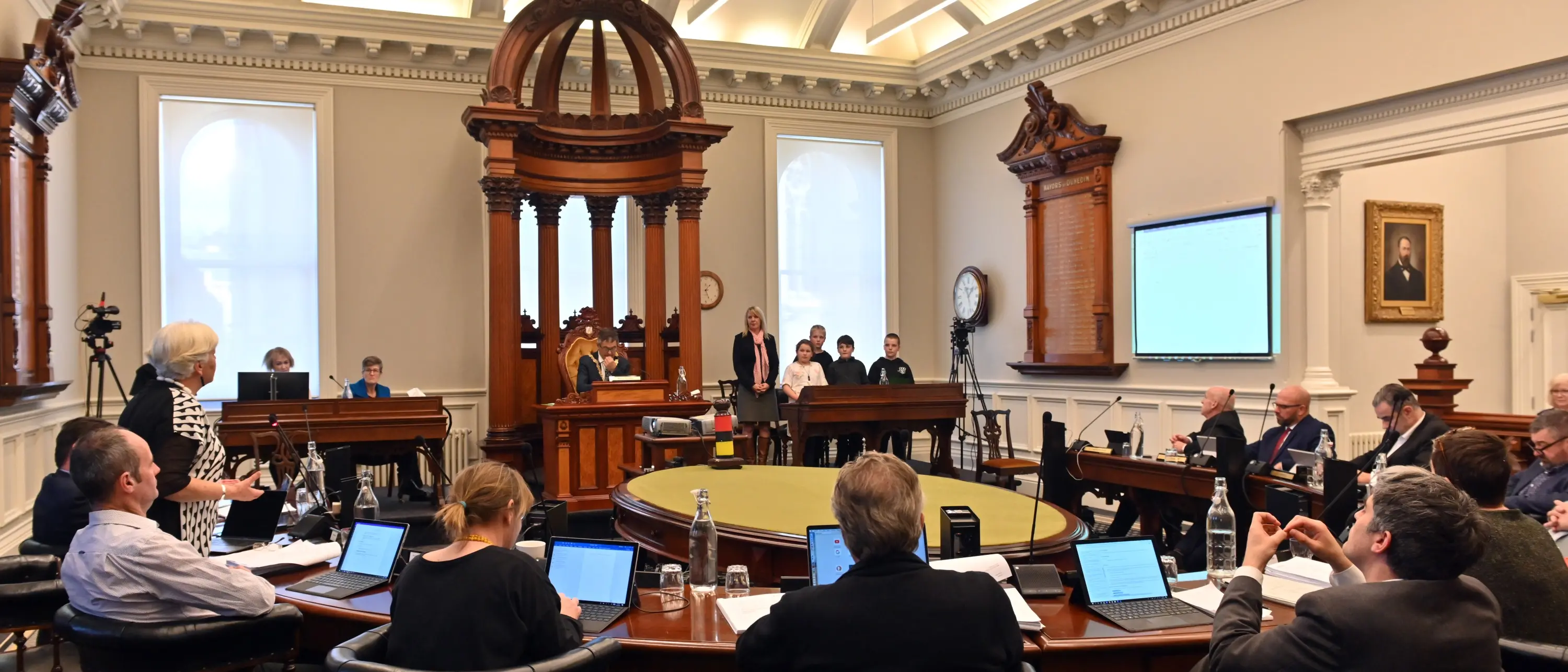
There were emotional pleas as the Dunedin City Council voted to declare a climate emergency this afternoon.
At a full council meeting which began at 1pm, councillors voted 9-5 to declare the emergency and accelerate efforts to become a carbon neutral city.
The council had aimed to reach a net zero carbon target by 2050, but would bring that forward to 2030, councillors decided.
Most councillors spoke strongly in support of declaring the emergency, while only Crs Lee Vandervis, Mike Lord and Andrew Whiley argued against it.
Cr Aaron Hawkins said the council had been hearing from “countless” people and organisations for years, calling for action.
Progress had been too slow “and meanwhile the clock is ticking”.
“This needs to be at the front and center of all of our decision-making. A business-as-usual approach is not just inadequate, it’s effectively intergenerational theft.”
The vote was carried with Crs Vandervis, Lord, Whiley, Conrad Stedman and Doug Hall voting against it.
Cr Jim O’Malley was among other councillors to argue for the move, comparing it to the country’s nuclear free movement.
That movement had also started small, but grown to a national movement with international clout, and the same needed to happen again, he said.
A failure to act would be akin to people who rushed to the beach to gather fish when a tsunami threatened, he said.
“We are looking at meters and meters of sea level rise. If we don’t act now . . . it will roll over us."
Others agreed, including Cr Kate Wilson, who declared she would “rather die trying than not try at all”.
Cr Christine Garey said she wanted to be able to look her own daughter in the eye after today’s vote “and know the decision and the vote I have made is the right one”.
Mayor Dave Cull also backed the move, saying the city needed to keep pace with the changing scientific consensus to avoid “a point of no return”.
“The cost to council is not whether we do. The cost to council will be if we don’t do anything.”
However, there was laughter in the public gallery as Crs Vandervis, Whiley and Lord argued against the move.
Cr Vandervis said whether the scientific consensus on climate change was strong enough, and whether the council could do anything about it, were fair questions.
“I don’t believe we as a city council can do anything practical in that light.”
Cr Lord objected to the use of the word “emergency”, saying it was “emotive” and would alarm people. He saw no evidence to support claims sea level rise was accelerating.
Cr Whiley accepted the climate was changing, but not the process by which the issue was now being considered by the council.
He also challenged councillors who supported the move to immediately declare their intentions to make personal changes, from investing in solar to buying electric cars and sourcing food locally.
Cr David Benson-Pope said he was pleased to see the council’s “skeptics and deniers out themselves”, but urged other councillors to take action.
“I don’t care if you call it a crisis or an emergency, because it’s sure as hell both actually.”
PUPILS: WE NEED TO DO SOMETHING FAST
A packed public gallery, including people carrying signs and banners, was in attendance to hear today's debate.
There were applause and cheers as Jennifer Shulzitski, of Extinction Rebellion, urged councillors to act now.
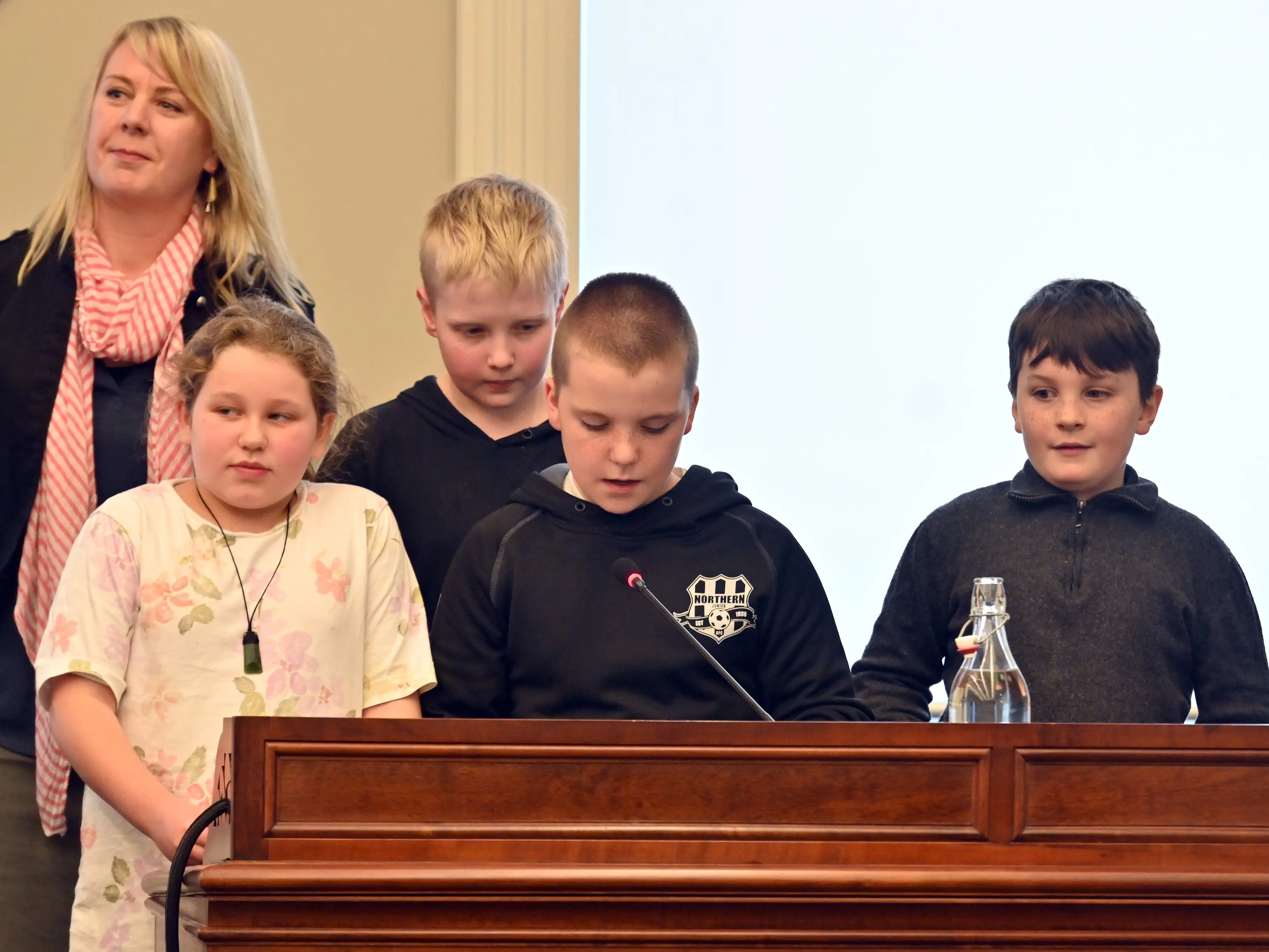
But the applause grew louder still as four young pupils from North East Valley school boiled the issue down to blunt terms.
"The sea level is rising . . . the ice is melting and we need to do something, fast," one pupil told councillors.
Ms Shulzitski said atmospheric carbon dioxide levels were now at record levels, but greenhouse gas emissions were still increasing in Dunedin and across New Zealand "with no end in site".
Without action, the planet was on course to return to an "unlivable" climate, beginning with 2m of sea level rise by 2100.
That scenario would see sea levels again reaching George St in Dunedin, she said.
Ms Shulzitski said she was a mother and a geologist, and "all of these things scare me and make me very sad".
The council needed to lead efforts to drive the city towards a carbon-neutral future by 2030, she believed.
"We have 10 years to make substantial changes and we are not doing anything near fast enough," she said.
"Like alcoholics, we need to admit that we have a problem."