
PHOTO
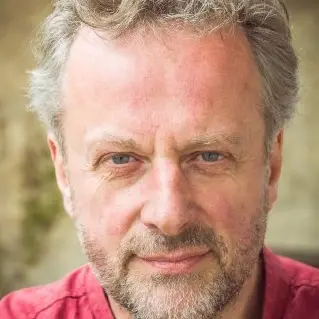
Cr Lee Vandervis walked out of a Dunedin City Council meeting in protest yesterday, after his speaking rights were curtailed in a politically-motivated ambush sprung by another councillor.
Councillors had been about to debate a resolution put forward by Cr David Benson-Pope, who wanted to reverse the council's earlier support for staff to investigate a unitary council for the city.
The investigation - which was to explore the merits of merging the DCC and Otago Regional Council - had been pushed for by Cr Vandervis, who won support for it in 2017.
It emerged last month that work on the investigation had not progressed since then.
That prompted a recent flurry of angry emails between Cr Vandervis, Dunedin City Council chief executive Sue Bidrose and Mayor Dave Cull.
At yesterday's full council meeting, as soon as Cr Benson-Pope had outlined the reasons behind his resolution to scrap any investigation, Cr Kate Wilson acted.
She took advantage of a rarely-used rule in the council's standing orders to prevent further debate by any other councillors, including Cr Vandervis.
The rule permitted any councillor to call for an immediate vote on an issue, ending further debate, if other councillors endorsed the move.
Her move won support from most councillors, who voted 9-5 in favour of her procedural change, prompting Cr Vandervis to stand, pack his bag and leave the meeting.
Crs Jim O'Malley, Aaron Hawkins, Rachel Elder and Andrew Whiley joined Cr Vandervis in opposing the move, but were defeated by Mayor Dave Cull and other councillors.
Councillors then voted 10-1 in support of Cr Benson-Pope's resolution, which was opposed only by Cr O'Malley, while Crs Elder and Whiley abstained.
Cr Vandervis did not respond to a request for comment by last night, but Cr Wilson defended her move despite conceding it was ''not my proudest moment''.
She was concerned by the ''vitriol'' in recent emails involving Cr Vandervis, and did not want to see ''someone who gets angry'' continuing to feature ''on the front page of the ODT''.
She also wanted to protect the relationship with the ORC, which had improved significantly since 2017, she said.
Standing orders provided a mechanism to curtail debate, and ''if good debate is drowned out with really negative comments, then sometimes we need to use the system'', she said.
''Generally, I would use it very, very sparingly, but I honestly think that at the moment, it [Cr Vandervis' behaviour] is a tool for an election campaign, where the net result of any bad behaviour continues to get front-page news for one person.
''And, since I'm not standing again, it doesn't matter if I do it.''
Mr Cull, speaking after the meeting, said he had to accept Cr Wilson's procedural motion and was ''constrained by the rules''.
Asked if he agreed with her move, and whether it was democratic, he insisted it was ''completely democratic''.
Standing orders set the rules for all councillors, and the vote ''puts control completely in the hands of the council''.
''It didn't stop the vote being taken and that was the object of the exercise, so it was a legitimate move on her part.''
On social media last night Cr Whiley said democracy had not been allowed to take place.
As a councillor he did not agree with what had happened and Cr Vandervis had every right to leave the meeting.
Earlier, Cr Benson-Pope, explaining his resolution, said he was not against structural change for local authorities, but had ''considerable unease'' at the volume of ''unprofessional and unpleasant correspondence'' being generated over the issue.
''Not by staff, I must say.''
The relationship with the ORC had improved as the two bodies collaborated on issues from public transport to waterfront development, and investigating a unitary council would be ''most inappropriate'' - particular during an election period, he said.