

Implications for land-use planning might include a sharper focus on community and social housing and the resilience of South Dunedin, documentation indicates.
However, elected representatives from both the Dunedin City Council and Otago Regional Council have yet to discuss the updated material and what sort of planning re-think might be needed.
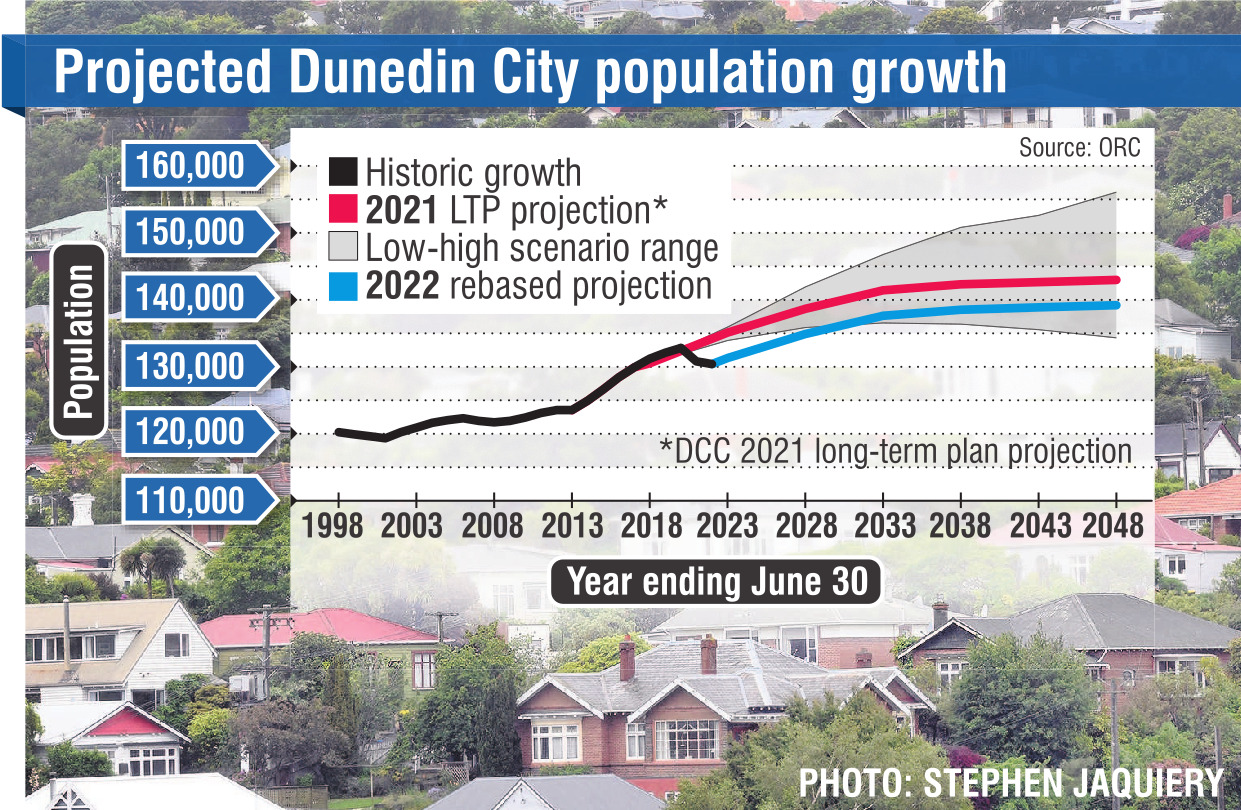
Dunedin’s population is estimated to be just over 130,000.
The estimated population growth peaked at 1800 new residents in the year to June 2016 and has been declining since, reinforced by altered migration patterns resulting from the Covid-19 pandemic.
The city lost an estimated 2400 residents between July 2020 and June 2022, it is stated in a draft housing capacity assessment for the Dunedin City Council.
This was not anticipated when the council passed its 2021-31 long-term plan and the council has also relaxed housing development rules when it had been thought capacity loomed as a problem.
The latest information suggests the development rules and zoning will open up significantly more housing capacity than is needed in the long term.
There should also be sufficient housing capacity to meet anticipated consumer demand for different types of housing, including demand for standalone houses, duplexes and townhouses.
Housing capacity is anticipated to be sufficient in the most likely scenario, medium growth.
It is expected new population projections will indicate lower growth in Dunedin for the next five to 10 years than was previously estimated, but similar long-term growth rates.
The council should further investigate constraints on regional economic growth and "identify the role of infrastructure investments in unlocking economic growth", the consultant said.
Planning changes have mostly been aimed at enabling more housing intensification in parts of the city, and more flexibility for developers.
It is also likely additional capacity will be created through greenfield rezoning decisions due early next year.
The two councils are required to work together to prepare a future development strategy for Dunedin by mid-2024.
The scope of this is to be discussed by the regional council today and by the city council next week.
Staff recommended the regional council agree to using a medium-growth scenario and add more areas of focus.
These would include community and social housing aspirations, supporting resilience of outlying townships and settlements and South Dunedin, and possible additional infrastructure to service future growth.
South Dunedin would be a point of focus because it is the city’s urban area likely to be most severely affected by climate change.
Government agencies, including Waka Kotahi NZ Transport Agency and Kainga Ora, are expected to be key contributors to the future development strategy.


