
PHOTO
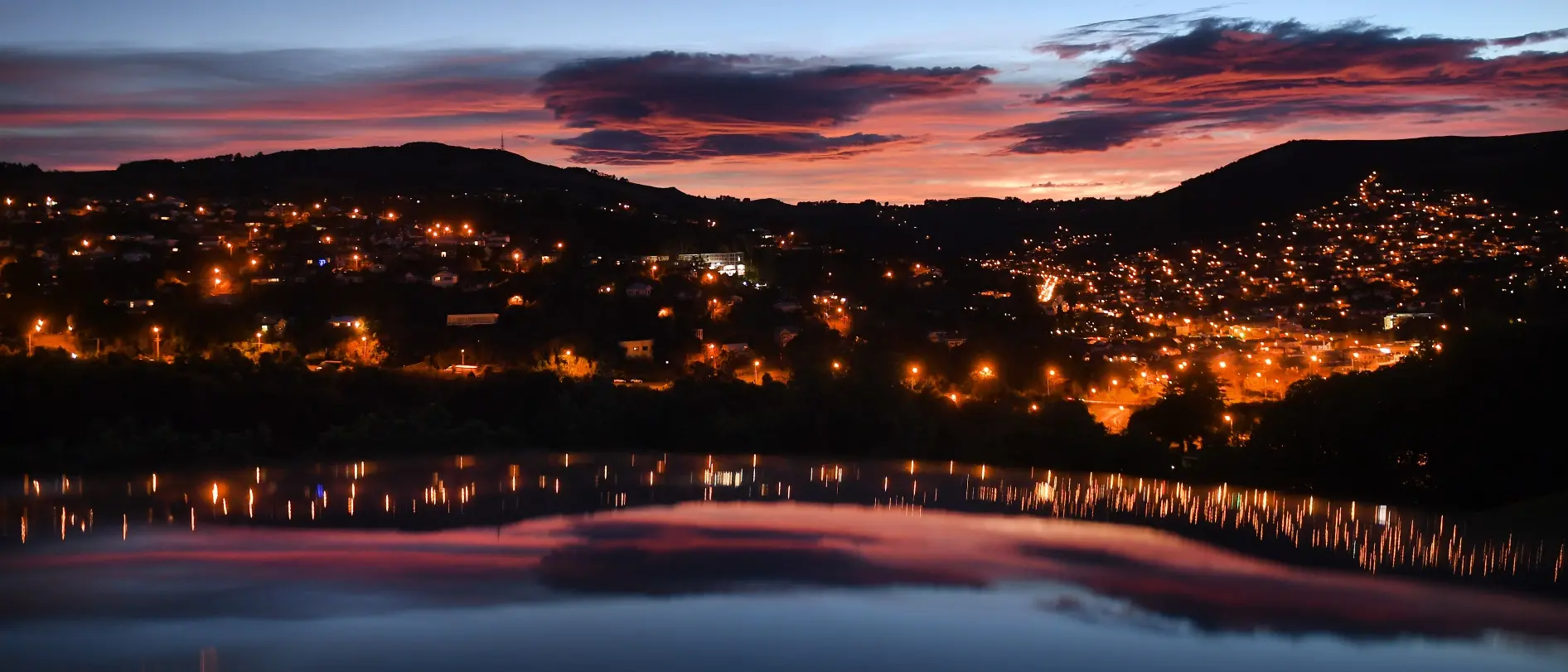
A $14 million plan to replace Dunedin’s 15,000 street lights with LED technology has pleased dark sky advocates.
The high-tech lights will come with the latest smart technology, allowing them to be dimmed or brightened remotely.
Work is expected to begin soon on installing the lights as the Dunedin City Council moves quickly to take advantage of an 85% subsidy from the NZ Transport Agency, which is only available for the next financial year.
The only possible hitch is whether the NZTA will provide a subsidy for the sort of lights the council wants.
A council infrastructure services and networks committee yesterday voted to install lights of a lower "colour temperature" — 3000degKelvin — which was recommended by the Dark Skies Advisory Panel.
The panel was set up in 2015 to promote Dunedin becoming a dark sky city more conducive to stargazing, something regarded as a good selling point for tourism.
Panel member and Dunedin Dark Skies Group spokesman Mirko Harnisch said the decision was "a good thing".
"It was part of our recommendations, and seeing those recommendations accepted is positive."
There was "room for improvement", however.
Areas such as Tekapo, a dark sky reserve, had different light fittings and even lower colour temperature and light intensity, and Naseby was also considering lights of less than 3000degK.
A report to the committee noted most of the city’s street lights were installed in the 1990s, were coming to the end of their useful life, and were failing more often.
Failure in the 2015-16 year was 12%, up from 9% the year before.
Funding of $6 million was included in council budgets for the work.
Council transport group manager Richard Saunders said if the NZTA did not subsidise the 3000degK lights, the council had approved the installation of 4000degK alternatives.
Mr Saunders said the council would have to develop a business case for the 3000degK lights, though he said other councils were also planning to fit them.
"We’re hopeful that it will be supported, but we’ve got to make that case to NZTA."
The expected $6 million cost to the council anticipated the entire city would not be fitted with LED lights in the year in which the NZTA offered the 85% subsidy.
The normal rate was 56%, so the council would have to pay more outside that period.
"We intend to work with the contractors to get them installed as quick as we can."
Cr Christine Garey asked about the effect of the lights on older people with visual impairment.
She was told the NZTA chose a 4000degK as the recommended standard, but efficiency of the lower intensity lights had improved.
The American Medical Association recommended no higher than 3000degK.
The report said LED lights had been widely adopted in the United States and Europe.
They used less electricity, halving energy consumption.
The committee also approved installation of a tele management system, which would allow light levels to be dimmed or made brighter remotely.
They could be made brighter, for instance, when people were leaving a major event, or dimmed for night sky viewing.