
PHOTO
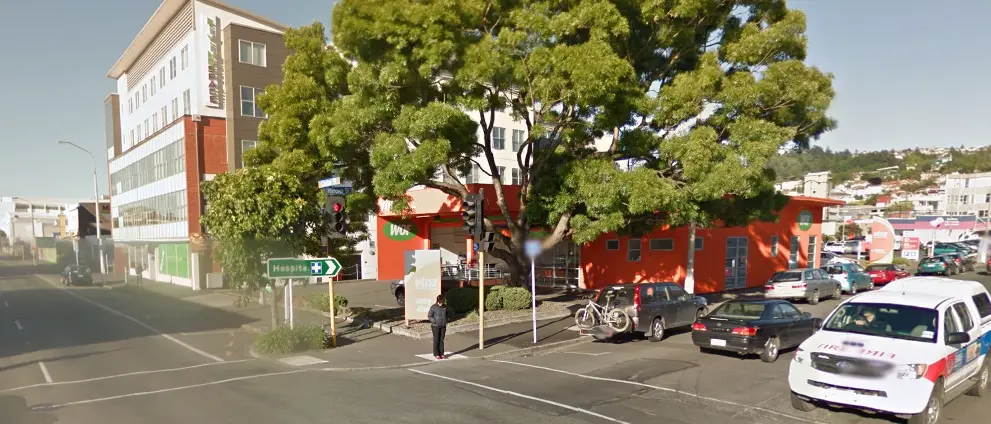
The Dunedin City Council says the traffic light setup criticised by a District Court judge will be upgraded later this year.
But the improvements were in the pipeline before Judge Kevin Phillips’ stinging broadside.
The judge was vehement in his condemnation of the way one of the city’s intersections was arranged following the court case of Koriana Fay Osborne last month.
He discharged the 22-year-old without conviction after hearing she got a green light to turn right from Castle St into Hanover St at the same time as pedestrians were given their green light to cross.
She hit a woman crossing the road, at low speed, causing her whiplash, delayed concussion, a fractured foot and ligament damage.
The judge said the traffic-light designers carried a ‘‘major responsibility’’ for what happened and he even suggested it should be them in the dock rather than Osborne.
"In my view, there is an ongoing difficulty in relation to pedestrians on the streets of Dunedin, where green lights allowing vehicles to move forward are not governed by arrows in relation to right turning," Judge Phillips said at the hearing.
"This was just an accident waiting to happen and something needs to be done about it."
The ODT questioned the council on the issue after the sentencing but a spokesman said it would not comment with only ‘"second-hand information" and would respond only after seeing the "full legal judgement".
When asked recently whether it had applied for the court documents, the spokesman said: "We are continuing the process of rolling out a phased light system across the city. The process of introducing phased lights began over five years ago."
Phased lights allow pedestrians to walk first before giving vehicles the green light to turn.
The council spokesman said 67 of 78 intersections (85%) had the delayed system installed.
The remaining 11, he said, which included the Castle and Hanover crossing featured in the court case, would be upgraded with the cycle network later this year.
The NZ Transport Agency confirmed the phased-light roll-out — as part of the introduction of separated cycle lanes on SH1 one-way streets — would begin in May and be finished in two years.
But it was not enough for pedestrian advocate Dr Lynley Hood, who said traffic lights were only part of the problem.
"All around the world, cities and neighbourhoods are becoming more walkable and they’re discovering what a lovely way it is to connect people as well as making them healthy and more mobile," she said.
Dr Hood suggested the council shut down Princes St, George St and the Octagon to traffic once a month.
"That’d be fun, just so people could see the sky didn’t fall in."
There was a preoccupation with cyclist safety, Dr Hood said, but statistics showed in 2015 there were three times more pedestrians than cyclists hospitalised for more than a day after car crashes.
"I think the time is rapidly approaching for a more pedestrian-friendly city," she said.