
PHOTO
Explainer: Election season has officially kicked off, and passions are flying high. But if you get fired up enough to vandalise or destroy a candidate billboard, be warned - the police may end up at your door.
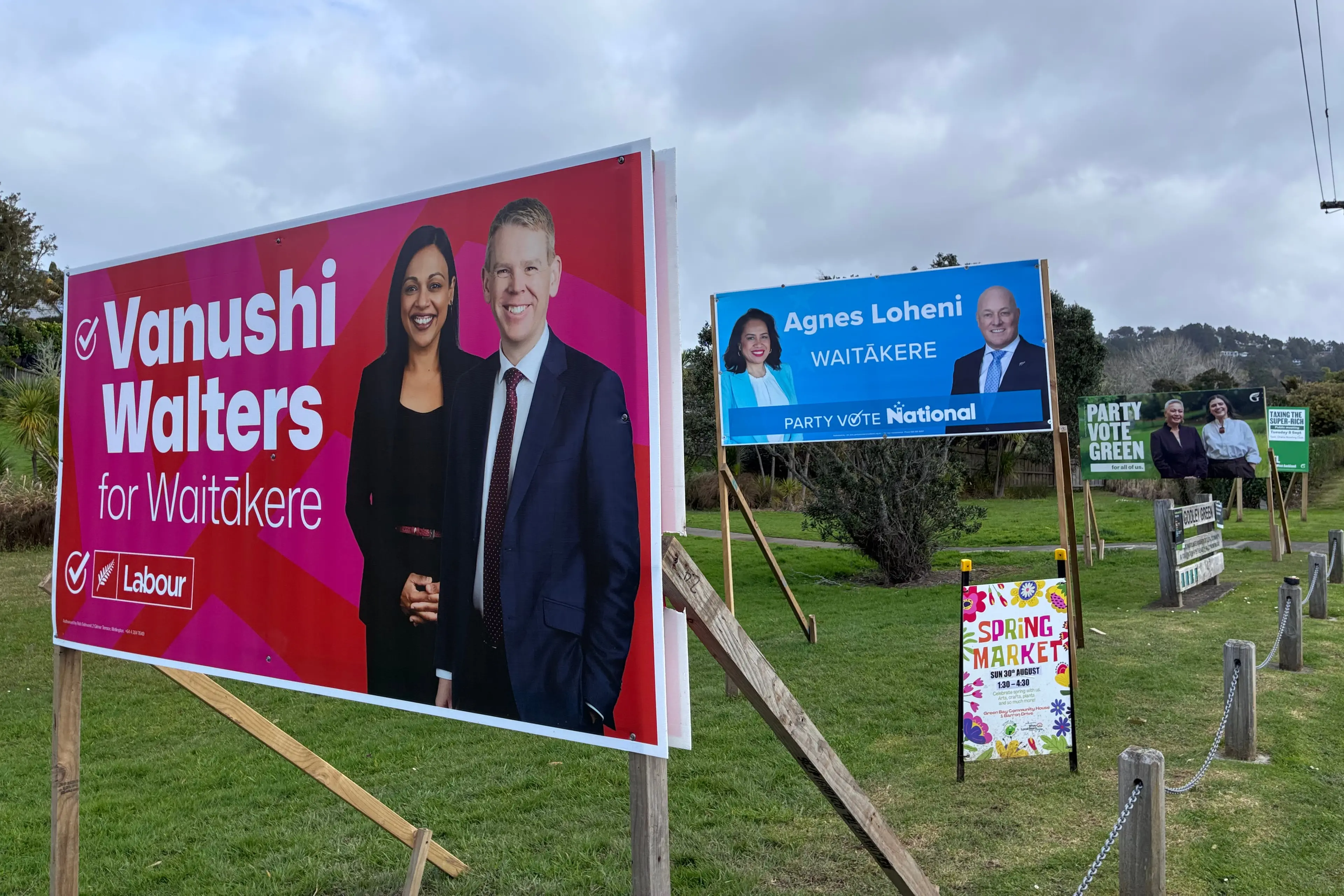
Defacing candidate billboards is a seasonal sport around much of the motu, but police warn that it is a crime and you may be prosecuted if caught.
Vandalism can range from the somewhat witty, like googly eyes glued on faces, to the nasty, such as racist and sexist comments, to the downright dangerous, such as setting billboards on fire.
What can you be charged with?
"It is illegal to deface, destroy, or remove election hoardings," a police spokesperson said.
"You can be charged with wilful damage, and if you were to remove one you could be charged with theft."
The penalties for wilful damage can be a prison term of up to three months or a fine of up to $2000, while the penalties for theft depend on the value of the item, but can attract fines or serious prison time.
Arrests aren't just hypothetical.
A man in Tauranga was charged earlier this month after allegedly damaging about 30 hoardings in a two-hour period.
"The damage in some cases is significant and unfortunately that's an unnecessary cost for the people who own them," Senior Sergeant Shannon Clifford said.
"We won't tolerate this illegal and destructive behaviour in our community."
Who is getting vandalised?
The vandalism runs across party lines.
The New Zealand Herald reported a National billboard was destroyed in an arson attack in Auckland's Mount Albert recently, requiring a Fire and Emergency callout.
"I have to replace signs that have been damaged when they cut our leader's face out of them," Waikato Labour candidate Jamie Toko wrote on Facebook. "Childish, jealous and threatened. You can't get any smaller than that."
Te Pāti Māori co-leader Debbie Ngarewa-Packer shared a photo on social media of one of her signs defaced with a racist slur.
"Our billboards team is made up of my husband, and a few really hearty supporters who work their butts off in between their normal mahi," she wrote.
"We then have beautiful whānau who help to look after, host and now are already having to clean billboards up."
National MP for Hamilton East Ryan Hamilton posted vandalised signs of him and party leader Christopher Luxon on Facebook recently, calling the attackers "cowards."
"If you disagree with me or want to discuss something, pick up the phone, send me an email, or come and have a conversation," he said. "Don't go around under the cloak of darkness vandalising other people's property."
The Electoral Commission said they have received some reports about sign vandalism, but encouraged people to contact police.
"The correct place to report theft or vandalism is the police," a spokesperson said.
"Local Councils oversee the rules around where and when signs can go up, so they may also receive complaints or reports."
Of course, vandalism is nothing new.
In past elections, racist attacks have been scrawled on billboards of Chinese candidates and Indian candidates.
Last year during local body elections, Maungakiekie Auckland councillor Josephine Bartley said her signs were marked up with personal abuse, but she couldn't afford to replace them.
"I told the Labour team to leave my billboards. Anything that's vandalised, leave it because I've got a mortgage. I can't afford to keep buying more signs. I'm only buying 30 and that's it."
Hamlton, the National MP, said on Facebook that he would replace his own damaged hoardings.
"I've got plenty more signs, I'm not going to be intimidated by it."
