
PHOTO
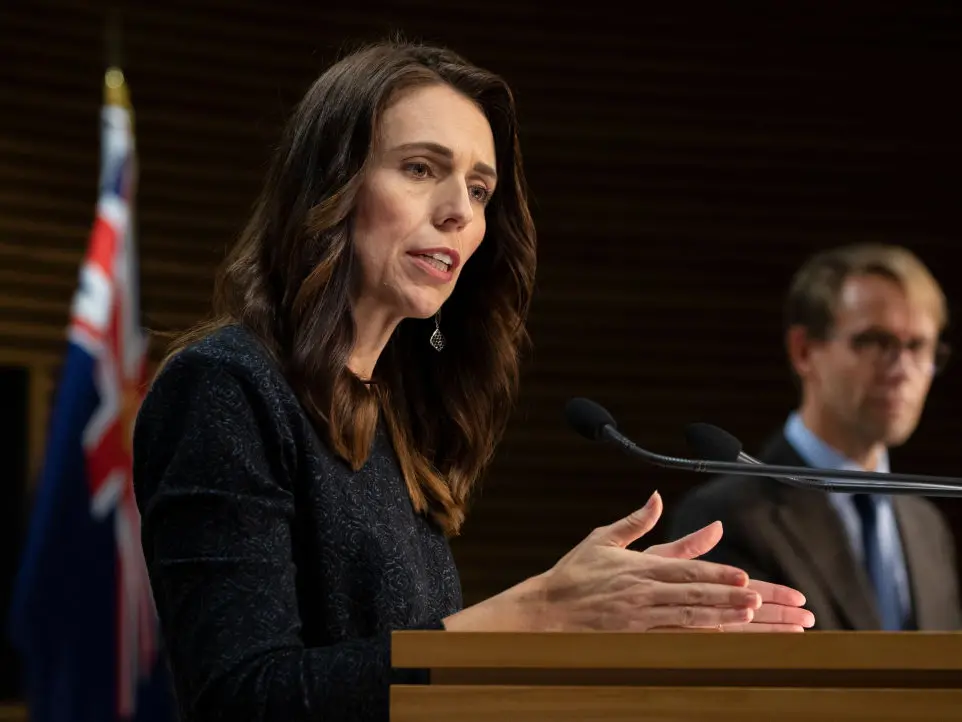
New Zealand will stay at Covid alert level 2 and Auckland at alert level 2.5 for at least 10 more days, Prime Minister Jacinda Ardern says.
At this afternoon's briefing, Ardern said the current levels will remain until Cabinet reviewed the situation again on Monday, September 14.
If in that time a change to alert levels is made, it will take effect from 11.59pm on Wednesday, September 16, Ardern said.
The decision comes as Director-General of Health Ashley Bloomfield announced five new cases of Covid-19 on Friday, including three in the community.
The Auckland region is currently at alert level 2.5, which was due to expire on Sunday. At present, Aucklanders can travel outside the region, though social gatherings are limited to no more than 10 people, with 50 allowed for authorised funerals and tangihanga. The rest of the country is at level 2.
Ardern said containment of the cluster, compliance to the rules and the impact of restrictions were considered by Cabinet today.
"The best economic response becomes the best health response," she told media.
She said that because the source of the large Auckland cluster was still not identified, it gave the Government cause to be cautious.
There was still a risk of spread to other parts of the country, such as happened in Tokoroa, which was a good reason to maintain the rest of the country on alert level 2.
"If that does happen, level 2 settings lessen the impact of any spread and avoids any further fallout."
Ardern said the Auckland cluster remained contained and there was no indication at this stage that the region needed to move back to level 3.
She says evidence suggested that the country could have some confidence, but caution was still being urged.
"The reality is that we will need to be dealing with it (the virus) in a number of ways."
Melbourne still provided a striking example of moving too quickly, she said.
"We are on the most perilous part of our journey."
Nearly 300,000 Covid-19 tests have been taken since the cluster was detected, including 67,660 in the past week - 61,800 in the community, 3587 border workers and 2213 staying in managed isolation facilities.
Since the move to level 2.5 in Auckland there have been another 30 community cases - all associated with the cluster. All are in isolation, as were people detected as close contacts
"All cases stem from a single index case," Ardern said.
A testing station will shortly be available at Botany Town Centre and places of worship, she said. There will also be health professionals available at the domestic terminal at Auckland Airport.
Police will also be highly visible in the community to enforce the rules over the weekend, the Prime Minister said.
Half of New Zealand was now using the QR posters, she said, and it was pleasing to see the widespread use of masks.
"So let's double down our efforts."
Ardern said she had spoken to other world leaders about how to manage lockdown fatigue and said it was understandable people had become weary.
She said it took hard slog and a huge effort, but people could see the gains of the measures they take.
Dr Ashley Bloomfield said on the subject of lockdown fatigue, the uptake of masks and the use of the Covid app, showed people realised that Covid may be with us for some time.
He urged people to be conscious of the size of the groups they were socialising with.
FIVE NEW CASES
Bloomfield said there are five new cases of Covid-19 today. Two cases are in managed isolation and three are in the community which are all epidemiology linked to the large Auckland cluster.
There are 82 people from the cluster in managed isolation and Bloomfield said that number continues to decline as people recover.
There are six people in hospital - two are in intensive care.
Eight new cases have recovered, meaning there are 112 active cases. Of these, 36 are in managed isolation/quarantine facilities and 75 are community cases. Some 3191 close contacts have been identified, of which 3136 have been contacted.
EXPERT WANTS GRADUATED SYSTEM
Some public health experts have argued that New Zealand needs to have a more graduated alert level system as it continues its bid to eliminate the virus.
Among them is the University of Otago's professor of public health Nick Wilson, who believes the system should be refined to reflect the risks of indoor gatherings and the need for widespread mask use, including in restaurants, bars and gyms.
A recent Japanese study estimated the risk of Covid-19 transmission is 20 times greater at indoor venues compared with outdoors, he told RNZ's Morning Report today.
"So that highlights the need to focus on these indoor environments where people are close together and that's where mask use is critical," Wilson said.
For outdoor areas people might not need to wear masks or even worry much about social distancing.
Auckland University Professor Shaun Hendy, whose modelling has guided the Government's response, says it's too early to tell the true impact of the current alert level.
"It would wise to figure out how well the current settings have worked before we change them."
Hendy believed it would be best to keep the whole country at level 2.
"The risks now are that Aucklanders are travelling again [out] of an outbreak in another part of the country and if we were at level 1 then that outbreak can grow very rapidly, whereas in level 2 there is a chance it won't take hold at all, or it will grow slowly so we will be better able to contain it."