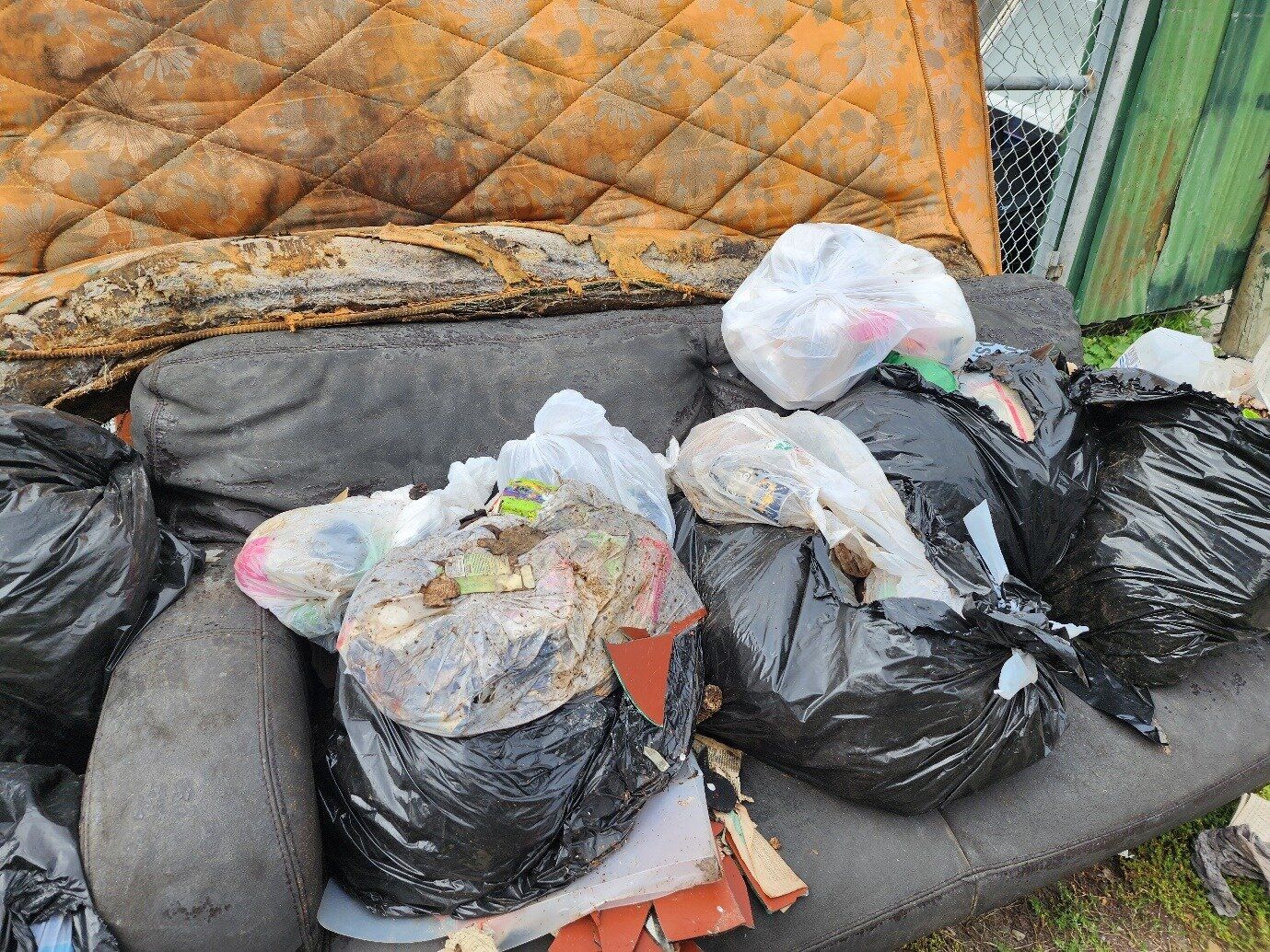
Illegal dumping of rubbish in Gisborne has reached an all-time high of 1200 tonnes in the past year — the equivalent weight of about 600 cars and nearly 55% up on the previous year.
Gisborne’s streets, beaches and parks have all been littered with dumped rubbish at times, including animal carcasses, mattresses, syringes and fridges.
However, about 94% of the cost the council incurs from illegal dumping comes from rubbish left outside the city’s Waste Management transfer station gates.
Council’s solid waste manager Phil Nickerson said the annual bill for waste outside the transfer station totalled $570,000, as of October.
About 20% of the rubbish left at the gate is stickered (paid for), with people thinking the crates at the gate are an after-hours service.
Putting stickered rubbish bags outside the station when people miss their kerbside collection was still an extra cost to the council, Nickerson said.
The 1200 tonnes of rubbish dumped this year have cost the council $610,000, which includes disposal and contractor costs.
It excluded internal staff time for management, customer service, compliance or parks and recreation services, he said.
Gisborne has seen a 54.8% increase in illegal rubbish dumping in the last year, with 775 tonnes dumped between 2023 and 2024 (October).
Figures show the volume of waste dumped increased from just over 150 tonnes at the end of 2021 to almost 350 tonnes by the end of 2023.
Kate Sykes, council team leader monitoring and compliance, said over the year to date there had been 43 complaints of burning rubbish, which included rubbish, plastic and toxic materials.
Eight additional complaints were related to the burning of green waste/tree prunings.
“Generally, people are burning green waste (which is permitted provided it is dry and that the fire season does not prohibit the use of incinerators or open burning).
“Other items commonly include plastic, rubber, [and] metal, which are not permitted to be burnt as they produce toxic components that can be harmful to health.”
Sykes said the number of complaints had been consistently between 50-60 complaints per year over the last three years.
The motive behind people burning rubbish was “a complicated matrix” of reasons, which included the cost-of-living-crisis, cost of disposal as waste levies were set by the Government, barriers to making rubbish disposal easy (landlords not passing on rubbish stickers, lack of transport for larger items, working shift hours, etc), and ingrained “poor behaviour and/or ignorance”.
For those non-compliant, the council used a graduated response to non-compliance, she said.
This might start with education (a pamphlet about what can/can’t be burnt) or a formal warning, and worked through a range of options that may extend up to and include court action, Sykes said.
This would be for those “serious or persistent offenders or where there is a high risk of harm.”
Where to go if you want to learn about reducing your waste?
Tairāwhiti Environment Centre offers recycling services, waste minimisation advice, a community garden and compost, a trap library and educational initiatives.
The centre’s Zero Waste activator, Jo McKay, said it was interesting that 94% of the cost the council incurs for illegal dumping happened outside the transfer station.
“It shows people are trying to get it to the right place.”
December was a great time of year to reflect on waste and consumer habits, with Christmas approaching, McKay said.
“This is a really good time of year to think carefully about what you’re buying as gifts, and reflect on whether we really need it in the first place.”
When purchasing, people could ask themselves whether there was another, more sustainable alternative, McKay said.
“Can something be repurposed, remade, handmade, upcycled ... the best things in life are free anyway.
“It’s really getting people to think about the end of life of that product and what happens to it.”
Why not buy someone “a beautiful keep cup, for instance?”.
Single-use cups were often full of microplastics, used only once and then become waste, she said.
While the centre offered a recycling service for items the council did not collect for kerbside collection, McKay said recycling should be one of the last solutions to aspire towards.
Reducing consumption was the first.
McKay encouraged sharing to reduce waste.
“We’ve got a frock swap here. That’s a free rack for people to bring in the dresses that they don’t like wearing anymore, and then other people can take them home.”
The Tairāwhiti Environment Centre also wanted to see “strong product stewardship legislation” requiring companies to take responsibility for their products and think about end-of-life solutions.
The centre also accepts old laptops, computers and hard drives, and the room where the e-waste is kept is “chocker”.
“E-waste (technology) is the fastest-growing waste stream in the world,” McKay said.
“We have a really wonderful volunteer who comes in and fixes what he can to be redistributed into the community.”
Anyone not sure of how to dispose of an item can contact the Environment Centre for ideas on where to take it, McKay said.
The centre also offers a workshop series to help people grow skills in reducing waste, which includes workshops on repairing and composting.