
PHOTO
More than half a dozen New Zealanders narrowly escaped last week's deadly flash floods on the Nepal-China border after their Auckland-based tour operator decided to cross the border a day earlier.
A massive flash flood, believed to have been triggered by a glacial collapse, swept through a Himalayan valley last Wednesday, burying villages.
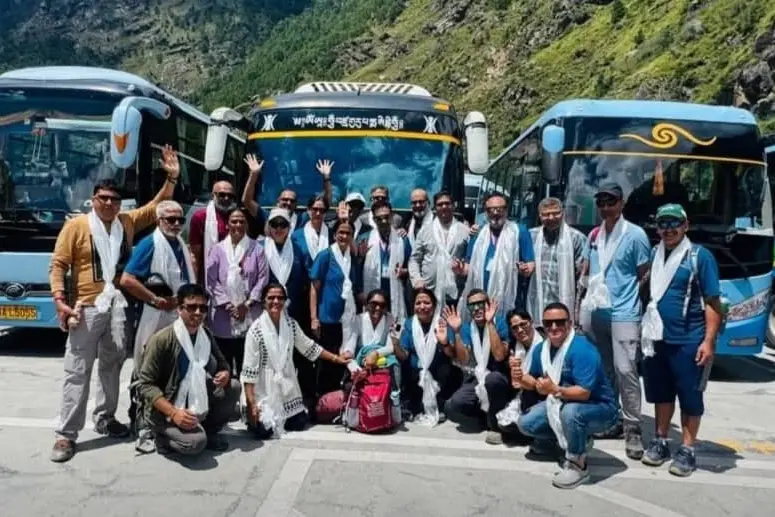
Eight New Zealanders were among a group of 20 pilgrims who crossed through the Gyirong Port immigration centre just a day before it was washed away by the deluge.
Dixit Chauhan, owner of Royale Travels, said he made the decision to take the group across the border one day earlier than planned because previous experience on the pilgrimage had taught him the benefits of acclimatisation before attempting the trip.
The gruelling 53km pilgrimage around Mount Kailash is undertaken at altitudes exceeding 5000 metres, and pilgrims are advised to spend some time in the area before making a gradual ascent in elevation.
Chauhan's decision to cross earlier than planned to spend time at altitude meant the New Zealanders were safely on the other side of the border when the flash flood struck.
Wire agencies have reported that more than 1200 people have been confirmed dead in the disaster, with another 4200 missing, including five New Zealanders.
Chauhan was leading the group on a pilgrimage to Mount Kailash and Lake Manasarovar.
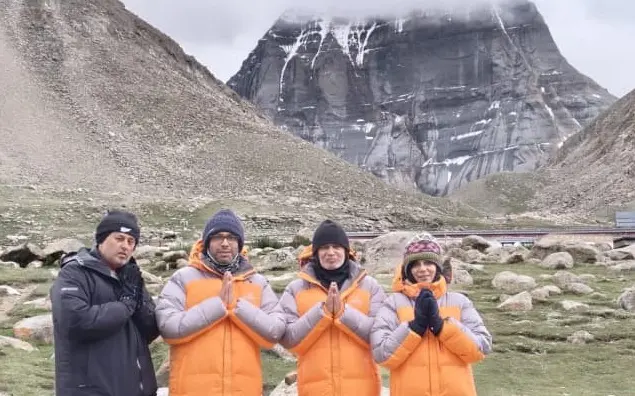
Mount Kailash is believed to be the resting place of Hindu deities Lord Shiva and his wife, Parvati, and is considered one of the holiest places for Hindus, Buddhists and Jains.
The mountain is also viewed as a "cosmic pillar", a central axis connecting the physical world and higher spiritual dimensions.
It is believed that Lord Shiva sits on the mountain top in perpetual meditation, sustaining cosmic equilibrium.
For that reason, pilgrims are prohibited from climbing to the summit.
Nearby Lake Manasarovar is also considered sacred.
Hindu devotees believe completing the pilgrimage and taking a holy dip in Lake Manasarovar can cleanse a lifetime of sins and help attain moksha, or liberation from the cycle of rebirth.
"We were all shocked by what happened," Chauhan said from Darchen in China's autonomous region of Tibet.
The group had completed its physically demanding walk around Mount Kailash.
"We were initially planning to cross the border on Wednesday when the floods happened but, because this was my second time, I told our operators we need to go a day earlier for the group to acclimatize to the conditions," he said.
Chauhan believed the decision to cross a day earlier was guided by Lord Shiva.
"I think it's not me who saved their lives but Lord Shiva," he said. "It's not my decision but the god's."
Chauhan said the group left New Zealand on August 20 and would return at the weekend.
He said the group was at the Gyirong Port immigration building as well as Rasuwa a day before the flash flood struck.
"We left Kathmandu in the morning [on Monday] and arrived [at Rasuwa] at 5pm and spent the night," he said.
"The next morning [on Tuesday] we left for the border, spent a couple of hours at the building and then crossed the border."
Chauhan said the group only learnt of the flash flood sometime later because it had limited connectivity in the mountains.
Remembering past visits
Auckland resident Amar Prakash has completed the pilgrimage twice.
Prakash arrived in Nepal in July, circled Mount Kailash and crossed the border from Tibet back into Nepal on August 2.
"We were devastated and shocked because we have been through that border four times now," he said.
"We just couldn't believe the force of the water, the rubble, everything coming down," he said. "[It] is just heartbreaking."
Prakash said the hotel where they had stayed a few weeks earlier had been washed away and the guide who helped the group in China was missing.
"Without her, our pilgrimage wouldn't have been complete," he said.
Prakash said it took a while for him to fully accept that the places he had walked through just a few weeks earlier were completely gone.
Prakash first went to Mount Kailash and Lake Manasarovar in June last year.
"I was going through a big life event transition in my life, going through divorce. I was at a very low point in life, I guess, and I needed something to sort of help me get back on my feet again," he said.
"It's quite a tough journey to go on because it challenges you emotionally, mentally and physically in all various aspects."
Prakash said the trip genuinely helped him, and he started to see positive changes in his life upon returning to New Zealand.
Inspired, he took some family members, including his parents and a cousin, on the pilgrimage this year.
Prakash said he spent a lot of time in Syabrubesi last year and walked around the bazaars of Rasuwagadhi this year as well.
He said the trip cost him somewhere between $10,000 and $12,000.
Unlike his first trip in 2025, Prakash noticed a significant increase in the number of Tibetan pilgrims this year.
"Because it is the Year of the Fire Horse, one that only happens every 60 years, the number of pilgrims from the China side increased this year," he said.
'We shouldn't let this devastation stop us'
Monark Panchal, another Aucklander, also made the pilgrimage this year.
"It was my long wish to go to Mount Kailash since I was young but somehow it got delayed until this year," Panchal said.
He said the pilgrimage was very tough, and he was asked by his tour operator to train in advance.
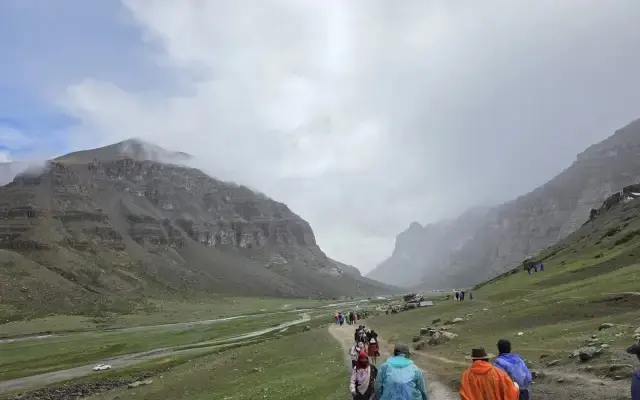
"The parikrama (clockwise circumambulation) around Mount Kailash is a tough hike and takes three days to complete," he said.
The walk enables pilgrims to see the mountain from all sides - north, south, east and west.
Panchal said members of the group had to take medicine because of the high altitude.
"Every 20 minutes we had an alarm set just for drinking water," he said.
Panchal said the third day of the trek was the toughest.
There were horses and porters to help pilgrims carry their luggage and provide a ride if anyone needed one, he said.
Panchal said the high altitude, lack of oxygen and tough terrain combined to make the pilgrimage physically demanding.
"When we reached Dolma La Pass, we were more than 5600 metres above sea level," he said.
"If you go up [another] 3000 metres above sea level, you'll be on top of Everest and so you can imagine how tough it must be."
Panchal said the climb down from the Himalayan plateau was equally treacherous, requiring hikers to navigate steep seven-kilometre drop.
He said most pilgrims crossed into Nepal through Gyirong Port because it was the shortest way back.
Panchal said he tried to get in touch with a few people he met during the trip but had been unable to do so.
"We have been trying to reach them," he said. "It's all washed out actually and very sad.
"Since the disaster, I'm really disturbed and a bit stressed thinking about all the people that I know."
Chauhan, Panchal and Prakash said they were keen to make another trip.
Prakash vowed to return to Mount Kailash next year.
"Nepal is a beautiful country and so is the Tibet side. The journey is a big economic industry for both areas," Prakash said.
"The pilgrimage creates a lot of jobs, creates a lot of money flow within the economy and so I think it's important that, where possible, we should still support and go through this journey because we shouldn't let this devastation stop us [from visiting]."
Five New Zealanders remain missing following the deadly flash flood: Dejan Kuzmic, Shweta Mhatre, Mihir Patel, Kinnari Patel and Suhasini Reddy.
Three hundred and thirty foreign nationals have been rescued, according to an update from the Nepal Tourism Board early Tuesday morning.
No New Zealanders have been included in that number.
RNZ understands Mhatre was also part of the Isha Foundation's pilgrimage, and Sadhguru had previously said two New Zealanders were missing from his trekking group.
Meanwhile, Reddy's family has called on rescuers not to stop searching for the 44-year-old after conflicting reports of her status emerged online.
Reddy's brother, Rajeev, and his wife, Lauren, urged people to keep searching for survivors in a Facebook post.
A spokesperson for the Ministry of Foreign Affairs and Trade said on Tuesday there had been no change to the status of the five missing New Zealanders.
"While various information is circulating online of those rescued and recovered, there is still no new verified information on the missing New Zealanders," the spokesperson said.
"This is likely to take more time to emerge. Unfortunately, reports of the situation on the ground remain bleak."
