
PHOTO
"So much goes into it and then some loser just comes along, clicks a few buttons and claims a song as their own," says Kiwi musician Jake Andrews.
A Kiwi musician is convinced an American man has used artificial intelligence to rip off his song 'Brainlock'.
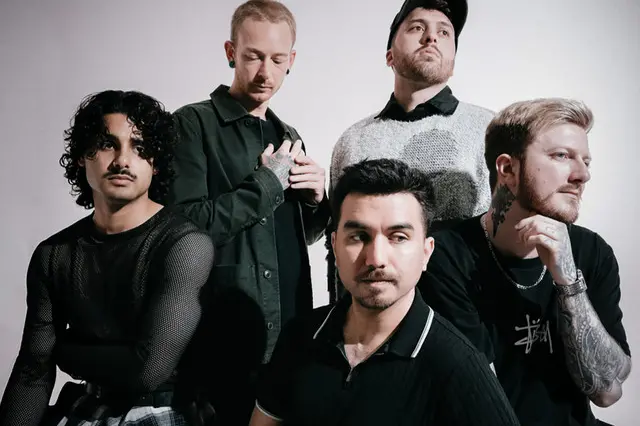
Jake Andrews - the guitarist for New Zealand metalcore band Crooked Royals - also releases solo music online through YouTube and Instagram, and believes an instrumental track 'Brainlock', released in early April, has been copied.
Andrews believes it has been ripped off by an American called Devin Cloutier, who claims to be the lead vocalist of a band called Our Sin. Cloutier released a song - soon after after Andrews - called 'Brain Locked'.
An email from Kansas
It all started in April, when Andrews said he received an email from Devin Cloutier, who said he was a singer in Kansas and the lead vocalist for a band called Our Sin.
Cloutier said the band's previous guitarist was also named Jake Andrews, but had recently died in a car crash. Andrews said Cloutier also asked him to collaborate with Our Sin.
Andrews said Cloutier also provided a song he thought was an AI copy of Brainlock, complete with male and female vocals.
Andrews declined to work with Cloutier, as he believed Our Sin's music was AI-generated.
Cloutier said they used AI for the drum tracks, but everything else was created by humans. He then promised to send Andrews videos of himself singing with a female vocalist named Hannah Knovak.
"Then came all the excuses," said Andrews.
In emails that Cloutier had sent to Andrews and provided to RNZ, Cloutier's excuses for not sending the videos included exhaustion, his wife being in bed, and finally a tree falling on his house.
Andrews said he did not give Cloutier permission to release any music based on Brainlock.
"I told him several times that he is not allowed to use it and I do not agree with what he is doing."
But a song called 'Brain Locked' was later uploaded to Our Sin's YouTube page.
Andrews had the video taken down, but it has since reappeared on YouTube, Tik Tok and Spotify.
RNZ contacted Cloutier via email and put Andrews allegations of plagiarism to him.
Cloutier responded saying: "The original riff was modified to be completely new. It is influenced by his masterful piece absolutely. We were inspired by it. However we are not directly ripping off artists."
Andrews said he planned to have the videos taken down again.
Joel Tashkoff - an entertainment lawyer for Dominion Law - said once a musician wrote or published an original piece of work, they owned the copyright.
"You don't actually need to register that copyright anywhere, as long as that lyrical melody is 100 percent yours and you haven't taken it from anywhere, and that's pretty much the basis of copyright globally."
Tashkoff said artists who think they have been ripped off can contact whoever is distributing the allegedly copied work. He said the distributor was always listed on YouTube videos.
"Then you can go directly to the distributor and that distributor will have a copyright take-down process as well. There's usually a couple of questions you need to answer and then the process goes ahead and they'll usually take it down straight away while the process is being completed. "
Plagiarism has existed in music long before the digital age, but Tashkoff said AI models were making it easier for people to copy music.
"There's no prerequisite to have any sort of musical talent now in order to get an end result."
Andrews certainly is not enamoured with artificial intelligence and said AI is ruining the music industry.
"As a musician we spend countless hours writing the song, learning the song, recording the song, making the video, editing the video, promoting the song. So much goes into it and then some loser just comes along, clicks a few buttons and claims a song as their own."
Andrews band Crooked Royals are still going strong, and will be playing at Auckland venue the Powerstation next month - without the use of AI.
