
PHOTO
An immigration checkpoint has reportedly been swept away in catastrophic flash flooding, as family of missing New Zealanders appeal for any information on people in the area.
New Zealand consular staff have arrived in Kathmandu and are working with authorities to gather further information and support for families affected.
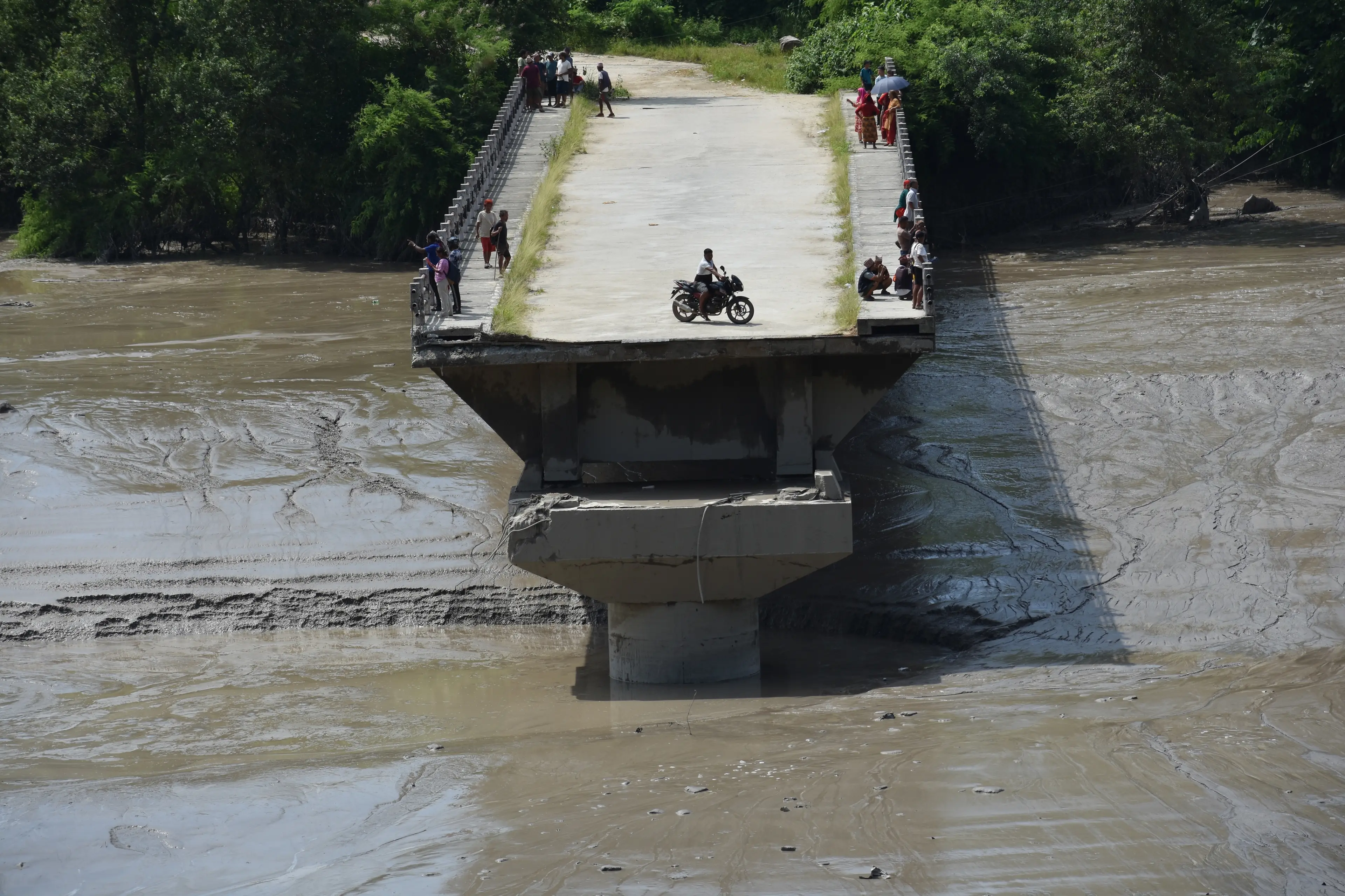
The flooding, believed triggered by a glacier collapse on Wednesday, sent a huge torrent of rock, ice, mud and debris cascading through Himalayan mountain river systems, sweeping through villages and key infrastructure down a route thronged by trekkers and pilgrims that links Kathmandu with Lhasa in Tibet.
At least 380 people have died and nearly 1400 people are missing in the region. Nearly half of the missing are foreigners from more than two dozen countries.
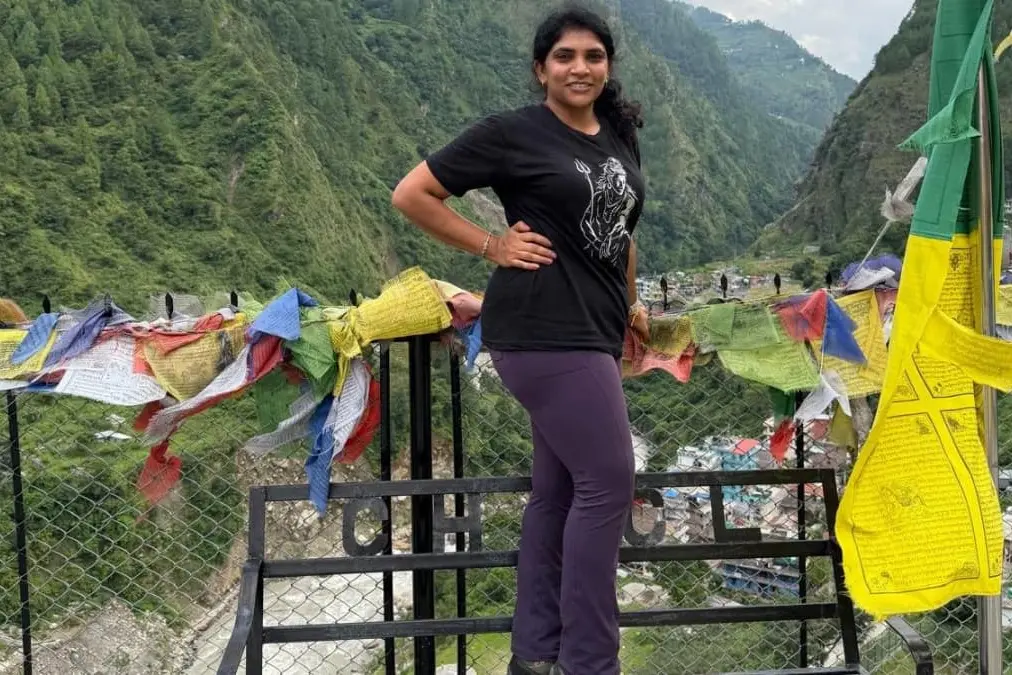
Rajeev Reddy, whose sister Suhasini is one of the five known missing New Zealanders, said in a Facebook post he was trying to work out the level of the damage around the immigration checkpoint between Nepal and Tibet, and if anyone was able to make it to higher ground.
He said Suyhasini was with a group of hikers due to meet with Chinese authorities to get permission to cross the border close to the time the raging flood hit.
"We have confirmed that Suhasini did not cross the border. We therefore believe she may have been near the immigration/checkpoint area when the flooding hit."
Former honorary consol of Nepal to New Zealand Dinesh Khadka says the checkpoint was swept away in the flooding, and nobody has made contact with anyone who was in the area.
Khadka said there was no further information on the five missing Kiwis. Four have been named: Reddy, a mum of two who lives in Australia, Auckland man Dejan Kuzmic, and Hamilton couple Mihir and Kinnari Patel.
Others missing include 288 people from India, 63 from the United States, 51 from Malaysia, 34 from Australia, 33 from Britain and 25 from Canada.
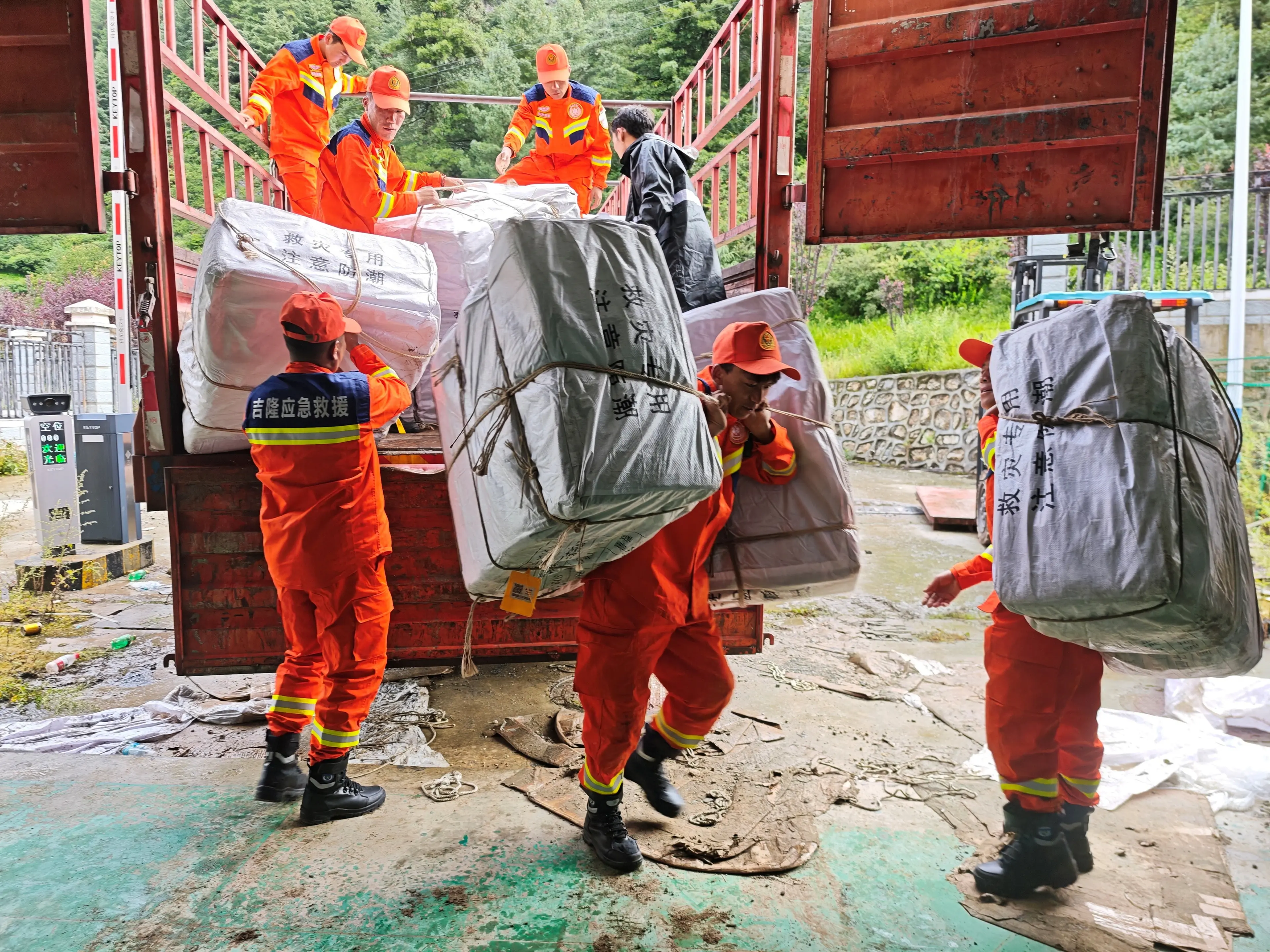
Authorities in Nepal used helicopters to search for survivors and drop emergency supplies to thousands cut off in towns and valleys, while emergency services recovered dozens of bodies swept down into the plains.
New Zealand’s Ministry of Foreign Affairs and Trade (MFAT) said on Friday it was still waiting for official information from authorities on the ground as they work to establish the whereabouts of the missing.
"The widespread and significant destruction is likely to mean verified information will take some time to emerge," a spokesperson said.
The New Zealand government would contribute a $2 million package of humanitarian assistance for Nepal, MFAT said.
"This will support the Nepal Red Cross Society to deliver emergency assistance including shelter, water and sanitation and restoring family links.
“Funding will also be made available to other international humanitarian partners with the capacity to provide essential relief and early recover assistance."
MFAT said it was aware of five New Zealanders believed to be in the impacted region and whose whereabouts have yet to be established.
"For privacy reasons, MFAT cannot confirm the names of the New Zealanders affected. We are still awaiting official information from authorities on the ground. The widespread and significant destruction is likely to mean verified information will take some time to emerge.
"Contact has also been made with all New Zealanders registered on SafeTravel (12 as of Thursday night). They are all safe.
"If New Zealanders have concerns for loved ones in the Rasuwa region, along the Nepal-China border, they should contact MFAT’s Emergency Consular Line (+64 99 20 20 20)."
Prime Minister Christopher Luxon said New Zealand is offering consular support in Nepal and it was happy to "surge" that with more resources. He did not have any further information about the five New Zealanders missing "apart from to say that we've got consular support in there engaging with authorities".
He also acknowledged thousands of Nepalese people in New Zealand, saying it was a devastating situation.
"Having spoken to some members of the Nepalese community this morning, you know, there are many families here in New Zealand that are going through high levels of anxiety, understandably, because they're losing, they've lost loved ones at home as well."
Meanwhile, Australia will provide $A3.6 million ($NZ4.3 million) in aid for communities hit by floods along the Nepal-China border and deploy extra consular staff to the area, Foreign Minister Penny Wong said on Friday as the number of missing Australians rose to 39.
The funds will be split between the United Nations' World Food Programme and Australian non-government organisations.

Hamilton couple celebrating 50th birthday
The son of a Hamilton couple missing following the Nepal flash flood is holding onto hope his parents left the area in the hours before the landslide struck.
Mihir Patel and Kinnari Patel, who own the Best Value Urlich Ave Dairy in Hamilton.
Their eldest son, Drishya Patel, told RNZ the couple were visiting Nepal to celebrate his mother's upcoming 50th birthday and had been away for about a week, he said.
"They're just on a trip to go visit some of the mountains in Nepal. It's like a pilgrimage of sorts."
Drishya Patel spoke to his father the day before the flash flood and said the couple's trip was going "really good". "They were having a good time."
He last got a message from his mother on WhatsApp about 5.30am (local time) from Timure.
"Leaving for Kerung," the message said.
Drishya Patel said he was "shocked" when he first heard the news of the landslip and the family has heard nothing from the couple since.
He hoped that the couple left when they sent the message, about three hours beforehand.
"As long as like they actually did leave when my mum sent me that message, I'm hopeful. These guys tend to run things on time, these tour guides," he said.
"But again, haven't heard anything confirming."
He had spoken with MFAT but "they don't know anything either".
"I don't think I've processed it… realisations slowly setting in as every hour passes, and I don't hear anything, and no one knows anything."
Mother of two missing
Rajeev Reddy told RNZ his sister Suhasini Reddy had been living in Australia for the last four years.
She was hiking with a group of friends from Australia with the Kailash Journeys Guides, he said. The flood occurred on day four of the 15-day trip.
He last spoke to his sister the night before the floods, while she was in Kathmandu.
"She was all good, excited. She had this trip planned for a while."
Before heading to Nepal, Suhasini visited her parents in India where she left her youngest son. Her other son is with family in Australia.
Rajeev Reddy said the family were desperate for information.
"We actually don't know what's happening ... we're just saying that she'll be okay.”
The family appealed for anyone with information about her whereabouts to contact them.
Another missing Kiwi on pilgrimage
Dejan Kuzmic was travelling on the Kailash Mansarovar Yatra, a pilgrimage to Mount Kailash, when the disaster struck on Wednesday.
Nepal's Tourist Police confirmed Kuzmic's name to RNZ on Thursday morning.
He was part of the Isha Foundation's Sacred Walks pilgrimage group, which was travelling towards Mount Kailash, revered by Hindus as the abode of Lord Shiva.
RNZ has also spoken to a family friend, who confirmed the family had been unable to contact Kuzmic since the floods.
"He was part of the Isha Foundation's walk group S3 and was at the border crossing, which was hit quite heavily within a reasonable time, which makes us believe he may have been involved," said Seyed Sepehr Hosseini, whose mother attends a meditation group with Kuzmic.
Hosseini contacted the Isha Foundation, which told him Kuzmic's emergency contacts had been notified. He also contacted MFAT which said it had opened a consular case for Kuzmic.
Mount Kailash is revered by Hindus as the abode of Lord Shiva, while nearby Lake Mansarovar is also considered sacred.
India's official Kailash Mansarovar Yatra portal describes the pilgrimage as having deep religious and cultural significance.
Hindu devotees believe completing the pilgrimage and taking a holy dip in Lake Mansarovar can cleanse a lifetime of sins and help attain moksha, or liberation from the cycle of rebirth.
Further disaster feared
Sir Edmund Hillary's grandson, Peter Hillary, told RNZ’s Morning Report programme on Friday the flash flooding showed the importance of early warning systems.
"People have cell phones and if you can only get them to go to high ground people will be safe. They may lose their homes and their possessions, but they won't lose their lives."
The region, like many others around the world was seeing "major glacial recession" which was forming glacial lakes, he said.
“Terrain in the Himalayas of course is the steepest in the world. So you've got these lakes... they're up at like 4500 metres."
"If they burst their banks and these are called glacial lake outburst floods, they just surge down the valley carrying huge boulders, mud and silt and whatever they pick up and they're unstoppable, literally unstoppable."
The sheer amount of water and debris stirred up now risks triggering a further disaster, Reuters reports.
Nepal's disaster management authority warned that a lake formed by debris blocking the Bhotekoshi River at the flood site was rising and at risk of bursting, while on the other side of the border China said that some 3 million cubic metres of water - the equivalent of about 1200 Olympic-sized swimming pools - was expected to flow into an already dammed lake over the next three days.
There is a high risk the lake could breach, with peak flow expected about September 1, Chinese state media said, citing the water resources ministry.
"The volume of water is continuing to increase, and so is the risk," Zhu Jinfeng, a researcher at the ministry's hydrology department, told state broadcaster CCTV.
Chinese rescuers had yet to reach the worst-hit area on the Chinese side of the border, the Gyirong border crossing, by Thursday evening, state-media reports indicated, as crews worked to clear debris from the key access road leading to the area.
Meanwhile, 350 labourers and locals have been rescued after being trapped inside the tunnel of Upper Trishuli Hydropower in Nepal since Thursday, the Nepal Prime Minister's Office said.
- additonal reporting by Reuters and Allied Media
