
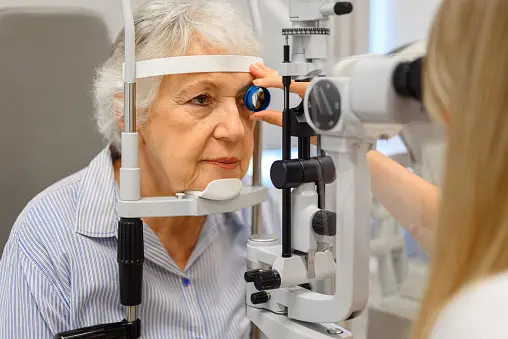
PHOTO
Tens of thousands of people are overdue ophthalmology appointments in the public system and doctors are aware of patients going blind because of waiting too long.
Ophthalmology New Zealand chair Dr Sonya Bennett told RNZ’s Nine to Noon programme on Monday that doctors were struggling with a "tsunami" of increased demand from an ageing population, poor IT systems and staff shortages.
Bennett said as of February this year there were 125,105 outstanding Health New Zealand follow-ups in the ophthalmology service. Of those patients, 36,306 had been waiting 50% longer than the doctor recommended and 20,280 had been waiting 100% longer.
"We see, as hospital specialists, we see patients who haven't been seen in a timely fashion and they're losing vision, and it really concerns us."
Health New Zealand said it was working to improve access and cut waiting times, including recruiting for vacancies and using community based models of care.
It acknowledged demand for eye health services continued to grow as the population aged and more people need treatment and monitoring for conditions.
Director national clinical networks Mary Cleary-Lyons said it did not keep figures on the number of people with deteriorating or lost vision as a result of long wait times.
"Clinical services routinely assess and prioritise patients based on urgency and risk, and patients whose condition changes are encouraged to contact their healthcare provider so that their clinical priority can be reviewed."
Bennett said these were often patients who had long term chronic diseases.
An ageing population meant there were many with age related issues such as cataracts, glaucoma, age-related macular degeneration.
"So especially important for patients with glaucoma and age-related macular degeneration... these patients have recommended time frames to make it a safe estimate between when they're seeing the specialist.
"But if they're not being seen within that timeframe, the risk of them having disease progression that goes on to lose vision that we can't bring back is very real."
Auckland and the Northern region were seeing some of the worst wait times with an increase of 4% in the last couple of years, with most other parts increasing by 2%, Bennett said.
"I was just having a chat with a colleague in Waikato, and he was saying that they have 3000 overdue follow-ups, that are over the 50 percent threshold.
"So it really is an indication of a system failure, which is multifactorial."
She said doctors were trying to use any resources they have to reduce the wait times, including utilising allied health professionals.
This meant getting patients seen by optometrists, ophthalmic technicians or nurses, often in clinics called "imaging clinics".
"We have senior nurses who run age-related macular degeneration review clinics... However, we just don't have enough people that we're allowed to hire to get through the work."
Aside from the ageing population, there was a lack of investment in staff. Bennett said only 80% of specialist positions were filled in the country, with a lack of sufficient optometrists, nurses, technicians and admin support staff within the departments.
"This is a tsunami. With a tsunami, you get ongoing, relentless increase in numbers - and you can't escape it.
"Apparently, the government says that we don't have a hiring freeze. However, the reality is that it's nigh impossible to employ new people. There's a lack of investment in the physical structures... We also have a lack of investment in our IT infrastructure."
Patients who suffered the consequences of long wait times, such as vision loss, needed support systems which come can come at a high economic cost, she said.
"In terms of the economic cost, it's much cheaper to actually put adequate funding into a public health system than have people end up with poor vision and try to look after them at the other end.
"We actually need cross-party support for a significant and sustained increase in funding for eye health care in the public sector."
Health New Zealand's Mary Cleary-Lyons said work was being done with the Eye Health National Clinical Network and local services in an attempt to improve access and reduce waiting times.
"Work is under way to reduce variation in access across the country, strengthen clinical pathways, support greater integration between hospital and community-based services, and improve digital infrastructure.
"This includes expanding opportunities for shared care with community optometrists where clinically appropriate, reviewing follow-up pathways for lower-risk patients, and supporting nationally consistent approaches to triage and prioritisation."
Health NZ continued to recruit for approved vacancies and trying to strengthen capacity through initiatives like "specialist training pathways, international recruitment, retention initiatives, and greater use of multidisciplinary teams,” she said.
