
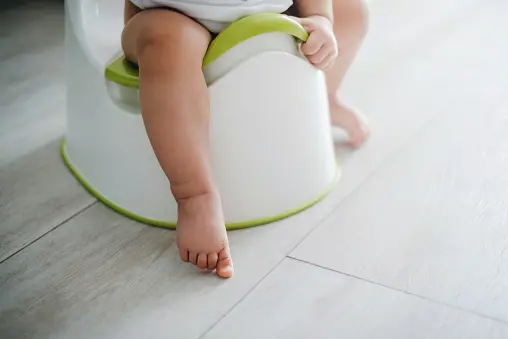
PHOTO
“I hate being a doomsayer, but the problem is becoming much worse,” says primary school principal Ash Maindonald.
At a primary school in Henderson, about a quarter of new entrants are starting school not able to use the toilet independently.
“Things have steadily become more challenging,” says Western Heights School principal Ash Maindonald.
“We have a great many children who cannot, or will not, wipe themselves after a visit to the toilet and this is becoming a really prevalent problem for us. We also have some children who soil themselves during the day.”
Earlier this week, the National Party announced a new 'School Start Check' for children at ECE before they go to primary school and would set expectations about the skills needed for school, including toileting.
Are fewer kids starting school with toileting skills?
While there is no official data on how many children are not able to use the toilet independently when starting school, anecdotal reports from educators, nurses, and specialists suggest it is becoming more common.
Lisa Smith is a paediatric nurse and runs the Children’s Continence Service. “I recently did a presentation for new entrant teachers and definitely the feeling is that many more children are not fully toilet trained when they start school and a significant number are still in pull-ups.”
Research from the UK has also found a similar trend, with one in four children in England and Wales starting school not toilet trained, accounting for 2.4 hours of teacher time lost each day supporting children who are not school-ready.
That research also found the age of potty training has crept up from just over two years in the 1950s, to just over three in the 2000s, with more recent research suggesting about a quarter of parents are starting after two and a half.
Maindonald says the situation is putting teachers under real pressure.
“If I've got a child who needs toileting support, the teacher can't walk out of the room and do that when she's got 20 other new entrants in there who haven't got social skills and are perhaps going to get into an argument or throw something.”
However the early childhood education sector says they aren't seeing more children leaving ECE unable to toilet independently.
Simon Laube, chief executive of the Early Childhood Council, says data is needed to understand who these children are that are struggling to use the toilet independently at school.
“What do we know about those children? There's still quite an absence of data to show whether or not those children actually went to ECE at all.”
Laube says generally, children would be expected to be toilet trained by the time they leave ECE, although he acknowledges this is not always possible depending on the child.
Why might a child struggle with toileting?
“There does appear to be an epidemic of toileting troubles in the western world,” says Smith.
She says constipation is actually one of the biggest issues impeding toilet training, affecting about one in three children at some point.
Smith says this can lead to toilet avoidance or stool withholding.
“I've seen kids hold on for weeks on end, and the longer they hold on, the more constipated they're going to become. So then it just becomes a cycle of hard, painful poo.”
But there are many other reasons for a child struggling with toilet training, such as developmental or sensory issues.
“About one in five kids have a disability that could impact on their ability to be fully toilet trained and independent when they start school,” explains Smith.
Being too absorbed in playing is another common issue.
“The toilet is the most boring place in the world. It can be quite smelly. It can be quite cold. So why would they want to go?”
Moving from nappies to the toilet can also be frightening for some children, Smith says, especially if there hasn’t been enough communication about the toilet process.
Smith says children can often be “a regular, happy pooper” in their nappy, but become fearful of the toilet.
“Some kids have an amazing imagination. I've heard some kids say that they thought that this was part of their body that they were letting go… that their insides were coming out.”
Early childhood
Plunket is one of the providers for an existing B4 School Check run by the Ministry of Health, which looks at a child’s health, behaviour, social skills and development at age four.
Clinical leader at Plunket, Kym Ward, says it’s an opportunity to speak with families, offer support, and refer children to a GP or specialists if necessary.
However anecdotally, Plunket is also seeing increasing numbers of children aged between four and five who are not yet toilet trained.
One hypothesis, Ward suggests, is that fewer children attended ECE during the pandemic and in subsequent years.
“And in these financially strapped times, many parents also can't afford to send their kids to ECE.”
She sees real value in the role ECEs can play in supporting families through this transition.
“If your child does attend ECE, quite often those ECEs want to work in collaboration with the parent to help with that toilet training.”
When to start toilet training
While there isn’t a specific age parents should start potty training, Smith definitely recommends beginning before the age of four.
“Because the longer they hold on to that nappy, the harder it is to get them out of it.”
When deciding when to start, parents should look for signs that the child is developmentally ready.
That could include staying dry for around one and a half to two hours, being able to pull their pants up and down, recognising when they need to go to the toilet and communicating that, or recognising when they are wet or soiled.
However not all children will show obvious signs that they're ready, and parents can still start teaching them.
Night-time wetting should be treated differently from daytime toileting, however, says Ward.
“We're not worried about the night nappies. It can be until they're seven or eight years old before they can master not having a nappy on at night time.”
Developmentally, it’s a reasonable expectation for a child to be toilet trained by the age of five, says Smith.
“Most children should have the neural pathways, everything should have matured by the age of five.”
Tips for toilet training
Learning to use the toilet independently is a complex skill for children, and a major developmental milestone, says Smith.
“There's actually 17 physical steps involved in the whole process of becoming fully independent with toilet training.”
She says it’s one of the most complex things a parent will guide their child through, followed by teaching them to drive a car.
Smith says toilet learning starts well before formal toilet training.
“Start right from the get-go and take a positive approach to changing their nappy.”
Then as toddlers, take your child into the toilet with you.
“Communicate and talk to them about you doing a nice, happy poo or a nice, happy wee. Normalise the whole thing.”
She recommends having one or two main caregivers establish the foundations, and that consistency and repetition are vital - and not to give up when it gets tough.
And when you do start training your child, make it a priority.
Some people even take time off work to focus on it, says Smith.
Ward says if you need additional support, PlunketLine provides free advice on 0800 611 116.
