
PHOTO
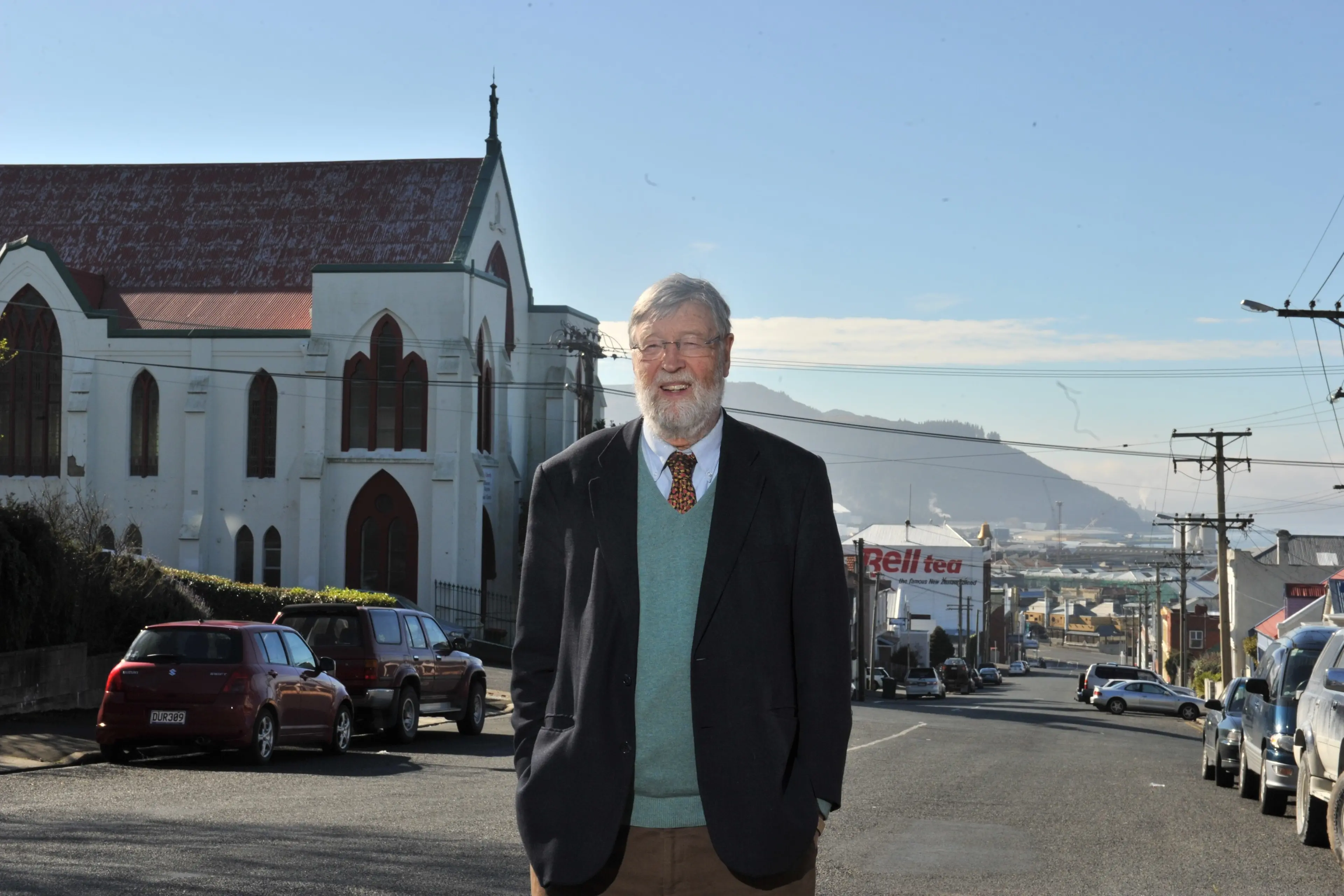
Erik Olssen was a born social historian.
The gregarious Otago academic could talk to anyone, and would quickly find out where they were brought up, where they went to school, and who their families were.
Building up a picture of people and how they lived was central to Olssen’s work. Twice the head of the University of Otago History department, Olssen was a pioneer in the field of social history through his groundbreaking Caversham Project.
Those achievements and his extensive history of publication earned Olssen many honours, including the New Zealand Order of Merit, a Fellowship of the Royal Society, and the NZ History Association Award for contribution to New Zealand history.
Such garlands would have seemed preposterous to a young Erik Newland Olssen, whose early passions were rugby and farming.
Born in Hamilton on December 14, 1941, Olssen was the first of four sons raised by Australian couple Edwin and Nancy Olssen, nee Newland. His mother was a lawyer, his father was an academic who moved the family to Dunedin in 1948 when he was appointed as a lecturer in the new field of political science.
The family settled in Andersons Bay and Olssen attended Andersons Bay School and Kings High School; Olssen was later highly amused that despite a school record he termed ‘‘undistinguished’’ that in 2021 he was made a member of the school’s Hall of Fame.
‘‘I spent most of my adolescence proving that I was no good at study but outstanding at various sports,’’ Olssen wrote.
‘‘Being the eldest however, I was the prisoner of parental hopes and expectations and ended up drifting through school then proceeding to university.’’
Olssen almost did not get to Otago: his Australian godmother had paid for a trip to Australia when he was 15, during which time he was a jackaroo in training, learned to ride a horse, and worked on two different sheep runs.
He also spent time every year fruit-picking on Devanny’s orchard in Earnscleugh, an experience which imbued a life-long love of Central Otago in general and that area particularly.
However, when he got to university he truly found his calling.
He entered a department managed by two very different but impressive professors, William Morrell and Angus Ross, and was inspired by the young lecturer Austin Mitchell. He wrote his MA thesis on 1930s maverick Labour MP John A Lee, and was recruited by Mitchell to be one of the founding members of the Castle St branch of the Labour
Olssen was also the political editor of student magazine Critic.
Morrell recognised the talent which Otago had unearthed and suggested that Olssen could do his PhD at Duke University in North Carolina. Despite knowing nothing of Duke and little of that part of the US Olssen was agreeable and departed Dunedin on a scholarship in 1965.
Olssen started studying American history just as the country went through a period of profound political and social change, and being in the country at that time had a significant impact on both his personal political thinking and his professional historical approach.
As well as studying at Duke, Olssen spent time in Washington DC and at the University of California, Berkley, and completed a minor to his Bachelor’s degree, in sociology/anthropology. In 1967 he attended Cornell Summer School on a Fellowship from the American
Mathematical Association to study how statistical methods might help solve historical problems — work which was invaluable later, especially for the Caversham Project.
During his travels Olssen met and fell in love with Andree Levesque, a French Canadian divorcee with two children, Andre-Christophe and Gaby.
The couple married in 1968: ‘‘my Catholic father was furious but too distant to exert much influence; my Anglican mother talked him around,’’ Olssen wrote.
The family of four soon became one of six after Karl was born in 1970 and Stephane, in 1973.
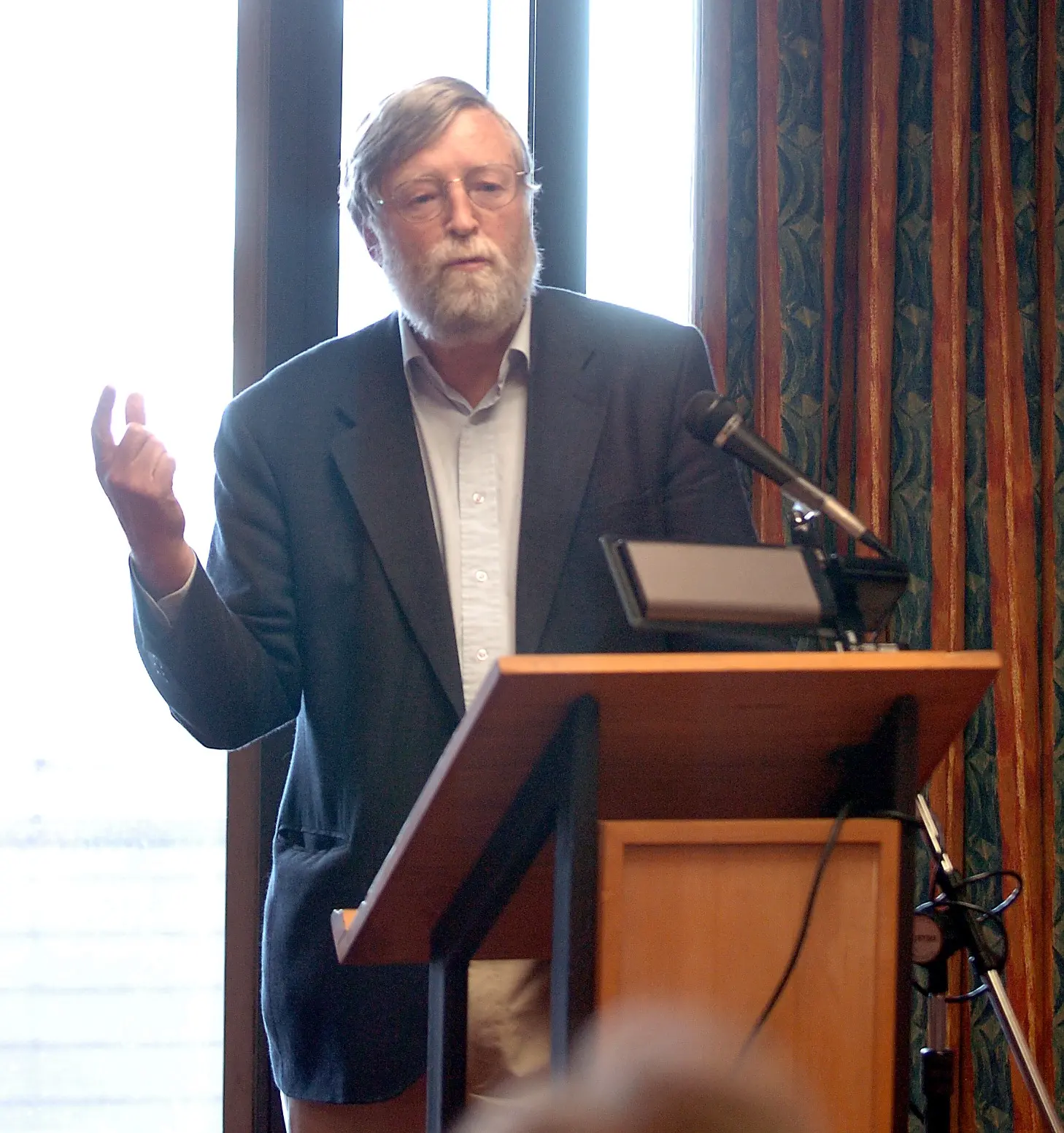
In 1969 Olssen returned to Dunedin, having being invited by his former PhD supervisor Angus Ross, who was now head of history at Otago, to teach the New Zealand history course.
He soon added a fourth year US history paper to his repertoire — with characteristic sly humour Olssen later said he blackmailed Ross into letting him do it by threatening to leave otherwise.
As the new decade began Olssen was part of a reform of the history curriculum, which was bedded into place in 1976-77. He began running a fourth year thesis course, as well as supervising several PhD candidates.
As a supervisor he was meticulous, supportive, and rigorous in equal measure, and he a kind and generous supporter of his students.
However, he could also be the archetypical absent-minded professor; several people recalled near misses when his pipe, which had been placed in his jacket, almost ignited the garment.
Many of the budding scholars taught by Olssen cut their teeth on a project he had launched with fellow Otago Professor, Tom Brooking, in 1975. Dubbed the Caversham Project, it was a forensic examination of the lives of those who lived in the Dunedin suburb in the late Victorian and Edwardian era.
Self-deprecatingly, Olssen once mused that had he known how long it would take and how much work it would entail he might not not have pursued the idea. Generations of scholars who have subsequently referred to the innovative and insightful work produced by the project will be forever grateful that he did.
In the NZHA’s citation for Olssen’s achievement award, project research team member Maureen Hickey wrote: ‘The Project itself was fascinating, ambitious, and unlike any other historical study in New Zealand in its scale, multi-disciplinary approach, span of subjects and use of data to examine interesting historical questions. Erik pulled together a team of New Zealand and international historians, geographers, statisticians, gender studies, data and computer experts to name just some and made it interesting, challenging and fun.’’
Erik and Andree's marriage ended in 1978, and to Olssen’s great sadness their little boys went with their mother to Canada. Until they grew up, Olssen spent each New Zealand summer in Montreal .
He bought a crib in Pūrākaunui with his mother and his brother Mark, and the boys would come to Dunedin for holidays.
Despite his busy academic schedule Olssen found time for many other interests, He was treasurer of the Committee on Vietnam, helped to found a local branch of the Civil Liberties Union, and represented the Caversham branch of the Labour Party on the party’s regional council.
In the 1980’s he sat on the NZ Historic Places Trust; the Special Committee for the Alexander Turnbull Library, and was a member of the secondary school curriculum committee. He was also President of the NZHA, and chairman of the then small but soon to become much larger Otago University Press.
Olssen became head of department in 1989, serving in that role until 1993. He would take up that post again later in life, from 2000-02.
There was also a profound change in his personal circumstances. While wandering and whistling along the corridors of the History department Olssen strolled into the adjacent English English department, where he met Annabel Cooper.
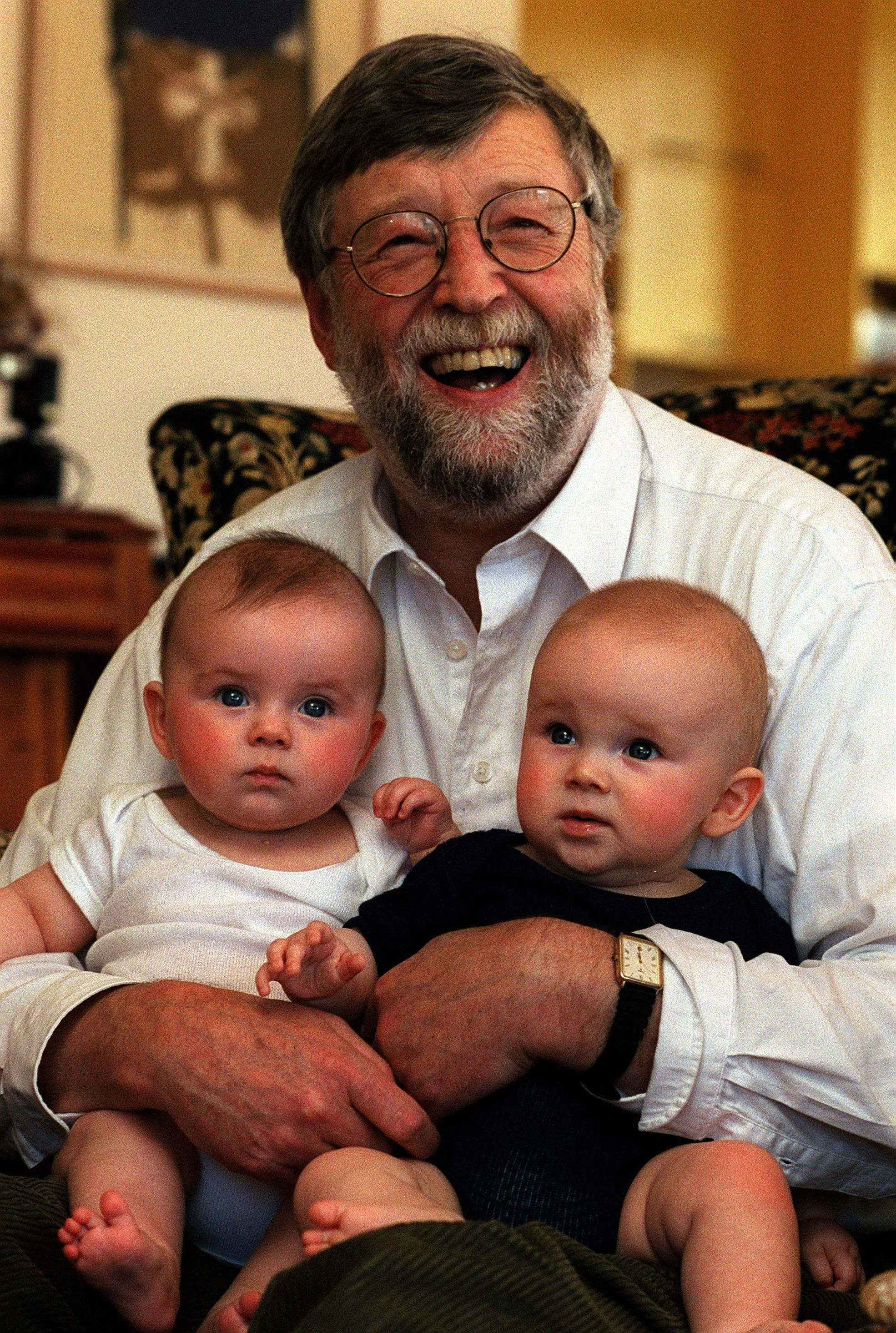
It was a meeting of minds and the academics fell in love, marrying in 1990. In 2000, after a decade of trying to have children, twins Susie and Cam were born.
‘‘This time I was more relaxed and available, which is just as well because twins are full on,’’ Olssen wrote.
‘‘Whereas the first time around my first wife and I founded a pre-school and helped run a food co-op, this time I found I had no desire, let alone energy, to try single-handedly to try to change much. Six hours sleep had become my idea of a major achievement.’’
Despite those challenges Olssen was, once more, a loving and involved father.
He also remained, despite all his various commitments, a dashing, insightful and prolific author. His 10 sole-authored books and four co-authored volumes place him highly in the list of new Zealand’s most published historians.
Olssen, unassuming and with a dry sense of humour, had curiosity enough for a lifetime, and never more so than when directed at Dunedin, its suburbs, its province, and its people, past and present. The Caversham Project alone spawned many books and journal articles, both by Olssen and in collaboration with others.
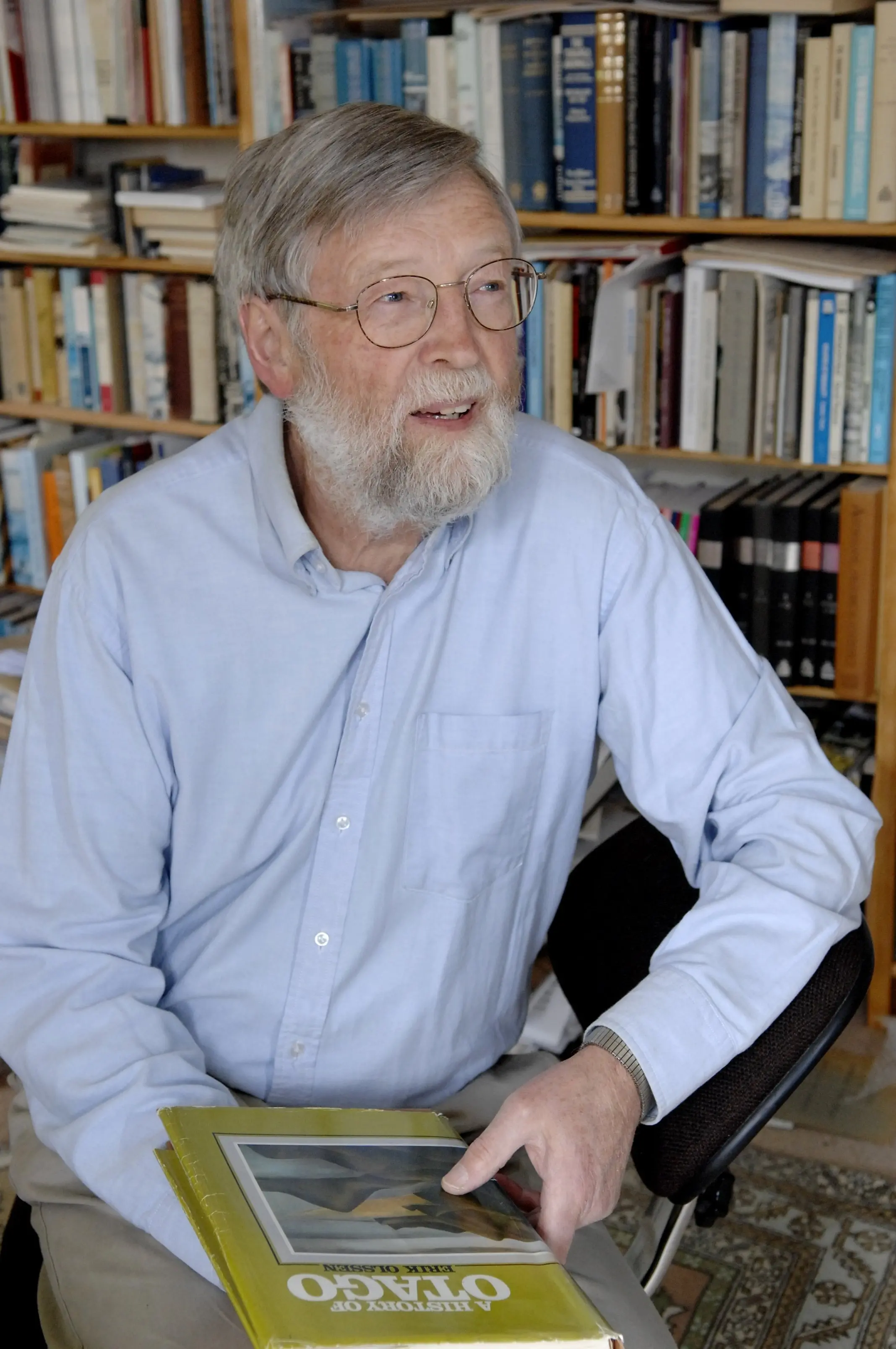
His John A Lee thesis became a published biography. In 1984, at the invitation of Brian Turner, Olssen authored a handsomely illustrated history of Otago, and six years later, in collaboration Judith Binney and Judith Bassett, he co-wrote The People and the Land: Te Tangata me te Whenua, a lavish illustrated history of New Zealand released for the 1990 sesquicentenary.
Mostly, Olssen liked to explore the relationship between mobility patterns and class mobilisation, both political and industrial. Notable volumes in that field included The Red Feds: Revolutionary Industrial Unionism and the New Zealand Federation of Labour 1908–14 and An Accidental Utopia? Social Mobility and the Foundations of an Egalitarian Society, 1880–1940.
In 2025 he published The Origins of an Experimental Society, New Zealand, 1769-1860, a formidable nearly 600 page exploration of the intellectual history of the origins of what is now called ``New Zealand’’ in a European context.
It was projected to be volume one of a three-volume set. The last revisions of volume 2 will be completed by Malcolm McKinnon and Annabel Coooper; a draft of volume 3 exists but its destiny is undecided.
Olssen retired from the University of Otago in 2002, when he was conferred the title of emeritus professor. Olssen remained actively interested in what his former colleagues and students were doing, and kept in contact with many: a celebration in Wellington to mark his 80th birthday was well-attended. Olssen would never have missed it; he was a man who keenly enjoyed company and celebrations.
Olssen took a philosophic approach after being diagnosed with cancer, calmly stating that he felt satisfied that he had had a good life, one which up until the end was animated by ideas, politics and people.
Erik Olssen died on July 29 aged 84. He is survived by wife Annabel and his children.