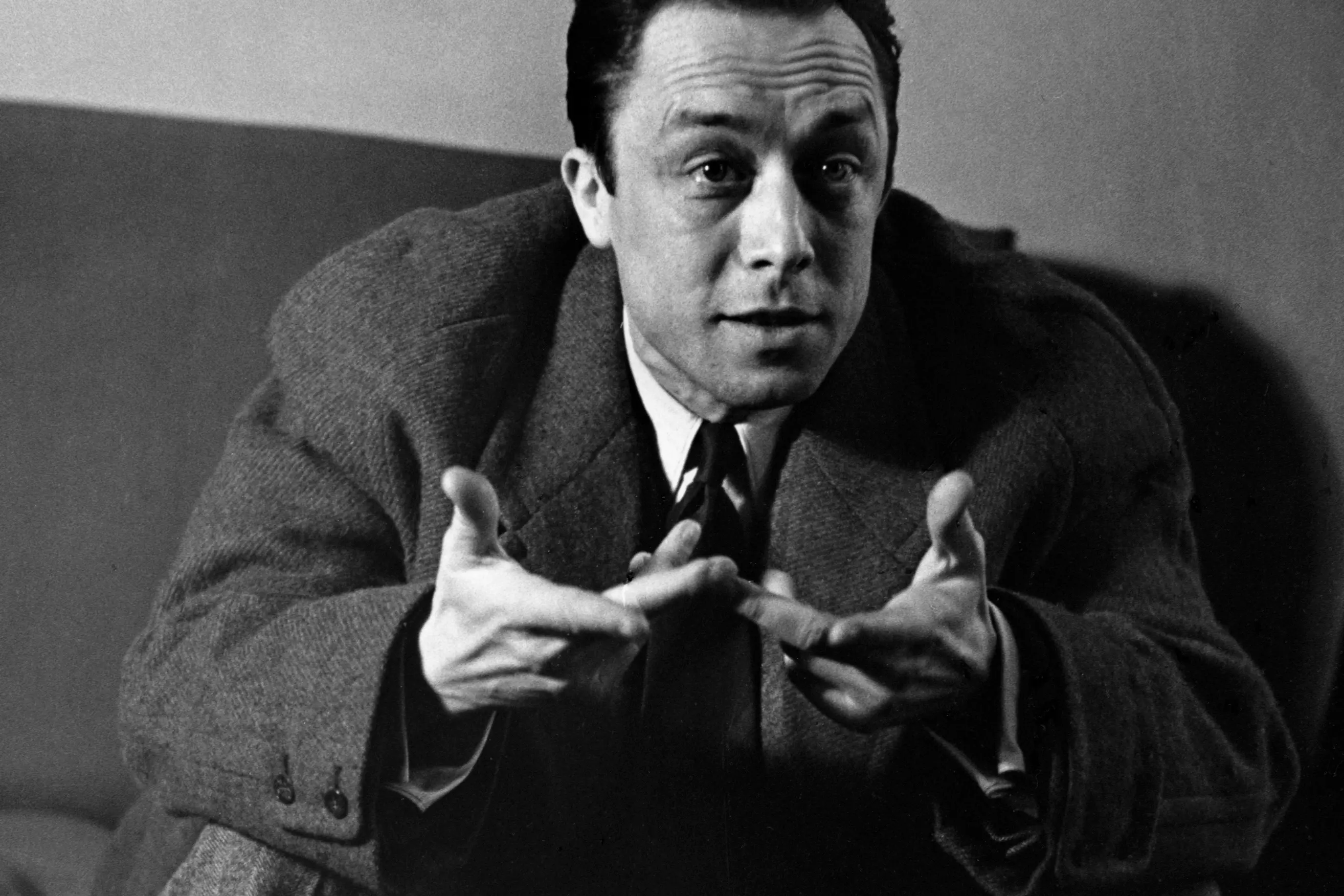
I went to see the film of the book. It was an afternoon screening at an art-house cinema. Pulling open the door I was confronted by a bar and a smiling barmaid-cum-usherette. I showed her the ticket I’d bought on line and ordered a shiraz and she said I was welcome to take the glass in with me and though I’d reserved a specific seat I could sit wherever I liked because I was it -- the audience entire. But even as she spoke two women arrived, separately, though they were hard to tell apart. Both were about my age and both had studied the book either at school or at university and one of them took out her original copy in the French. ``Look,’’ she said, delighted by a whiff of yesterday, ``it’s still got my notes in pencil.’’ The cinema was lovely. The seats bulged with upholstery, arms as chubby as a grandmother’s, legroom you could have done ballet in, and a thoughtful, indulgent swinging tray on which to stand your glass of wine and its successor. The three of us scattered on entry though we all settled near the back. I sank down into my seat, prepared to be disappointed. And I was. Of course. The book was L’Etranger by Albert Camus, written in 1940. The film was a brand new thing made on location in North Africa. I had seen a review in the paper and it was scattered with stars and I thought why not, though I knew damn well why not. Why not is because a book is words and a film is pictures. When you see pictures you take them in without effort. We are used to seeing. We are visual creatures. But when we read words they are just ink on paper, symbols that we must work to turn into sounds and sights, ideas and characters. To read is to create. And it was Camus’ words that gripped me at the age of 17, and have never since relaxed that grip. (I take down now from my shelves the paperback copy I stole from school. Thick yellowing pages, the school name and crest, the date October 7, 1973, the stamp inside the front cover saying that I am ``responsible for keeping this book in good order.’’ I have kept it in good order for half a century). The first two sentences are almost the book in miniature: “Aujourd’hui maman est morte. Ou peut- etre hier, je ne sais pas”. Literally, “Today, mother died. Or perhaps yesterday, I don’t know”. Like all the best writing in any language it sinks in translation, but here is the unemotional honesty of the main character, Meursault. His name is a blend of sea and sun. He never lies. He does not pretend to feel things that he doesn’t feel. He likes the actual sapid world of food and drink and sex and sea and wind but he espouses no creed, no philosophy, and he sees no point to anything, no purpose, no reason. And by being honest and by saying little he exposes the delusion and hypocrisy of the world. It was this spare rigour that seized my adolescent mind. Meursault commits a murder and is condemned to death. He refuses to see a priest, of course, but on the eve of his execution the priest comes uninvited to his cell, urges him to make his peace with his conscience and with God. Meursault tells him he has little time left and he doesn’t want to waste it with God. When the priest says he will pray for him, Meursault, in his only passionate act of the novel, becomes enraged, assaults the priest and has to be hauled off by the guards. And then he’s left alone to spend his last night under the limitless stars and to embrace “la tendre indifference du monde”.’ The film shied at the first fence. It ignored these famous opening sentences, discarded them. It went on to tell the story faithfully enough, no doubt got all the period details right, from the swimming costumes to the hairstyles to the vehicles, but in bringing down the jar of fidelity it missed the wasp of truth. I was unmoved, felt nothing. And when the credits rolled I scuttled out quickly, eager not to have to betray Meursault and lie. Lyttelton writer Joe Bennett writes the Sleeping Dogs column for the ODT.