
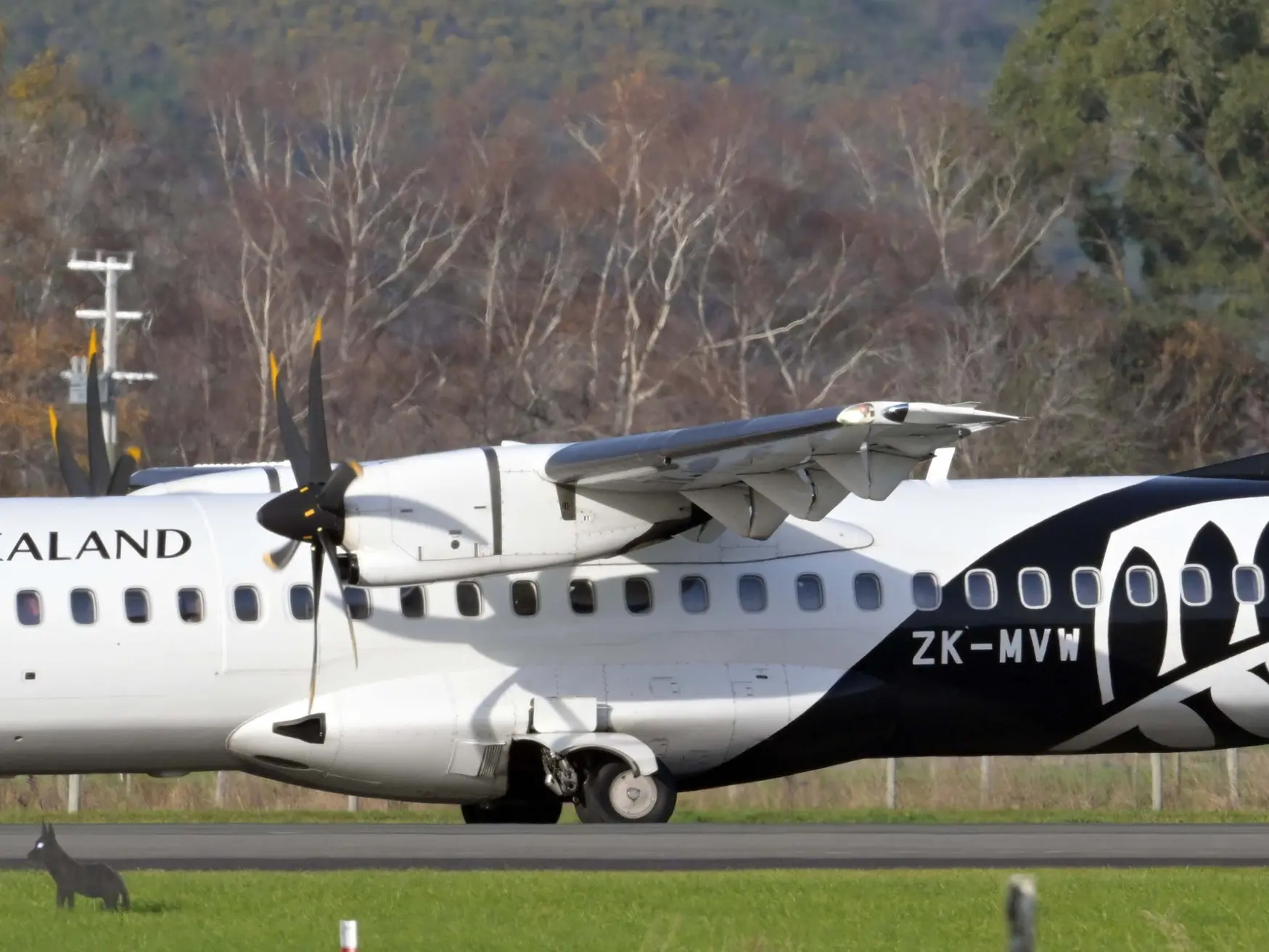
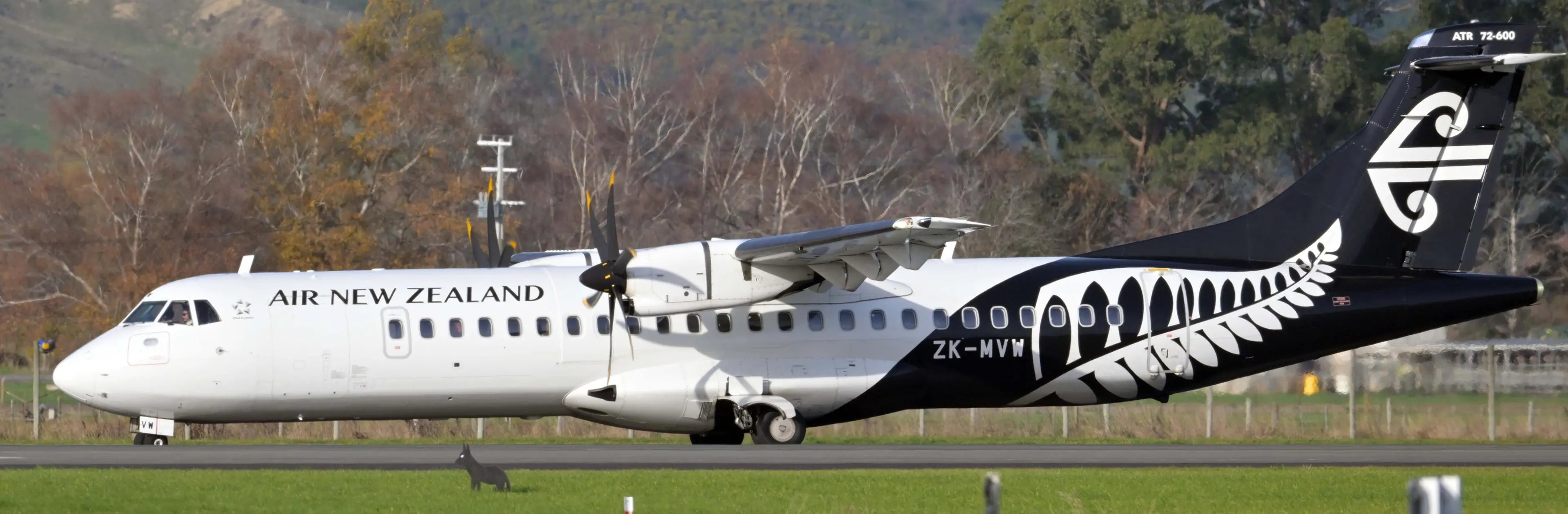

PHOTO
I was surprised to hear the Prime Minister’s unusually blunt assessment of Air New Zealand’s latest
financial result: “It’s clearly a very poor performance,” he said.
But it was what followed that caught my attention. Air New Zealand, he said, needed to explain
what had caused such a significant loss and, more importantly, what it was going to do to build a
better business.
“We expect them to very quickly turn it around and get the company growing again and performing strongly.”
Fair enough. But surely New Zealanders are entitled to expect the same from the Prime Minister
when it comes to running the country. So how is he doing?
Before answering that, let’s afford him the same consideration I think he should have afforded Air New Zealand.
What did he inherit? What has happened that he couldn’t control? What can he control? And what is he doing about it?
Plenty of New Zealanders would prefer to fly our national airline but, increasingly, that is becoming difficult to justify. I understand that.
Last week a same-day return flight from Dunedin to Wellington cost me $1333.75. The week
before, Dunedin to Christchurch and back cost $857.75.
$2191.50 for two short domestic flights. Neither was on a jet. Both were full. And with fewer
flights available, there weren’t many other options.
I noticed something else on the invoices. Of that $2191.50, $285.86 was GST.
A business may be able to claim that back. Most New Zealanders flying to visit family, attend a
funeral or simply travel around their own country can’t.
That part of the ticket price doesn’t go to Air New Zealand. It goes to the government.
So, what else sits behind the price we pay to fly in this country? A $336 million pre-tax loss is a
serious number. But numbers need context.
Global engine problems left expensive Air New Zealand aircraft sitting on the ground. Air New
Zealand puts the impact on its latest result at around $190 million.
War in the Middle East drove fuel prices higher, taking another $135m off the result.
Maintenance costs increased by $139m. Aviation-system costs — fees, levies and airport
charges — increased by another $142m.
Air New Zealand’s CEO, Nikhil Ravishankar, has to manage the airline’s response to all of those
things, but he doesn’t control any of them. That’s where I struggle with the Prime Minister’s criticism.
He knows this business. He knows the people who work in it. He knows exactly what it is like to sit in the chair now occupied by Nikhil Ravishankar.
When Christopher Luxon became chief executive of Air New Zealand in 2013, he inherited an
airline whose earnings were already improving strongly. In the financial year before he took over, Air New Zealand made a net profit after tax of $71m.
In Rob Fyfe’s final six months as CEO, normalised earnings before tax had risen from $33m to $139m.
Luxon went on to deliver some outstanding results at Air New Zealand — he deserves credit for that — but he inherited an airline that was already climbing. Nikhil Ravishankar didn’t.
And surely the former CEO understands better than most that the number at the bottom of a
financial statement doesn’t tell you everything about the performance of the people responsible for it.
There is another reason this matters. New Zealand taxpayers own 51% of Air New Zealand. The Prime Minister represents us. So perhaps the first call should have been to the new CEO of the company we own, to understand what was happening and what we could do about it.
Aviation-system costs could be a good place to start because that is something the government can influence.
Air New Zealand says it, and its customers, share of those costs reached $1.2 billion in the past
year, $142m more than the year before. Airport charges are part of that and in New Zealand, Wellington provides an interesting example of how those charges can be used.
Wellington Airport already discounts charges to encourage airlines to grow passenger numbers. Fair enough. Competition should be good for travellers.
But look at where that competition occurs. Jetstar flies from Wellington to Auckland, Christchurch and Queenstown. Air New Zealand flies those routes too; plus Blenheim, Dunedin, Gisborne, Invercargill, Napier, Nelson, New Plymouth, Rotorua, Tauranga and Timaru.
Three destinations versus 13.
The Commerce Commission has explained why competitors aren’t rushing to those regional routes: they are more expensive to operate. Many of the costs are incurred simply taking off, landing and having an aircraft on the ground.
So when Wellington Airport offers discounted charges to attract additional capacity on those three profitable routes, why not offer Air New Zealand the same discounted rate for the capacity it already provides on them? Let them compete on equal terms.
Air New Zealand isn’t just flying three routes out of Wellington. It is maintaining a network of
13, including regional routes the Commerce Commission tells us are considerably harder to
make work. Perhaps helping it compete more effectively on the profitable parts of that network will help keep the rest of it viable.
Auckland provides another example of why these costs matter.
Earlier this year, The Economist published an international comparison of 2024 airport charges that ranked Auckland the most expensive, ahead of Heathrow, Frankfurt, JFK, Singapore, Paris, Dubai and Seoul.
Last year the Commerce Commission also found Auckland Airport’s charges too high, including
$190m in excess profit. They subsequently cut those charges, but airport costs clearly have an
impact on our airline.
In 2025 Air New Zealand paid Auckland Airport $265m. By 2032 that is scheduled to climb
to $735m.
Place that in the context of a $336m dollar loss. And that’s just one airport.
Which brings me back to the question I think sits behind all of this. What do we actually expect Air New Zealand to do? If all we want is an airline that flies the most profitable routes, the market can probably provide that.
But Air New Zealand does something more. It connects us across the whole country and is our gateway to the world.
I agree with the Prime Minister. Air New Zealand has to run the best business it can. But as the
majority shareholder, we have a responsibility to help make that business work.
What can they fix?
What can we fix? And what can we fix together?
That should be the goal. Making sure the national airline we own can do the job we need it to do.
For all of us.
- Dunedin businessman Sir Ian Taylor is the founder and managing director of Animation Research.