
PHOTO
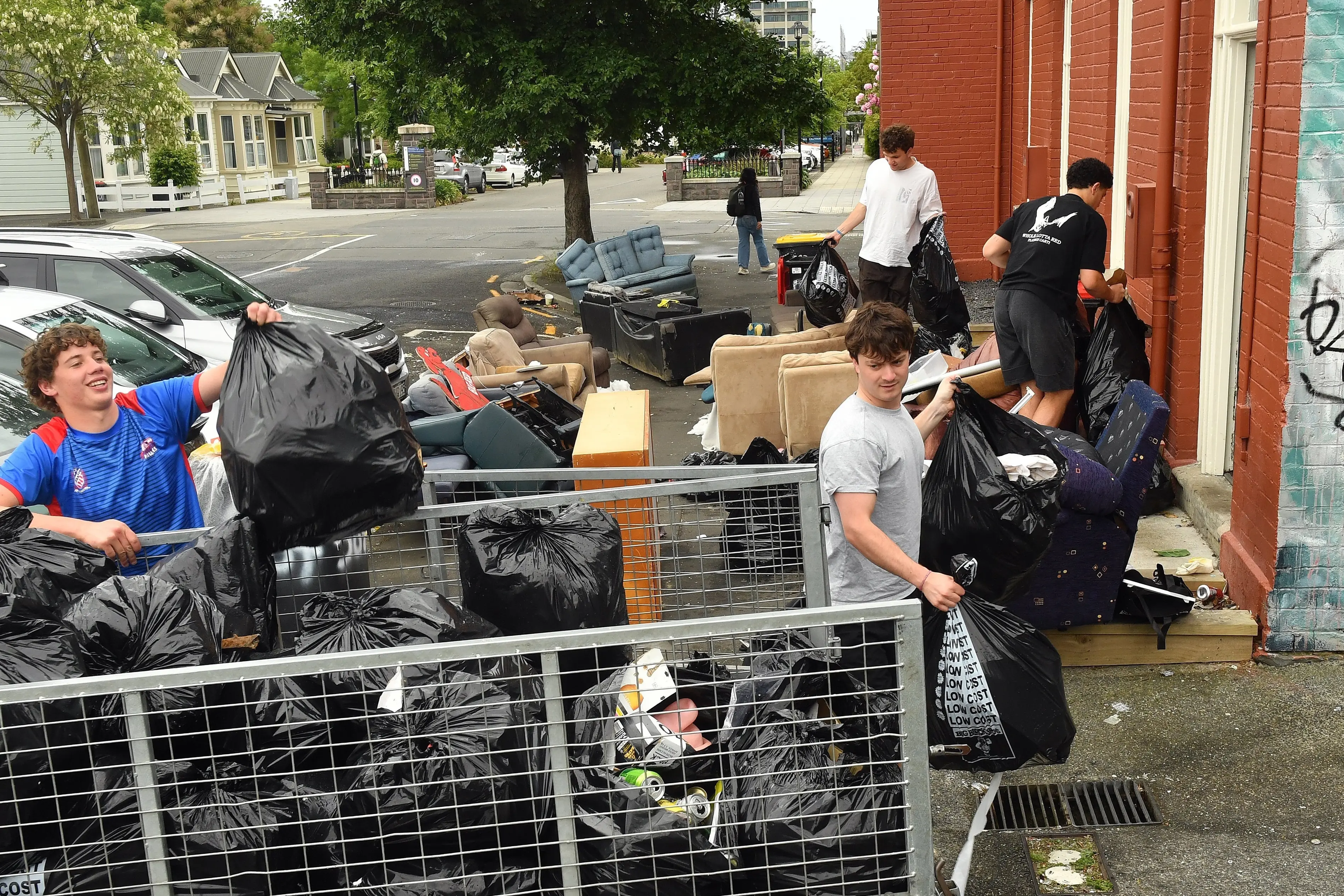
Litter in North Dunedin is often discussed as an aesthetic nuisance: an eyesore that reflects poorly on the city and its student population. That framing understates the problem.
For a wheelchair user, broken glass is not simply something to be stepped around. It can become a genuine safety hazard, potentially forcing a detour around a contaminated section of footpath or, in some circumstances, towards the carriageway.
A footpath narrowed or blocked by an abandoned couch can create a similar problem.
Elderly residents, vision-impaired pedestrians and guide dogs can encounter comparable hazards at ground level. Any discussion of Castle St's litter problem that overlooks accessibility is therefore incomplete.
Prospective students, tourists and whānau — all of us — want to live, work and feel safe in a clean corner of Godzone.
The condition of our surroundings affects how we experience the places we share. How we treat those places is ultimately a collective responsibility.
This is not simply a year-round problem. There are predictable pressure points, particularly around end-of-year flat move-out and the beginning of the academic year. I have observed this cycle repeatedly since at least 2020.
The scale is measurable rather than merely anecdotal. Dunedin City Council material records weekly kerbside collections in the student area, including glass, compared with fortnightly glass collection elsewhere.
Sweeper trucks and a hand crew are also dedicated to the University/North Dunedin area three times a week, compared with approximately every five to six weeks in many other suburbs.
Council information records substantial quantities of glass being collected at recycling facilities in the student area.
In September 2024, for example, the Castle St recycling hub beside the Marsh Study Centre collected 0.54 tonnes of glass.
There are already constructive measures in place. The University of Otago's Diversion Days provide recycling and general-waste options, while the Castle Street recycling hub was established because students sometimes had more recycling than could fit into their kerbside bins.
These initiatives deserve recognition. They demonstrate that providing convenient infrastructure can make responsible behaviour easier.
The question is whether the existing response is sufficient when demand is greatest.
Rather than simply copying another country's system, Dunedin could consider a combination of modest local measures.
Council could investigate an SMS or app-based reminder service timed to predictable seasonal pressure points.
Council and the university could review whether additional or replacement bins are appropriate at Castle St and other identified hotspots.
A clearly defined enforcement approach could also make the consequences of persistent or serious littering more predictable.
Technology could be trialled on one street before being introduced more widely — for example, fill-level sensors for high-use bins, or location-based reminders directing people towards recycling and waste facilities.
Any financial estimates should be treated as pilot estimates rather than established council costs. Procurement and a proper cost-benefit assessment would be needed before ratepayer funding was committed.
Public safety is another reason to take the issue seriously. Large gatherings and alcohol-related activity can place additional pressure on residents, emergency services and council resources.
Broken glass is particularly relevant. Council material prepared during its Local Alcohol Policy review has recorded concerns about quantities of glass and broken glass generated in the North Dunedin student area.
None of this should be read as an indictment of students as a group. Many students already contribute constructively to keeping North Dunedin clean.
The recycling hub, Diversion Days, the Sophia Charter and voluntary community clean-ups demonstrate what can be achieved when people have practical opportunities to contribute.
Students should be able to have fun while partying safely and respectfully — for their own wellbeing, for their neighbours and for the environment.
The tools already exist: recycling facilities, additional collection services, community groups, enforcement powers and opportunities for better coordination.
What is needed now is a consistent, evidence-based approach that measures what works and adjusts what
does not.
With the 2026 general election approaching, there is also an opportunity for a local community meeting involving residents, students, community organisations, the university, council representatives and parliamentary candidates. Such a meeting could allow residents to ask questions directly and discuss practical local issues.
This should not be about supporting one political side. It should be about bringing the community together to identify practical solutions and hold decision-makers accountable for delivering them.
North Dunedin belongs to the students, residents, visitors and the wider Dunedin community. Keeping it clean and accessible is therefore not someone else's responsibility.
It is something we can all contribute to.All is inclusive.
- Thomas McAlpine is a North East valley resident.